
In the quiet Ukrainian town of Medzhybizh, surrounded by rolling green hills and aging wooden houses, stands one of the holiest pilgrimage sites in the Jewish world. The grave of Rabbi Israel Baal Shem Tov, founder of the Hasidic movement, continues to draw visitors seeking spiritual connection, Jewish history, and the atmosphere of the vanished shtetl world of Eastern Europe. Even during the uncertainty of war in Ukraine, the longing to reach Medzhybizh has not disappeared.
Shavuot marks the yahrzeit (the anniversary of the passing) of Rabbi Israel Baal Shem Tov, the founder of the Hasidic movement. His resting place in the quiet Ukrainian town of Medzhybizh is one of the most sacred Jewish heritage sites in the world, a place where history and holiness meet under the open sky.
There are places the heart reaches before the feet do. Medzhybizh is one of those rare places. Surrounded by green hills and whispering birch trees, this unassuming town cradles one of the most spiritually charged sites in Eastern Europe: the grave of the Baal Shem Tov.
He passed away on Shavuot in 1760 at the age of 61. For generations, his gravesite became a magnet for pilgrims and seekers. A grand HILULA annual pilgrimage once brought thousands to Medzhybizh. But today, those journeys are far more difficult. The ongoing war in Ukraine has cast a shadow over the region. Medzhybizh lies in the Khmelnytskyi Oblast, home to military bases and an airfield that are targeted by Russian missiles. As diplomatic negotiations between Ukraine and Russia inch forward, the hope for peace also rekindles the dream of returning to Medzhybizh, just 400 kilometers southwest of Kyiv. For now, only a handful of determined travelers make their way via Chișinău, Moldova, continuing the rest of the journey overland.
Medzhybizh: A Town Where Time Paused
In Medzhybizh, time hasn’t so much passed as it has settled-softly, like dust on an old book. The town’s single-story homes, whitewashed and sagging, resemble the modest The Jewish Agency-built houses that once dotted Israeli moshavim in the 1960s. Some are patched with rusting sheet metal. Their corrugated iron roofs, stained and brittle, seem to have absorbed the moisture and sorrow of decades. The buildings slouch like the elderly, with deep wrinkles of neglect. The plaster has peeled away in patches, revealing the reddish bricks beneath, skin giving way to bone. In recent years, the walls have cracked further, no longer only from age but from the distant blast of war.
The streets are cobbled with worn, uneven stones, washed in hues of pale gray and beige. Motorized traffic is rare; horse-drawn carts still rattle by. The air is thick with the scent of manure, wet wood, damp soil, and the lingering trace of smoke from a fire long extinguished.
Walking here feels like entering a different dimension. One that belongs neither fully to the past nor entirely to the present. You are not simply a visitor; you are a participant in a sacred continuum.
In the Footsteps of the Baal Shem Tov
As I walk toward the Baal Shem Tov’s synagogue, my heart beats not from the exertion, but from reverence. He walked this path. These stones felt the imprint of his feet. The earth here seems unchanged. The sounds-wind rustling through leaves, the creak of old doors-remain eerily familiar. The silence is not empty but expectant, as though the town itself is holding its breath.
You do not merely visit Medzhybizh-you arrive. And in arriving, you encounter more than a place. You meet something eternal. This is where the Baal Shem Tov studied, taught, and prayed. This is where he laughed, cried, and elevated the souls around him.
In a world of fast-moving headlines and fleeting moments, Medzhybizh stands still. It beckons not to the curious, but to the seeking. And for every Jew who longs to connect with the roots of Hasidism, the soul of Eastern European Jewry, and the legacy of the man who taught that every spark contains divine light-Medzhybizh is not just a destination. It is a calling.
The Importance of the Baal Shem Tov
To understand the revolutionary impact of the Baal Shem Tov, one must first feel the weight of the world into which he was born-a world of grief, disillusionment, and spiritual collapse.
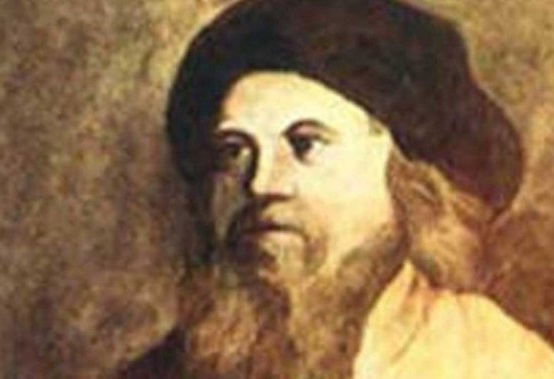
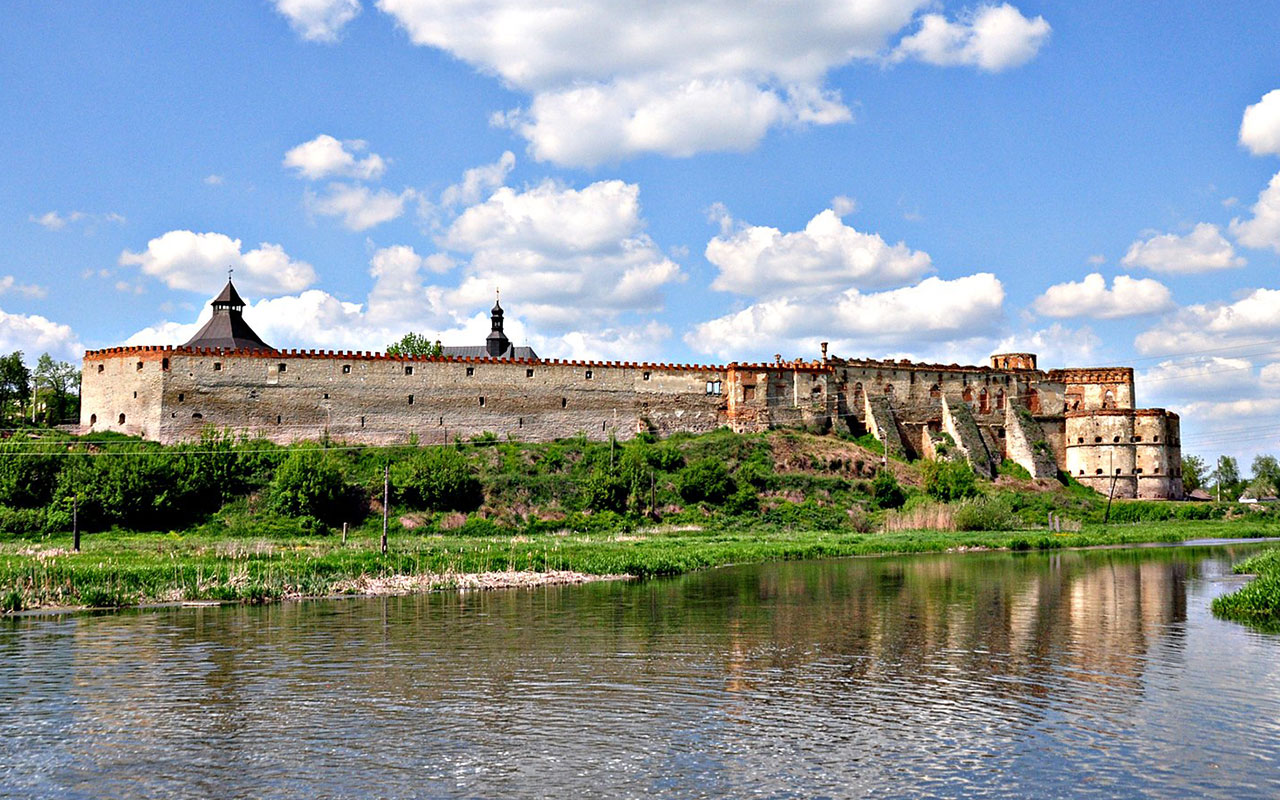
Around 350 years ago, European Jewry stood at a crossroads of despair. The Khmelnytsky massacres of 1648 had torn through the Jewish communities of Eastern Europe with terrifying brutality. Nearly 50,000 Jews were slaughtered by rampaging Cossacks. Grief blanketed every shtetl; there was scarcely a Jewish family untouched by mourning. On the outskirts of Medzhybizh, the ruined castle of the Ossarok noble family still stands-a silent witness to the town’s dark past, once seized and defiled by those same Cossack forces.
In the ashes of that destruction, a second trauma took hold: the rise and fall of Shabtai Tzvi. This self-declared messiah had ignited desperate hopes among Jews seeking salvation. When he was exposed as a fraud-and worse, when he converted to Islam-those dreams imploded, leaving behind a bitter vacuum of faith. The people were spiritually starving, clinging to any flicker of hope.
It was from this fractured soil that the Baal Shem Tov emerged.
Outwardly, the Jews of this era were poor. Many couldn’t read or write, nor afford tutors for their children. But inwardly, they were ablaze with devotion. They kept Shabbat with precision, wrapped tefillin over calloused hands hardened by manual labor, and prayed with trembling voices that rose from the heart, not from scholarly volumes. These were not the lamdanim of the yeshivot; they were the cobblers, woodcutters, and shepherds whose synagogue was the field and whose prayer book was their pain.
The rabbinic elite of the time looked down upon them. In many communities, synagogues were divided-one side for the learned, and another for the so-called amei ha’aretz, the “ignorant masses.” Wandering preachers known as maggidim traveled from town to town, offering fire-and-brimstone sermons, piling guilt upon a people already weighed down by poverty and sorrow. But the Baal Shem Tov rejected this model. He saw not sin but sanctity in the simple Jew.
To him, these unlettered souls were not a burden. They were the soul of Israel. Their awe of Heaven was unfiltered, their toil was worship, their tears a sacred psalm. He offered something radical: not shame, but joy. Not rebuke, but love.
At age 36, on Lag BaOmer, the Baal Shem Tov stepped out of obscurity and began to teach openly. His message was clear and intoxicating: that God could be served not only in study halls but in the fields, the markets, and the kitchens. That a person’s worth was not measured by Talmudic fluency, but by sincerity of heart.
Crowds began to gather around him in his early home of Kolomyia. Men, women, and even skeptical scholars came to hear his words-words that lifted the soul and restored lost dignity. His following grew rapidly.
In 1740, he moved to Medzhybizh, where he would remain until his death. There, he became known not only as a spiritual leader but as a miracle worker. The title Baal Shem-“Master of the Name” was traditionally reserved for healers who used divine names, amulets, and Kabbalistic incantations. But Rabbi Yisrael ben Eliezer became more than that: he became the Baal Shem Tov, the “Master of the Good Name.”
Decades later, in the 1980s, a researcher from Bar-Ilan University uncovered a fascinating detail in the dusty municipal archives of Medzhybizh: the Baal Shem Tov’s home had been officially exempt from taxes-on the grounds that he was registered as a physician.
And perhaps that title was apt. He was, in the deepest sense, a healer: of bodies, yes, but more profoundly, of souls. Rabbi Dr. Yitzhak Alfasi, the Hasidic scholar and B’nai B’rith leader, compiled thousands of stories attesting to the Baal Shem Tov’s wonder-working power-stories of barren women who bore children, of the sick who found healing, of hearts too broken to speak finding words again.
But his greatest miracle may have been this: he made the Jew believe that God still listened. That even in a broken world, joy was not only possible-it was holy.
The Baal Shem Tov in Mezhybizh
It was in Mezhybizh that the Baal Shem Tov began to crystallize the core teachings of Hasidism. Ideas that would quietly, then thunderously, revolutionize Jewish life. While the Vilna Gaon fought bitterly against the movement, fearing it was yet another reincarnation of Sabbateanism, one can’t help but wonder: had he lived to witness what Hasidism would become, would he have been so quick to oppose it?
The Baal Shem Tov spent much of his life longing to settle in the Land of Israel. He dreamed not just of walking its sacred soil, but of studying Kabbalah in Jerusalem alongside Rabbi Chaim ben Attar, the famed Or HaChaim. But the road to Eretz Israel in the 18th century was no mere journey. It was a perilous expedition, fraught wuth bandits, shipwrecks, and illness. On one attempt, he made it as far as Istanbul, where he celebrated Passover. But during the Omer, turbulent seas forced him to turn back to Mezhybizh. From the road, he wrote to his brother-in-law, Rabbi Gershon of Kitov:
"God knows I have not given up hope of journeying to the Land of Israel."
In modern terms, we might say: the Baal Shem Tov was a Zionist. If he lived today, he might wear a 'kippah sruga' and a kind of Chardalnik avant la lettre, blending deep-rooted Hasidic spirituality with passionate love for the Land. He doesn’t belong exclusively to the ultra-Orthodox world that has since tried to monopolize his legacy. In fact, it's likely he would disapprove of the rebbes who, while claiming his mantle, forbade their followers to immigrate to Israel before the Holocaust, and in some cases, even today.
The Baal Shem Tov’s Grave

The most visited Jewish site in Ukraine is the grave of the Baal Shem Tov, known lovingly as the Besht. On the night of Shavuot, as legend tells it, his students gathered by his sickbed to recite the Tikkun Leil Shavuot, following the mystical custom of the Ari. The Besht offered a final teaching on the Giving of the Torah. The next morning, sensing the end, he summoned his closest followers and instructed two of them to handle his burial when the time came.
But how would they know when that moment arrived?
The Besht gave them a sign: “When I leave this world, both clocks in my house will stop.”
Soon after, the large clock indeed fell silent. His disciples, not wanting to alarm him, secretly hide it. But the Baal Shem Tov smiled knowingly. “I know the clock has stopped,” he said gently, “but I do not fear. I know I will leave through this door and immediately enter another.”
Then he sat up, whispered one final Torah teaching, and, in a tremor of holiness, his soul departed. At that exact moment, the second clock also stopped.
A Sacred Encounter in Medzhybizh
The Baal Shem Tov was buried in the ancient Jewish cemetery of Medzhybizh, a place where the air itself seems to pause. As you pass through the gates, your breath changes. The pace of your heart adjusts. The whisper of centuries hangs heavy in the wind.
Scattered across the grass lie weathered gravestones, some worn to illegibility, others bearing names etched four centuries ago. A simple wooden ohel once stood over the Baal Shem Tov’s grave, but it was destroyed during the Holocaust. In the 1980s, Chabad Hasidim built a new structure, and 21 years ago, a larger, more stately marble-covered ohel replaced it. During the renovations, the Besht’s gravestone and those of his companions were restored and preserved.
Inside, his gravestone-gray marble, modest yet dignified-is engraved: “Here lies Rabbi Yisrael Baal Shem Tov, of holy and blessed memory.”
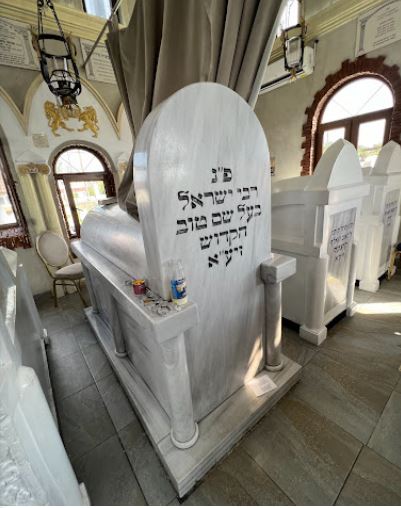
Candles flicker in every direction. Some are enclosed in glass boxes like an aquariums of flame; others rest on simple tin trays. The scent of melted wax mingles with the soft murmur of prayers and tears. A fabric curtain separates the women’s section, passing directly over the grave itself, as though cleaving it in two and partially veiling it from view.
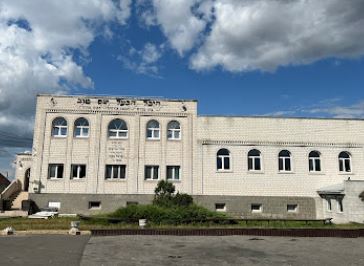
To accommodate the growing number of pilgrims, a full visitor complex Heichal HaBaal Shem Tov, now surrounds the site. It includes a beit midrash, a kosher restaurant, and a guesthouse aptly named “Kedusha” (Holiness). The place offers not only rest for the body but solace for the soul.
The Baal Shem Tov’s Synagogue
In the Baal Shem Tov’s synagogue in Medzhybizh, trembling hands once rose skyward in whispered, tear-soaked prayer. Here, beneath creaking wooden beams and time-worn floorboards, the Divine Presence was said to hover like morning mist. The air itself once carried the cadence of yearning souls, echoing the founder of Hasidism’s teachings in every crevice.

But Medzhybizh, like so much of Eastern Europe, did not escape the fire and fury of the 20th century. The synagogue was desecrated during the Holocaust, a casualty of a collaboration between Nazi forces and Ukrainian nationalists. Where once the sacred had breathed, silence settled like ash.

In recent years, however, the beit midrash was lovingly restored by the Ohel Tzadikim organization of Bnei Brak. Their efforts yielded more than just bricks and beams-they resurrected a spiritual heartbeat. What now stands is a modest white structure with a red-tiled roof, but within lies something deeper: a revival of soul, not just of space.
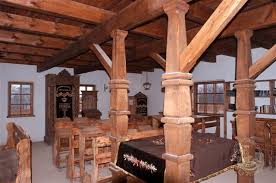
Crossing its threshold, one instinctively slows down. The air thickens with reverence. Massive, dark wooden pillars-hand-carved, worn smooth by time-stand like sentinels, holding up more than the roof. In the center, a wide bimah covered in green velvet seems to invite memory as much as prayer. Wooden benches, arranged in rows of four seats, feel as if they’ve been waiting for their worshippers to return for centuries. Nearby, pinewood stenders stand like old friends leaning into quiet conversation.
The western wall is lined with bookcases, their shelves sagging under the weight of sacred texts, some new, others with cracked spines and gilded lettering faded by decades of study. The scent of lacquered wood and candle wax mingles with something older still, something like history itself.
But the crown jewel, the soul of the room, is the Aron Kodesh. Crafted from deep reddish mahogany, it wraps protectively around the original Holy Ark. Two slender columns frame it, topped by a carved lintel of understated elegance. From above hangs a heavy velvet curtain, embroidered in gold thread: “The place where the Baal Shem Tov prayed.”.
Nearby, a brown marble plaque whispers a quiet truth in white lettering:
“The place on which you stand is holy. The prayer site of the Light of the Seven Days, our teacher Rabbi Yisrael Baal Shem Tov, of blessed memory.”
And in that moment, it’s hard to breathe. Hard to comprehend that your feet are planted exactly where the Baal Shem Tov once stood, chanting the same ancient words that lit candles in the darkest corners of Jewish history.
Just beyond this room lies another echo of spiritual legacy. The Baal Shem Tov’s beit midrash was built adjacent to the older synagogue of the Bach-Rabbi Yoel Sirkis, author of the Bayit Chadash. It was there, in that more ancient house of prayer, that the Besht first davened upon arriving in Medzhybizh. The Bach, a towering halachic authority and master commentator on the Arba’ah Turim, served as rabbi of the town roughly 150 years before the Baal Shem Tov’s arrival.
Even today, the crumbling remains of the Bach’s synagogue are visible just beside the Baal Shem Tov’s restored beit midrash-a physical reminder that Jewish history here runs not only deep, but layered.
To stand here is to feel the soul of Jewish time braided together: past, present, and something eternal.
The Rebbe’s Spring
Not far from the center of Medzhybizh, nestled in a quiet meadow untouched by time, flows a spring known to locals, Jews and non-Jews alike, as Rabinova Krinitza, “the Rebbe’s Spring.” To this day, it’s whispered that its waters have healing powers. People come with empty bottles, with whispered prayers, with old aches in their limbs or their hearts.
Legend wraps itself around this spring like mist in the morning. It is said that the Baal Shem Tov once invited Rabbi Yaakov Yosef HaKohen of Polonne, the author of Toldot Yaakov Yosef and the first to publish Hasidic teachings, to join him on a retreat into nature. Alongside a few devoted students, they ventured into the woods for solitude, contemplation, and prayer.
On the way back to town, as the sun began to dip and it came time to pray Mincha, they found their flasks dry. No water remained for netilat yadayim, the ritual washing of hands required before prayer. A small halachic detail, perhaps. But for the Baal Shem Tov, every detail was a window into the Infinite.
He stepped off the path, lay prostrate on the earth, and began to murmur, so softly it was almost the wind:
“I beseech You, Master of the Universe, before your glorious throne. In your great mercy, grant us water with which to wash our hands before the Mincha prayer. If not, let my soul depart, for better is death than transgressing the words of our holy Sages.”
He rose, dusted off his coat, and quietly returned to the wagon. Moments later, the disciples turned to find a small spring bubbling up behind them, where before there had been only dry grass and silence.

That same spring flows to this very day. Strangely, it emerges not from a hillside, as springs usually do, but from a flat plain, as though the earth itself had bent to the Rebbe’s plea. Locals have since encased it in a concrete pipe about a meter wide and waist-high. At the base, a small outlet lets the water escape into a narrow, gently murmuring stream. Israelis and pilgrims often stop here, plastic cups in hand, to taste the waters-searching not just for healing, but for a touch of that same miracle.
The Baal Shem Tov’s Cave
Before the Baal Shem Tov settled in Medzhybizh, he lived with his brother-in-law, Rabbi Gershon of Kytov, serving as a teacher's assistant while delving deeply into Torah and Kabbalah. But his real classroom was nature. The forests and caves of the Carpathians were his sanctuary, the earth his sefer, the silence his chavruta.
Elders in the region tell of “the holy Jew” who would immerse himself in the cold waters of the Vyzhnytsia River, then vanish for days into the thick woods of Mount Sukilskyi. There, in a hidden cave, he prayed, studied, and kindled the sparks that would one day ignite a movement.
In 2017, that cave was rediscovered. At first it lay unreachable, swallowed by brambles and years of neglect. A team armed with advanced survey tools and aided by locals finally uncovered the entrance. It was like peeling back the layers of a forgotten dream.
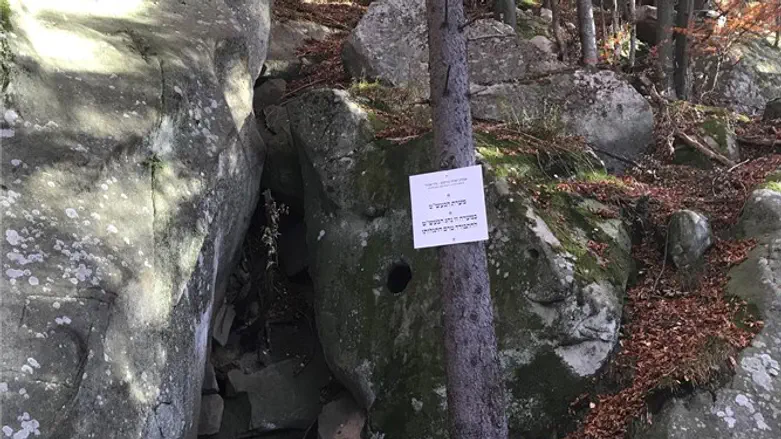
Plans are now in motion to open a path and make the cave accessible to visitors. In time, the trail may become a pilgrimage route-a kind of Hasidic Camino-for seekers who want to walk not just in the Baal Shem Tov’s footsteps, but into the landscape that shaped his soul.
Medzhybizh: A Place Between Worlds
Medzhybizh is not simply a Jewish heritage destination or a historical monument. It is a place where memory still breathes through cracked stones, prayer books, cemetery paths, and the quiet wind moving across the Ukrainian fields. The Baal Shem Tov transformed Jewish life by teaching that holiness could be found even in brokenness and simplicity. Standing beside his grave, far from the noise of the modern world, that message suddenly feels as alive as ever.
To walk here is to touch both the past and something that never quite left. You don’t come here only to see. You come to feel.
It is a place where stories live in stone, in water, in shadow. And perhaps, more than anything, it is a place to meet yourself and whatever lies beyond you.
Every Jew should come to Medzhybizh at least once in their life-not for nostalgia, but for reconnection.