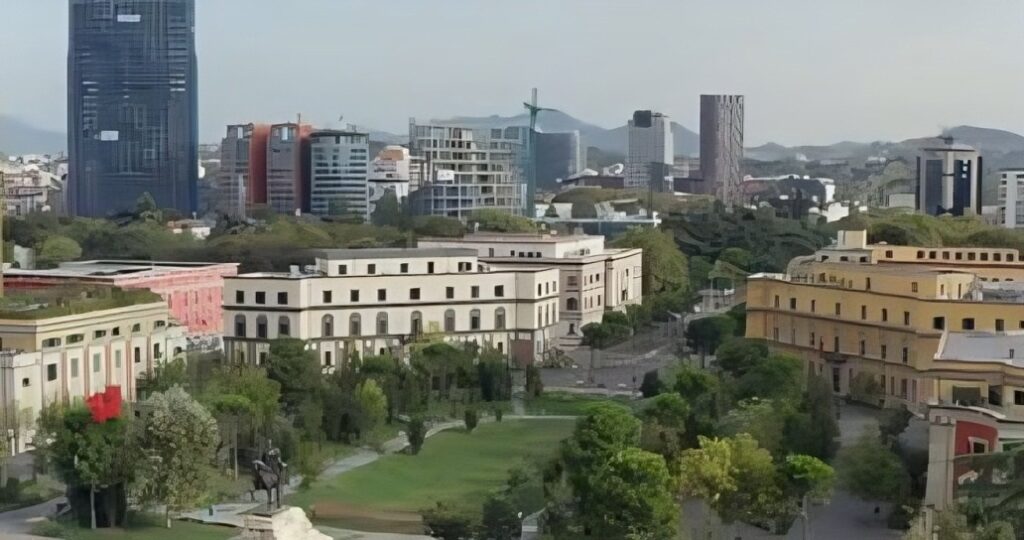
Tirana, the capital of Albania, is slowly awakening like a city that has been deeply asleep, stretching under the Balkan sun as if finally joining Europe's tourism party. It lacks well-known tourist attractions. Until recently, it was barely mentioned beyond accounts of communist rule and isolation, but now it is on many lips, including those of many Israelis flying in for a visit. What's its secret?
Albania sits in the heart of the Balkans, next to the Adriatic Sea, north of Greece, and south of Montenegro. In the local language, the country is called 'Shqipëria', meaning 'Land of the Eagles'. Poverty and hardship are visible everywhere. The economy is struggling, and there's a basic hardship among the locals, reminiscent of Israel's early years. There's an earthy smell in the air, like after a summer rain. Surrounding it is a city that looks like it was taken out of a Soviet era film reel. Gray railway buildings, wide streets without shade, and remnants of an ideology long gone. But here and there, a pink building, a bold yellow facade, like strokes of color a child insisted on painting.
It turns out the main reason for Albania's popularity is money. Everything is cheap there. It's a former Soviet state with a mentality and standard of living akin to the Soviet Union. It hasn't yet reached Western standards in services and prices like other former Eastern Bloc countries. The country that was once Europe's poorhouse now presents itself as an accessible alternative to the world of tourism. And indeed, it's very inexpensive. A fine espresso in a glass cup costs less than one Shekel in Israel, and a full fish meal on the beach will leave you both satisfied and surprised. But it's not just about the price here. Albania has something raw and primal, preserved precisely because of the lack of mass tourism. In recent years, the Albanian government has been investing in promoting tourism. They set up a booth at the international tourism fair IMTM in Tel Aviv. At the recent ITB international tourism fair in Berlin, Albania created a large complex and sponsored the entire fair. That's in Europe. But here in Israel, there's an impression that the local embassy isn't interested in Israeli tourists. There's no promotional material or prospects from the embassy, and no tourism events for travel writers at all.
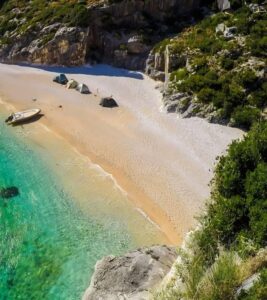
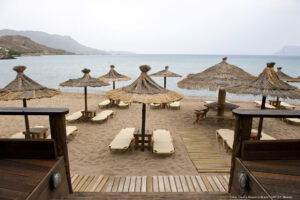
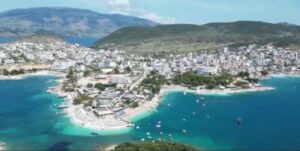
The main attraction is the beaches of the "Albanian Riviera" in the south of the country, which allow for an inexpensive beach holiday. Along the Adriatic coast, there are long beaches with soft, pleasant sand and gentle waters, occasionally interrupted by lagoons. These are particularly suitable for families with children. There are also beaches with deep blue waters right on the edge of the sea, ideal for young snorkelers and fishermen.
In the streets of Tirana, there's an atmosphere of lost time. Men with mustaches sit in small groups in cafes on plastic chairs, while women are almost absent from public view. Children kick balls in neglected corners, and the sounds of birds compete with the honking of old cars. The scent is a blend of diesel, wood smoke, and Turkish coffee poured into tiny cups.
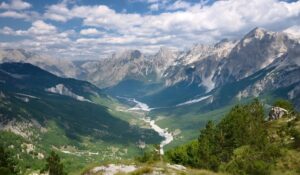
But the complete picture emerges only when you leave the city. Two-thirds of Albania is mountains. Not just mountains, but wild peaks that sometimes still bear snow in summer. Ten of these mountain ranges rise to over 2,000 meters. The road winds through small villages where farmers work fields with wooden plows and oxen. A rare sight, like stepping into a biblical painting. Wheat fields, herds of goats, women spreading laundry between ancient olive trees. In these villages, there's a silence of reverence. No billboards, no malls, just time that seems to have stood still. You can see elderly women sitting at the doorsteps, weaving diligently with their hands, while the smell of freshly baked bread spreads through the alleyways. These are villages where knives are still being sharpened by hand.
Despite the poverty, the tourist areas are well maintained. Orderly streets, green gardens, and restaurants. Sitting at a seaside restaurant, with a chilled glass of lemonade in hand and the sea breeze gently brushing your face, it’s easy to forget that this country was once cut off from the world. (These descriptions are based on YouTube videos and visitors experiences, rather than firsthand experience. Apparently because the Albanian embassy in Tel Aviv has shown little interest in allowing Israeli journalists to discover their country up close).
Albania is about one-third larger than Israel, and you can drive across the entire country within a few hours. Tirana, the capital, is considered “modern Albania,” much like Tel Aviv in Israel, while the rest of the country remains more traditional and authentic.
Albania isn’t a destination for those seeking Western luxury or shopping. It’s for those who want to discover, to smell, to feel. A step back in time into a forgotten Europe.
And amidst it all, there is a small Jewish point—warm and soothing like a light blanket on a summer night in Albania. A memory of a community that once was, stories of Holocaust rescue, and grateful glances from locals when you mention the connection.
Albania’s Jewish Point – A Menorah in the Darkness
In the narrow, winding streets of Sarandë, a southern port city where salty winds blow in from the Greek sea, there is a place where time has frozen between cracked stone pavements and the flickering shadows of palm fronds. Here, the remains of an ancient synagogue were discovered.
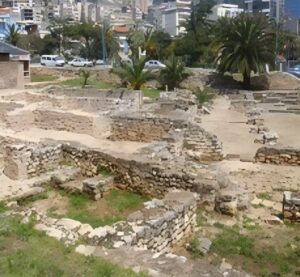
The ancient synagogue featured a beautiful mosaic floor, showing a seven-branched menorah, whispering the story of a nearly 2,000-year journey.
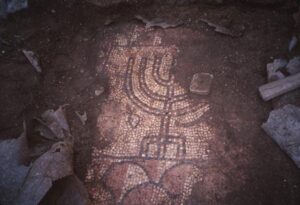
According to historian Apostol Kotani, the first Jews arrived here shortly after the destruction of the Second Temple, chained aboard Roman ships as spoils of war from ruined Jerusalem. Some of them jumped into the sea at nights, swimming toward the shore. From that ruin, a beginning was born. They built a community. They erected a synagogue. The shofar and menorah etched in stone remain as living relics of a persistent memory. Symbols of a soul that survived exile, destruction, and revival. Centuries passed like drifting autumn clouds, and only vague rumors remained of the Jews of medieval Albania. In a 13th-century responsa, there’s a question posed by Jews living in the port city of Durrës, like a dormant ember reigniting into flame. Later came the exiles from Spain and Portugal, sailing eastward on waves of sorrow, rebuilding communities, retying the threads of lost identity.
But the true moment of heroism occurred during the Holocaust. Tiny, overlooked Albania became a beacon of light. As the Nazis rose to power, wise Jews left Germany, sensing the approaching storm. The Albanian embassy in Berlin was the only one in Europe issuing entry visas to Jews, and many fled there. The Albanians stood firm against powerful tides of antisemitism, clinging to an ancient moral code called 'Besa', a word of honor that is both oath, commitment, and sacred law etched in the heart, not just in law books.
“The Albanian’s home belongs to its guests and to God,” says a local proverb. And indeed, many Albanian families opened their doors, their hearts, and especially their attics, to hide persecuted Jews. Not for money. Not for ideology. Simply because it was the right thing to do.
When the Nazis demanded names and addresses of Jews, the local authorities refused to comply. Instead, municipalities issued false identity documents to help Jews blend into the local population. And by the end of World War II, there were more Jews living in Albania than at its start. A statistic that echoes like a sweet melody of humanity in a world screaming with the dissonance of hate.
In 1941, the Grand Mufti of Jerusalem, Haj Amin al-Husseini, arrived in Albania to recruit Muslim volunteers for a Muslim division in the Nazi army.
After the war, only about 400 Jews remained in Albania. Half of them immigrated to Israel, leaving behind quiet alleys and shuttered synagogues.
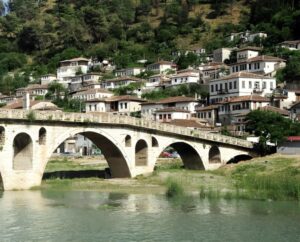
And yet, the Jewish spirit did not fade. In the enchanting city of Berat, surrounded by mountains and streams, the Solomon Museum operates today, dedicated to the history of Albanian Jewry and the rare coexistence of Jews, Christians, and Muslims over 500 years. In the museum, you’ll find not only documents and photographs but also the scent of old wood, the dust of ages, and above all, the hushed excitement of a story that hasn’t been told enough.
Today, a few hundred Jews and Israelis live in Albania. The Chabad House in Tirana is located in the city center, offering warmth, kosher food, and a sense of belonging. In 2010, Rabbi Yoel Kaplan was appointed as Albania’s Chief Rabbi, and in 2022, the "Or Yitzhak" Synagogue was established. Not a grand building, but a small candle in the darkness, illuminating the space with blessings, Shabbat songs, and the voice of a cantor who doesn’t compete with the loudspeakers of the muezzin, but rather purifies alongside them.
Like a feather landing in the eye of a storm, Albania became a refuge. A place where human dignity stood taller than mountains of hate, and where a menorah carved in stone became a moral lantern for generations.
General Sites and Scenery
In the north of the country, the landscape is Alpine and mountainous. In the south, it is Mediterranean.
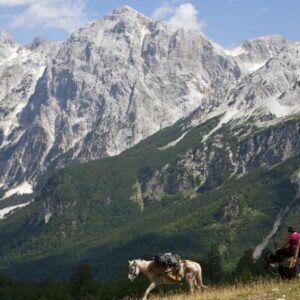
As you leave Tirana and drive northward, the asphalt grows bumpy, the scenery transforms, and the sunlight shatters on the Albanian Alps like a shard of glass striking a green drum. The sights unfold one by one: wave-like hills, herds of goats leaping across slopes, and children perched on stone fences with worn-out balls in hand, their eyes trailing every passing car as if it were sent from another world.
On the outskirts of villages, strange structures suddenly appear—"Revenge Towers", or in Albanian, "Kulla". These are stone small fortresses built under an ancient blood-feud code—a form of unwritten law in which a man suspected of accidental murder. No doors on the ground floor, no windows. Only narrow slits, like the eyes of an old woman gazing suspiciously at the world.
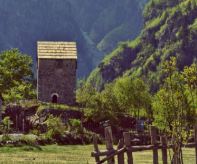
Until just a generation ago, these towers functioned as Torah-like "Arey Miklat" "cities of refuge." You can still see them in villages like Theth, Valbona, and Kukës. Some now turned into tourist attractions.
Farther south, the landscape softens. The colors shift to Mediterranean hues. Twisting olive trees, wild lavender bushes, the scent of grapevines and figs fills the air. And within all this beauty, the scar of the 20th century remains. The leader of the partisan underground fighting against the Germans and Italians was Enver Hoxha. After the war, he seized power, isolated his country, and imposed an extreme communist regime. He wrapped Albania in frozen suspicion, sealed its borders, and turned it into the “North Korea of Europe.” One radio. One newspaper. One truth. Endless fear.
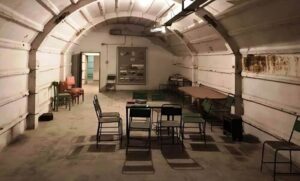
That fear gave birth to 700,000 bunkers, scattered like concrete mushrooms across the land. They stare at you from the roadsides like lidless eyes—a quiet reminder of a regime that lost its faith in humanity. Some of these bunkers have now become tourist sites.
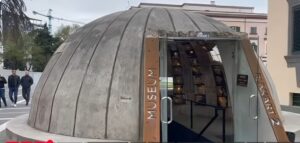
Entering one is like stepping into the mind of a man convinced the whole world is about to collapse on him.
The most beautiful site in Tirana is actually just outside the city: Mount Dajti, which rises over 1,000 meters above sea level. A cable car ascends at a meditative pace, gliding between tall pine trees. At the top, over a thousand meters high, the city below appears suddenly small, almost fragile. The ride takes more than fifteen minutes—a span of time that allows your thoughts to wander, to say goodbye to the city, and to meet the silence.
The Road to Albania's Soul From Tirana, one can head south toward the shimmering curve of the Albanian Riviera, or north to the stony highlands, where the air carries the scent of pine and forgotten battles. But in Albania, the road is not just a path—it is part of the pilgrimage. As we leave the capital, it becomes clear why Albania is still the poorest country in Europe. The smooth façade of Tirana peels away, and the asphalt gives way to pocked, broken roads. Old Mercedes sedans, relics of better times, bounce along beside horse-drawn carts. Even the public toilets speak of another time—those dreaded "squat" latrines, known locally as "bull's-eye" targets, a reminder that here, comfort is not always guaranteed.
Durrës—the country’s second-largest city, facing the Greek island of Corfu. Its beaches are gold by day, rose-tinted by dusk. But beneath the sand lies sorrow. In 2019 the earth trembled and cracked, and houses folded. And Israeli rescue teams landed almost immediately, welcomed not as diplomats or soldiers, but as brothers. A moment of raw, apolitical empathy—as if the Albanian heart instinctively recognized a kindred spirit.
Farther north, nestled along the banks of the Drin River, lies the city of Shkodër, and atop its hills, Rozafa Castle, built on a tale as heavy as the stone it rests upon. Three brothers tried to build a fortress here, but each night the walls collapsed. An old man told them: "If you wish your walls to stand, you must make a sacrifice of one of your wives." The next day, the youngest brother’s wife brought him lunch, as she always did, not knowing he had not warned her. They entombed her within the walls. And still, legend says, one breast was left exposed, so she could continue to nurse her infant son. To this day, the stone at Rozafa is always damp. From her tears? Her milk? No one knows. But the wall remembers.
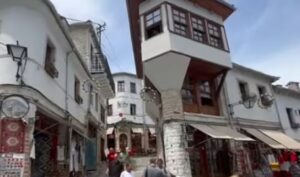
In Butrint, a town with the scent of old resistance, a bazaar spills like a woven tapestry through the alleys. Carpets dyed in pomegranate hues, spice jars that tingle the nostrils, bundles of herbs and old men with long beards and longer memories.
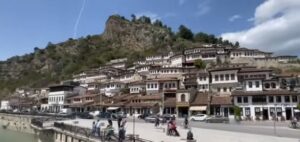
Then there is Berat, “the City of a Thousand Windows,” so whitewashed and serene it seems more dream than place. Once a Byzantine border town, its stone houses spill down the hillside like frozen doves. Here lies the tomb of Shabtai Zvi, the infamous false Jewish messiah. The streets whisper, but say little. History lingers in the silence.
In Butrint, once a thriving Greek polis, the past is not hidden. It is displayed, theatrical. We wander between temples, forums, and a stone amphitheater where the only actors now are lizards basking in the sun. The wind whistles through columns as the azure Vjosa River winds through the surrounding national park like a silk ribbon. Birds chirp where once philosophers debated.
Nearby is Gjirokastër, a town so steeped in story that even the stones seem to speak. Declared an “open-air museum” by dictator Enver Hoxha, who was born there. Its skyline is dominated by an Ottoman-era fortress. From its ramparts, Ali Pasha raised a clocktower.
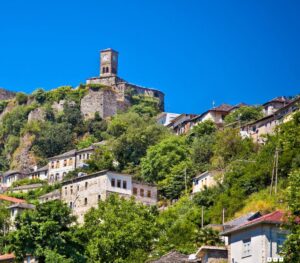
But Gjirokastër is also the home of Ismail Kadare, Albania’s national writer, who spent a lifetime dancing with dictatorship through his novels. His prose, delicate but sharp, unveils a nation scarred by totalitarianism. If you want to understand Albania—not just visit it—read one of his books before you go.
Today, about 70% of Albanians are Muslim, but the Islam here is gentle, almost whispered—more cultural than dogmatic. A fig leaf over a deep Christian past. The conversions happened after the fall of Skanderbeg, the lion of Albanian resistance. Taken as a child to serve the Ottomans, Skanderbeg rose in the sultan’s army, only to rebel, raise an army of 10,000, and push back the empire. His statue, with sword aloft, graces city squares across the country. More than a hero—he is a metaphor for defiance.
And finally, Tirana again—but under another name: Mother Teresa. The airport bears her name. A tiny woman in a blue-edged sari who walked between Calcutta’s slums and Vatican halls, with hands aged by kindness. In 1982, she tried to mediate between Israelis and Palestinians. A woman of peace, born in a land that knows both suffering and survival.