Izmir Synagogues stand hidden behind crowded market alleys, rusted iron gates, and crumbling stone walls blackened by centuries of smoke, earthquakes, fires, and forgotten prayers. In the old Jewish quarter of Izmir, where spice merchants still shout across narrow streets scented with coffee, dust, and roasted chestnuts, entire worlds survived in silence after the expulsion from Spain. Here, Marranos who escaped the Inquisition rebuilt their shattered identities beneath painted wooden ceilings and around elevated bimahs unlike any found in Ashkenazi Europe. The synagogues of Izmir are not merely houses of worship. They are architectural memories of exile, secrecy, resilience, and the longing of Sephardic Jews to remain themselves after generations spent hiding who they were.
On this sacred Sabbath, within the Torah portion of "Beshalach," we solemnly observe the yahrzeit, the anniversary of the passing, of Rabbi Chaim Palaggi from Izmir. Rabbi Chaim Palaggi held the esteemed position of "Chacham Bashi" or Chief Rabbi
The Jewish History of Izmir
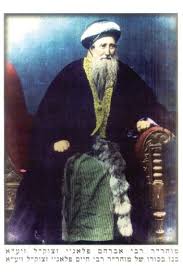
In 1855, the Turkish Sultan appointed him to lead the Jewish communities in the Ottoman Empire, granting him legal authority to control the affairs of Jewish communities across the empire, including those in the Eretz Israel. Despite his desire to ascend to Eretz Israel in his later years, the leaders of the Izmir Jewish community opposed his departure
Rabbi Chaim Palaggi passed away on the 17th of Shevat in 1868. His final resting place is in the ancient cemetery in Izmir, where a regal funeral was held, attended by representatives of local authorities and foreign dignitaries. Today, both his home and synagogue have become significant sites for Jewish tourism
The Golden Age of Izmir Jewry
Izmir once boasted a prestigious Jewish community comprising around 40,000 members, including influential rabbis who left an indelible mark on Jewish history. The city was adorned with numerous synagogues, Yeshivot, and Hebrew printing houses. Some were preserved in their full glory, some were damaged by natural disasters, and their ceilings collapsed inward. These underwent rescue and conservation operations. Some have been renovated and restored recently
Presently, only about a thousand Jews remain, and the spiritual legacy endures within renovated synagogues. The current Izmir market location was the erstwhile Jewish neighborhood
The Ancient Synagogue Quarter of Izmir
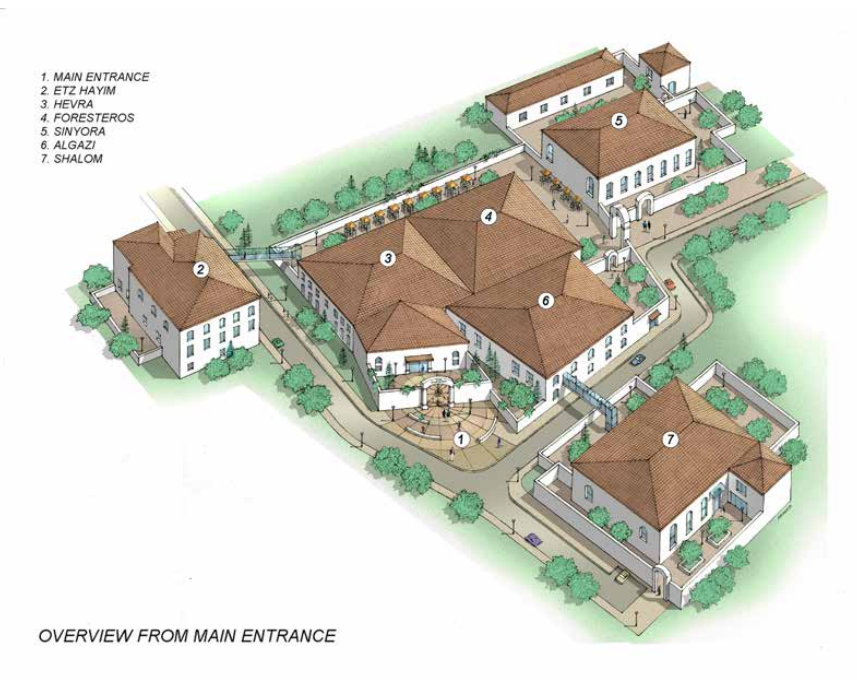
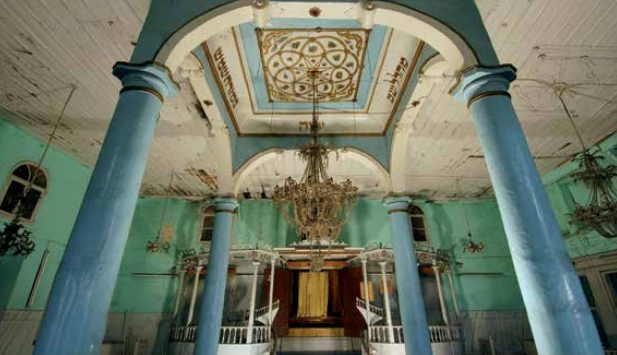
In close proximity to the market lies an area where nine ancient synagogues stand side by side, preserving a Sephardic architectural style dating back to the 16th century. Within the prayer hall, four columns stand at the center, creating a distinctive canopy. The Torah reading podium is elevated higher than usual. The Holy Arks are crafted from wood, adorned and painted in warm hues, often divided into three sections. In the center is the primary ark, flanked by smaller ones on either side capable of holding a single Torah scroll or prayer books. The seating arrangement within the prayer hall forms concentric circles around the bimah, fostering a sense of community as worshippers can see one another. This is in contrast to Ashkenazi synagogues where individuals sit in rows, akin to churches or cinemas, without facing each other
The synagogues in Izmir, once vibrant centers of Jewish life, now stand as a testament to a dwindling community and the dispersion of Jews to new neighborhoods within the city or to Israel. Some have succumbed to the forces of nature, with their structures bearing the scars of collapse
The Restoration Project of Izmir Synagogues
While the world is familiar with the historic Portuguese Synagogue in Amsterdam, the story of its "sibling" in Izmir, Turkey, remains relatively unknown. In Izmir, during the same period, a synagogue was erected for the Marranos (Anusim/Conversos) who sought refuge from Spain in Portugal, secretly maintaining their Jewish identity until they found a haven to openly practice their faith. This article unveils the "secrets" held within the ancient synagogues of Izmir. i
Yehudit Kiriaty Matalon’s Discovery
 Credit for discovering these synagogues in Izmir and on the initiative of establishing a project for their rehabilitation and preservation goes to Mrs. Yehudit Kiriaty-Matalon from Tel Aviv. "Engaged in real estate for generations, my family, led by my father who redeemed lands and partnered with Yehoshua Hankin, owned a hotel in Izmir," she explains. During a visit in 2002, she learned about the ancient synagogues and was offered the chance to explore them. It took her four years to find the time for an in-depth exploration of the synagogue complex. The initial encounter was with 'Senjora' and as she stood at the entrance, the panoramic view evoked powerful energies of holiness, bringing tears to her eyes. She recalls thinking, 'There are angels here.' i
Legal Battles to Save the Synagogues
To her surprise, the synagogues were not registered in the name of the Jewish community. Determined to prevent the burial of the magnificent heritage of Jews expelled from Spain in 1492, Mrs. Kiriaty-Matalon, who also heads the Kiryati Foundation named after her late father, Mordechai Kiriaty, decided to utilize the foundation to preserve and renovate these historical structures. The process involved navigating legal bureaucracy to register the buildings in the name of the local Jewish community. Despite facing setbacks in Turkish courts, she persevered. Even after an unfavorable Supreme Court ruling, she took the matter to the International Court of Justice in The Hague and emerged victorious
Yehudit initiated fundraising efforts for the preservation and restoration of the synagogues in Izmir, securing support from prestigious Foundation, the American Ambassadors Fund, the German government, and the IZKA Foundation in Turkey. Mr. Morris Rayna, Honorary President of the Israel-Turkey Chamber of Commerce, is also actively engaged in championing the project
From Ruins to Living Museums
Over a span of 13 years, restoration activities have been meticulously undertaken on nine ancient synagogues in Izmir. In an initial assessment, the synagogues were categorized into three groups: those in good condition, those completely ruined, and those in moderate condition requiring renovation. The initial focus was on rescue operations, reinforcing walls and roofs susceptible to collapse. Structural enhancements, utilizing steel or wooden frameworks, were employed to halt the deterioration process. Subsequently, the restoration phase commenced, and today, in the advanced stages of the project, the majority of the synagogues have already undergone renovation
Even before the completion of the renovation project, visitors can witness the transformation of the synagogues. One noteworthy example is
Etz Chaim" Synagogue"
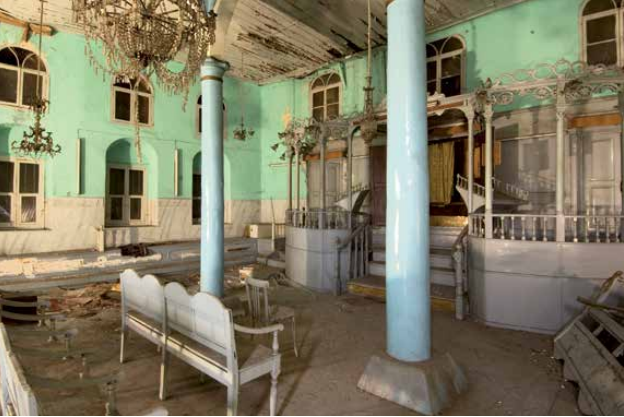
"This synagogue marked the inception of the preservation and restoration project," explains Yehudit Kiryaty. "Upon observation, I noticed that the wooden floor was curved and on the verge of collapse. Drawing from my experience, I realized that it posed a risk to the stability of the walls. Hence, urgent intervention was paramount. The roof also required immediate attention. Peel back the layers, and beneath the floor, I uncovered remnants of an ancient Romaniote synagogue." i
Uri Bar-Ner from the Kiryaty Foundation elaborates, "During our initial visit, we encountered walls ridden with mold, exhibiting a greenish tint, and showing signs of imminent collapse. To avert its destruction, we launched a fundraising campaign, securing a generous $75,000 donation from the American Ambassadors Fund for urgent rescue work. A wooden cage was ingeniously constructed within the prayer hall to prevent the walls from collapsing, although they continued to lean and, in some instances, detach from the floor." i

In the 15th century, this synagogue also welcomed Muslim worshippers. At the time of the Turkish invasion of Izmir, the city had no mosques, only churches and synagogues. Seeking a place free of Christian icons and statues, the Turks approached the Jewish community, seeking permission to pray in the synagogue temporarily until mosques could be erected
Emergency Rescue Operations
When natural disasters led to the collapse of the original synagogue, a new one named 'Etz Chaim' was constructed on the same site in the 17th century, preserving its historical name. The restoration efforts by the Kiryati Foundation uncovered stunning wall paintings and revealed ceiling decorations adorned with verses
In London, the Jewish Heritage Foundation initiated a project to map Jewish heritage sites in Europe' led by Professor Vladimir Levin, head of the Department of Jewish Art at the Hebrew University of Jerusalem. Mr. Michael Mile, the foundation's director associated with the Prince of Wales (recently crowned as the King of England), played a key role. i
The foundation highlighted 16 prominent Jewish heritage sites in Europe, including the 'Etz Chaim' Synagogue in Izmir. Michael Mile, anticipating the potential of the synagogue preservation project in Izmir, initiated contacts and government support for the project grew after the British Parliament's declaration became known in Turkey
Synagogues in good condition
The Lady" (Gevret/Senjora) Synagogue"
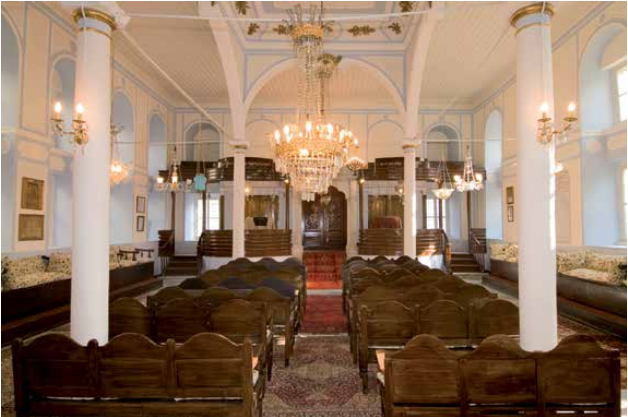
Built in the 17th century, this synagogue is better preserved and stands out for its aesthetic beauty. The interior and exterior are painted in a bright white hue, illuminated by large, expensive leaded windows. Accessible through an iron gate, a charming garden leads to the women's gallery, while men use a separate entrance. The spacious women's gallery hints at the synagogue's feminist context
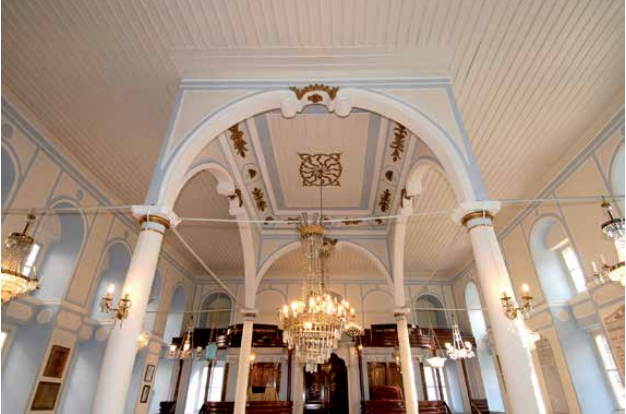
Named after Dona Gracia, the wealthiest woman in 16th-century Europe, who outwardly lived as a Christian but secretly embraced Judaism. She dedicated most of her life to rescuing Marranos Jews, she lived as a Christian on the outside, but secretly as a Jew. Only when she came to the Ottoman Empire at the age of 40 she publicly return to Judaism. She was very active in helping the Maranos and rescued many of them in her ships
Algazi" Synagogue"
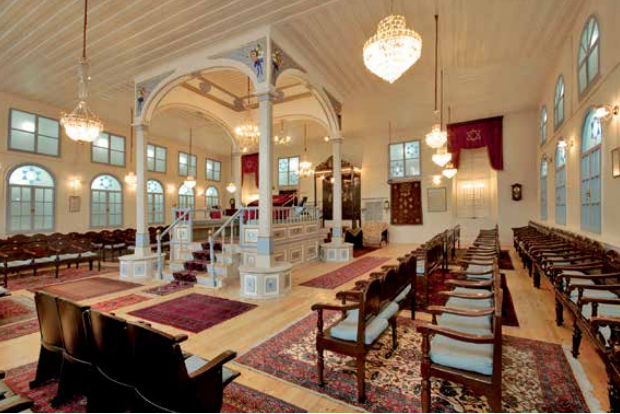
Constructed in 1724 by the renowned Algazi family, this synagogue boasts large windows uncommon for its time. Despite suffering damage and natural disasters, multiple renovations funded by the wealthy family have restored its full beauty and glory. Thanks to the Kiryaty Foundation It was restored again lately
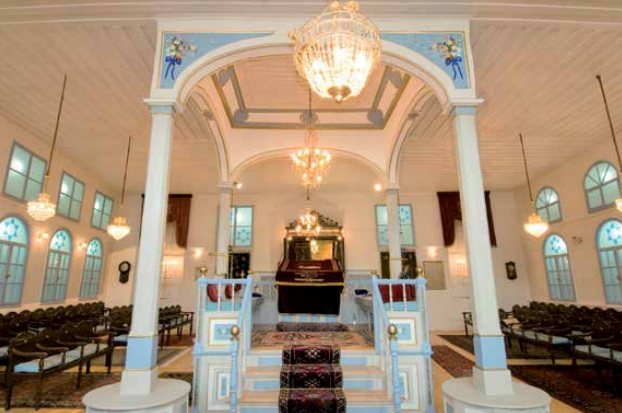
Unlike the women's gallery in the "Gevret" Synagogue, the Algazi Synagogue lacks a women's gallery at all. According to local folklore, about 150 years ago, during Yom Kippur prayers, it was discovered that the cantor was winking at one of the praying women (not his wife) in the women's gallery. To prevent such incidents, they demolished the inner balcony where the women's gallery was located, and it remains unchanged to this day
Synagogue "Shalom" Sephardi
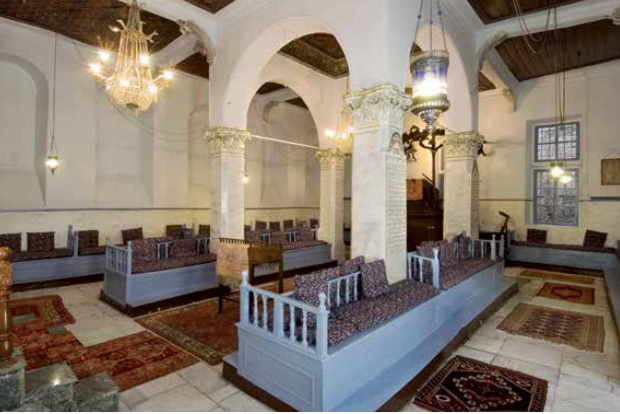
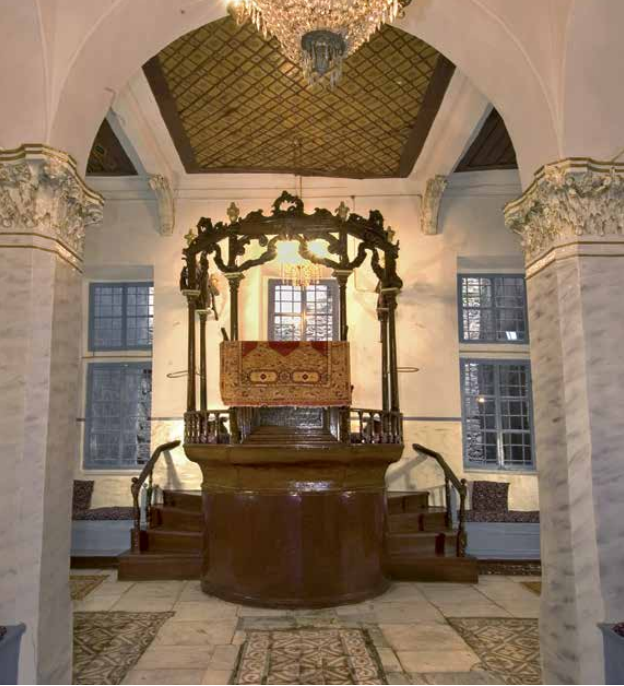
Constructed in the early 17th century, Synagogue "Shalom" is one of Izmir's earliest synagogues, boasting unique and exquisite furniture. The Holy Ark's doors and panels are meticulously crafted from carved wood. Unconventionally, the Torah reading podium is situated on the western wall, facing the Holy Ark, deviating from the customary center placement in the prayer hall. The podium's circular design, resembling a ship's hull, likely pays homage to the vessels that brought Spanish Marranos expellees to Izmir. The ceiling, a masterpiece of carved wood, is adorned with paintings reflecting the 18th-century Turkish style
In 1841, as a devastating fire swept through Izmir, an extraordinary event occurred-the flames miraculously ceased precisely at the synagogue's entrance. This divine intervention is commemorated on an ancient plaque adorning the entrance wall
Within the courtyard lies an additional hall that once housed the "Shalom Ashkenazi Synagogue." In the 19th century, a wave of Jewish migrants, escaping Russian pogroms, sought to preserve their distinct prayer traditions. Consequently, they erected this synagogue dedicated to their specific needs
Bikur Cholim" Synagogue"
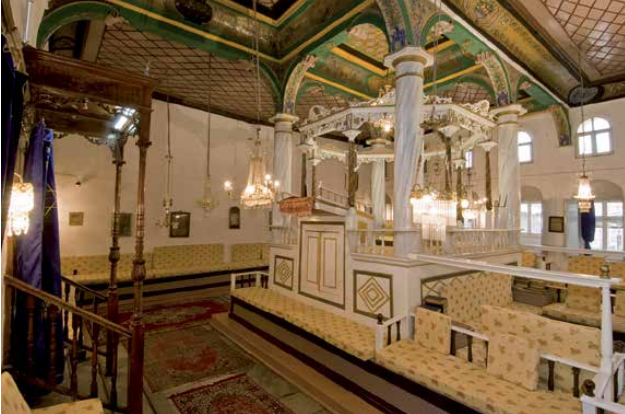
Founded in 1724 by Shlomo De Chaves, who generously donated the building, the Bikur Cholim Synagogue stands out as one of the city's most beautiful. Its unique ceiling features intricate floral and geometric designs, contributing to the synagogue's distinctive character
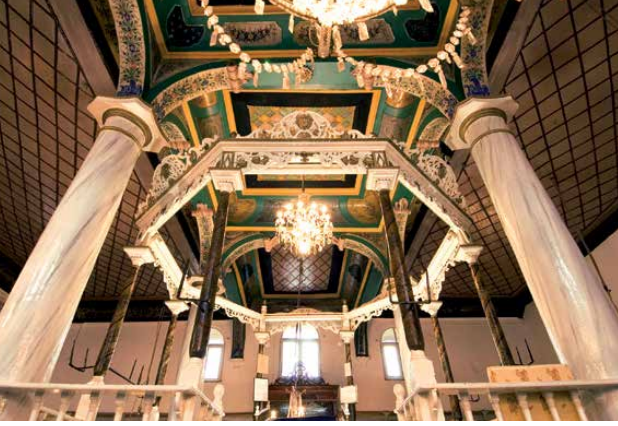
During a cholera epidemic in 1770, the synagogue temporarily served as a hospital, earning it the name 'Bikur Cholim' (Hospital Visitation). Even after returning to its original purpose post-epidemic, the name persisted. Enduring two fires in the 18th century, the descendants of De Chaves faithfully renovated the synagogue on both occasions
During renovations led by the Kiryati Foundation, an intriguing discovery was made-a prison concealed beneath the prayer hall in the basement. The authority granted by the Sultan to Chacham Bashi in Izmir included judicial and punitive powers, leading to the construction of prison cells for Jewish individuals who violated Torah laws and community regulations
Completely Ruined Synagogues
The Portuguese Synagogue
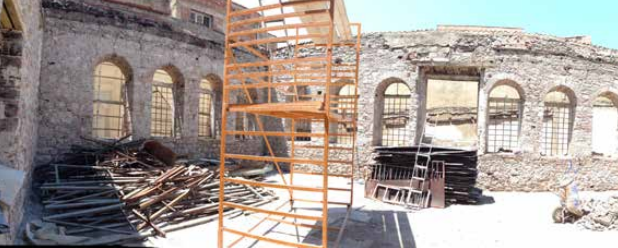
Izmir welcomed Marranos Jewish refugees who, having lived outwardly as Christians in Spain and Portugal, sought refuge from the Inquisition, where they practiced Christianity publicly. Upon settling in Izmir, they returned to their Jewish roots. However, their familiarity with Halakha and Torah was limited, especially in matters of kashrut and Sabbath observance when compared to the local Jewish population. This divergence led to tensions within the community, prompting the Portuguese Marranos to establish a distinct community, culminating in the construction of the Portugal Synagogue. Built around the same period as the Portuguese Synagogue in Amsterdam by similar-minded Jews, this synagogue gained global recognition for allowing women to participate in Torah readings during Sabbaths
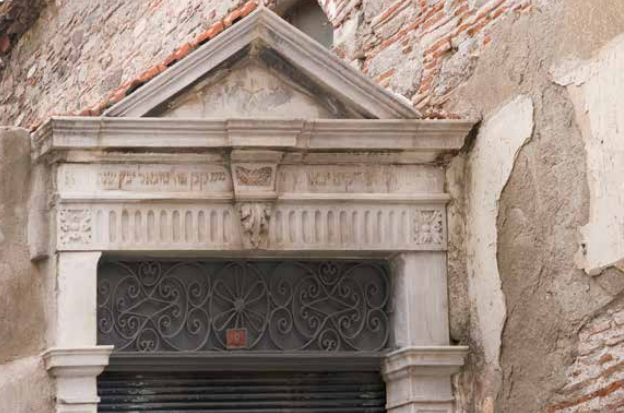
The rabbi of this synagogue was Sabbatay Zevi, who later proclaimed himself the Messiah. This is where the Messianic Sabbatarian movement that exists to this day in Turkey emerged as a foreign branch of Judaism that caused damage to it attracted many during its time and gave its signals in European Jewish communities. In front of the synagogue, Shabtai Zvi's opponents staged riots and demonstrations against him, boycotted him, and finally even expelled him from Izmir
Although the original synagogue, which had succumbed to fire many years ago, only preserves three walls and an impressive gate crafted from marble columns, it has undergone substantial renovations. Of the original synagogue, which burned down many years ago, three walls and an impressive gate made of marble columns remain. It was leased several years ago to a financial company with the possibility for the Jewish community to visit and use it when necessary, the lessees thoroughly renovated it, and restored the ancient building
Beth Hillel" Synagogue"
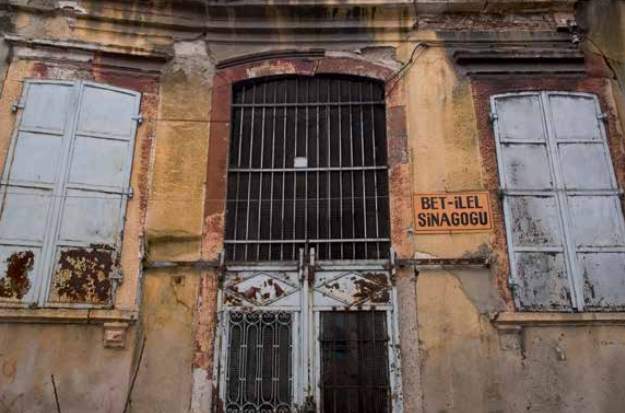
The Palaggi family produced prominent rabbis and Poskim in the Jewish world. Rabbi Haim Palaggi, appointed by the Sultan as the "Chacham Bashi," the chief rabbi of the entire Ottoman Empire, hailed from this esteemed lineage. In honor of this family's legacy, one of its members dedicated their residence to serve as a synagogue, naming it "Beth Hillel" after a Jewish patron from Romania who financially supported the printing of books authored by Rabbi Palaggi and his forebears
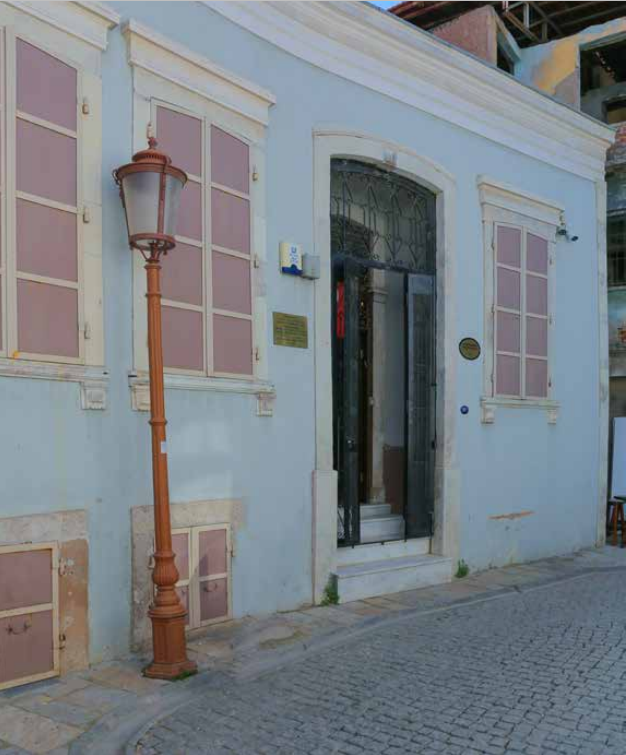
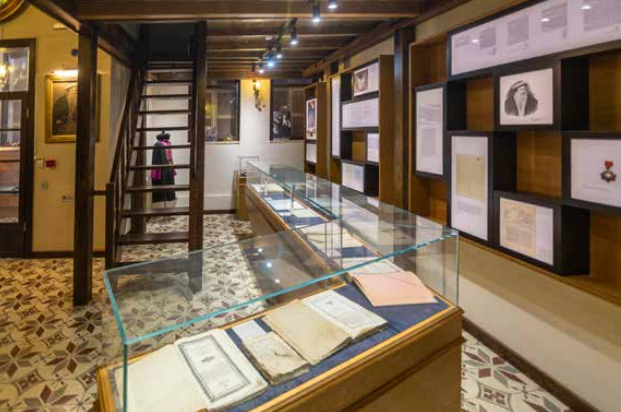
Over the years, the synagogue fell into disrepair but has recently undergone restoration by the Izmir municipality. Now functioning as a small museum, it pays tribute to the life of Rabbi Haim Palaggi, exhibiting 70 responsa (Shu"t) books authored by the esteemed Chacham Bashi
Hevra" Synagogue"
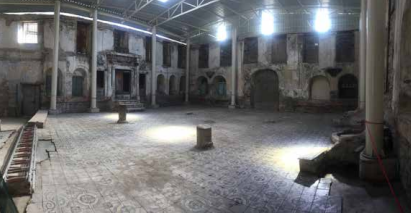
Constructed in the 17th century and also recognized as the "Talmud Torah" Synagogue, this historic site was initially led by Rabbi Yosef Escape. Unfortunately, over half a century ago, the ceiling and roof collapsed, while the walls and furnishings endured damage from the elements
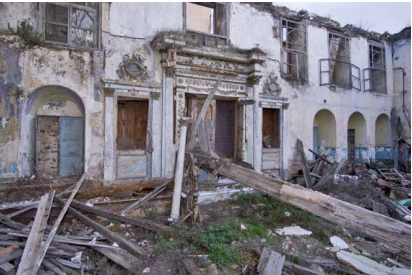
Thanks to the support of the German Foreign Ministry, a new roof and reinforced steel columns were erected to safeguard the structure against further deterioration. Amid the ruins, traces of the Holy Ark and podium endure, attesting to its former grandeur
Foresters Kadosh Synagogue
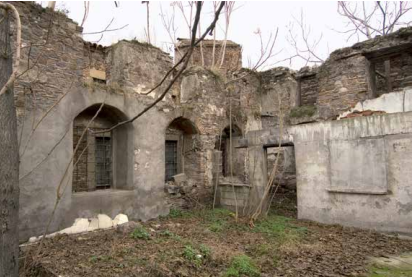
Erected in the 17th century, this synagogue goes by two names - 'Kadosh' (Holy) in Hebrew and 'Forestros' in Spanish, signifying 'strangers' or 'guests.' Indications suggest that this synagogue catered to newcomers in Izmir rather than established families. Having succumbed to fire many years ago, the vacant space left behind has been repurposed as a poultry and cattle slaughterhouse. Unfortunately, no plans or photographs documenting the site's original state remain, but ongoing excavations are shedding light on its history
Can’t see the forest for the trees
Beneath the visible structures of the synagogues lies a deeper significance. While the physical edifices serve as "the container," attention must also be directed towards "what's inside" - the spiritual essence. The synagogues in Izmir transcend local interest; they hold spiritual importance for each individual and the broader Jewish history. Following the expulsion from Spain, Sultan Bayezid II welcomed Jews into the Ottoman Empire, granting them privileges and respect. The Sultan even issued a firman (presidential decree) instructing to treat Jews with respect, allowing them to buy houses anywhere, establish synagogues and businesses as they wish, and not to harm them. Izmir and Saloniki became havens for Jews, and they enjoyed a unique status not extended to Jews in Christian Europe
Mrs. Yehudit Kiriaty-Matalon envisions not only learning from the past, but shaping the future. Her vision extends to establishing a Jewish museum in Izmir, dedicated to the distinctive Sephardic Jewish heritage of the city and Turkish Jewry. She believes that highlighting the historical collaboration among Jews, Muslims, and Christians in Izmir can contribute to understanding and fostering peace between Jews and Muslims
Yehudit Kiryaty shares: "The expulsion from Spain in the 15th century was a traumatic event in Jewish history, comparable to the Holocaust in the 20th century. While there are numerous museums for the Holocaust, there are none dedicated to the expulsion from Spain and the lives of Jews and Marranos. My vision is establishing such a museum in Izmir because here, the original tradition of the expellees from Spain is preserved." Mrs. Kiryati emphasizes the untold history of Izmir, highlighting the unknown freedom granted to Jews and their harmonious coexistence with Muslims. She sees the museum as a means to promote peace by showcasing historical examples of peaceful coexistence
In the Ottoman Empire, Jews thrived alongside Muslims and other minorities. Their integration into diverse fields such as trade, medicine, and even port operations was emblematic of this harmonious existence. The vision extends beyond diplomatic ties, emphasizing the potential for collaboration between Turkish and Israeli peoples, transcending religious differences
Izmir stands as one of the last bastions where this unique and authentic culture endures. With the impending completion of the renovation project, the synagogue complex is poised to transform into a living museum, offering a window into Sephardic Jewish culture during the "Golden Age." i
Walking through the synagogues of Izmir today feels strangely similar to opening an old prayer book abandoned on a shelf for centuries. Dust rises from the pages, fragments are missing, entire chapters have faded, yet the soul of the text somehow survives. The synagogues stand half suspended between ruin and rebirth, between silence and memory. In their cracked walls linger the voices of rabbis, merchants, Marranos, mystics, widows, and refugees who once believed they had finally found shelter after exile. Perhaps that is why these buildings matter far beyond architecture. They remind us that civilizations do not disappear all at once. First the prayers fade, then the language, then the crowds. Yet sometimes, if someone cares enough to preserve a doorway, a ceiling, or even a single wooden ark, history finds a way to breathe again.
Pictures: Kiryati foundation, Uri Bar-Ner, Jacob Maor