
The Pnei Yehoshua grave in Frankfurt Jewish Cemetery continues to draw rabbis, Torah scholars and Jewish heritage travelers from around the world. Hidden behind stone walls in one of Germany’s oldest Jewish cemeteries, the memorial site connects visitors not only to the legacy of Rabbi Yehoshua Falk, author of the celebrated “Pnei Yehoshua,” but also to centuries of Ashkenazi Jewish scholarship, destruction and remembrance.
Who Was the Pnei Yehoshua?
Today marks the Yahrzeit anniversary of the passing of Rabbi Yehoshua Falk, known as "Pney Yehoshua", a revered figure among the Achronim. Frankfurt became a focal point of commemoration during this time, drawing visitors from London, Antwerp, and Israel through special flights to honor his legacy
While Pnei Yehoshua holds a revered place among Torah scholars, it's valuable for a broader audience to acknowledge his significance. His four-volume work is a cornerstone for scholars studying Gemara in the profound "Amkuṭ" (Deeply) method, making it an indispensable resource in yeshivas such as those affiliated with Bnei Akiva and 'Hesder' yeshivot
Descended from Rashi, Pnei Yehoshua skillfully elucidated Talmudic intricacies in the vein of his predecessors, Rashi and the Baaley Ha-Tosfot. During my yeshiva studies, when grappling with complexities in Tosfot, Pnei Yehoshua's lucid explanations were instrumental in clarifying those challenges for me
The Torah giant whose writings shaped generations of yeshiva study
The 'Saraf of Kotzk,' Rabbi Menachem Mendel Morgenstern, praised Pnei Yehoshua's dedication, noting that before composing his magnum opus, he meticulously studied the entire Talmud 36 times
Beyond his renowned work, Rabbi Yehoshua Falk was a chief rabbi in significant Jewish communities like Levov, Berlin, and Frankfurt. He passed away in Worms on the 14th of Shevat, 1756, and was laid to rest in the Jewish cemetery of Frankfurt
Even in contemporary times, Pney Yehoshua's teachings resonate in ongoing debates in Israel, such as the "grandchild clause" in the Law of Return. His writings on conversion matters and navigating uncertain identities continue to be cited in modern judgments, notably in cases involving Ethiopians seeking recognition for their conversions influenced by the actions of certain rabbis
The Lost Grave in Frankfurt Jewish Cemetery
Despite the lasting impact of Pnei Yehoshua's legacy, his final resting place remains a mystery. While his monument stands in the old Jewish cemetery of Frankfurt, the exact location of his burial was lost during the tumult of World War II. The cemetery, including Pnei Yehoshua's monument, suffered damage due to bombings, leaving his precise grave site unknown. Nonetheless, visitors still pay homage to his monument, honoring his enduring influence and teachings
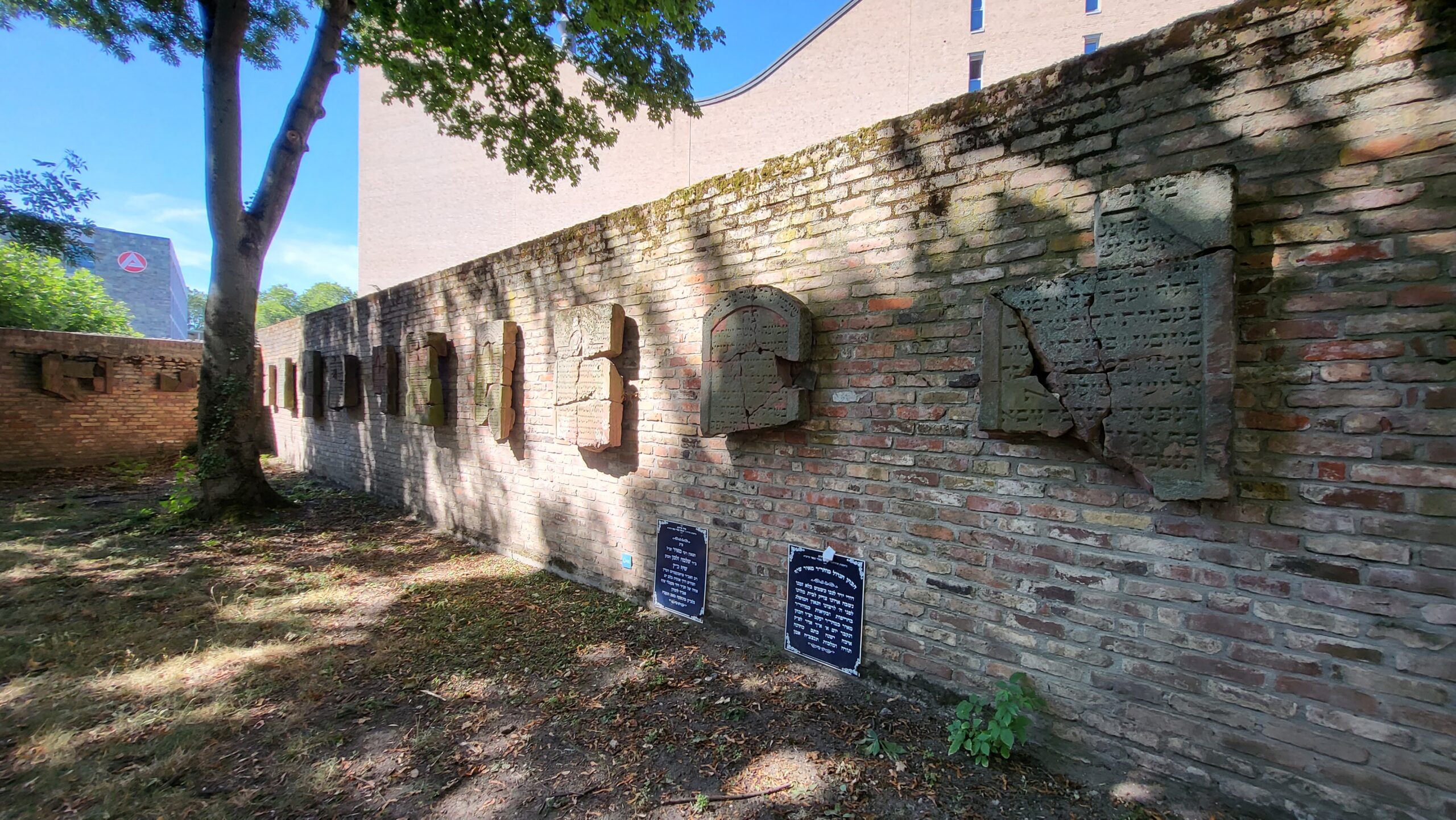
In this week's Torah portion, we encounter the passage recounting Moses' pledge to bring Joseph's remains along when leaving Egypt: "And Moses took the bones of Joseph with him, for he had placed the children of Israel under oath, saying, 'God will surely take notice of you, and you shall bring up my bones from here with you" (Exodus 13:19). Inspired by this verse, the Jewish community in Frankfurt embarked on a project in the 1960s to collect scattered bones and fragments of monuments, aiming to restore the desecrated Jewish cemetery. They meticulously reassembled complete gravestones, arranging them in neat, closely aligned rows on the eastern side of the cemetery, positioned to the left of the entrance gate, though not necessarily in their original locations
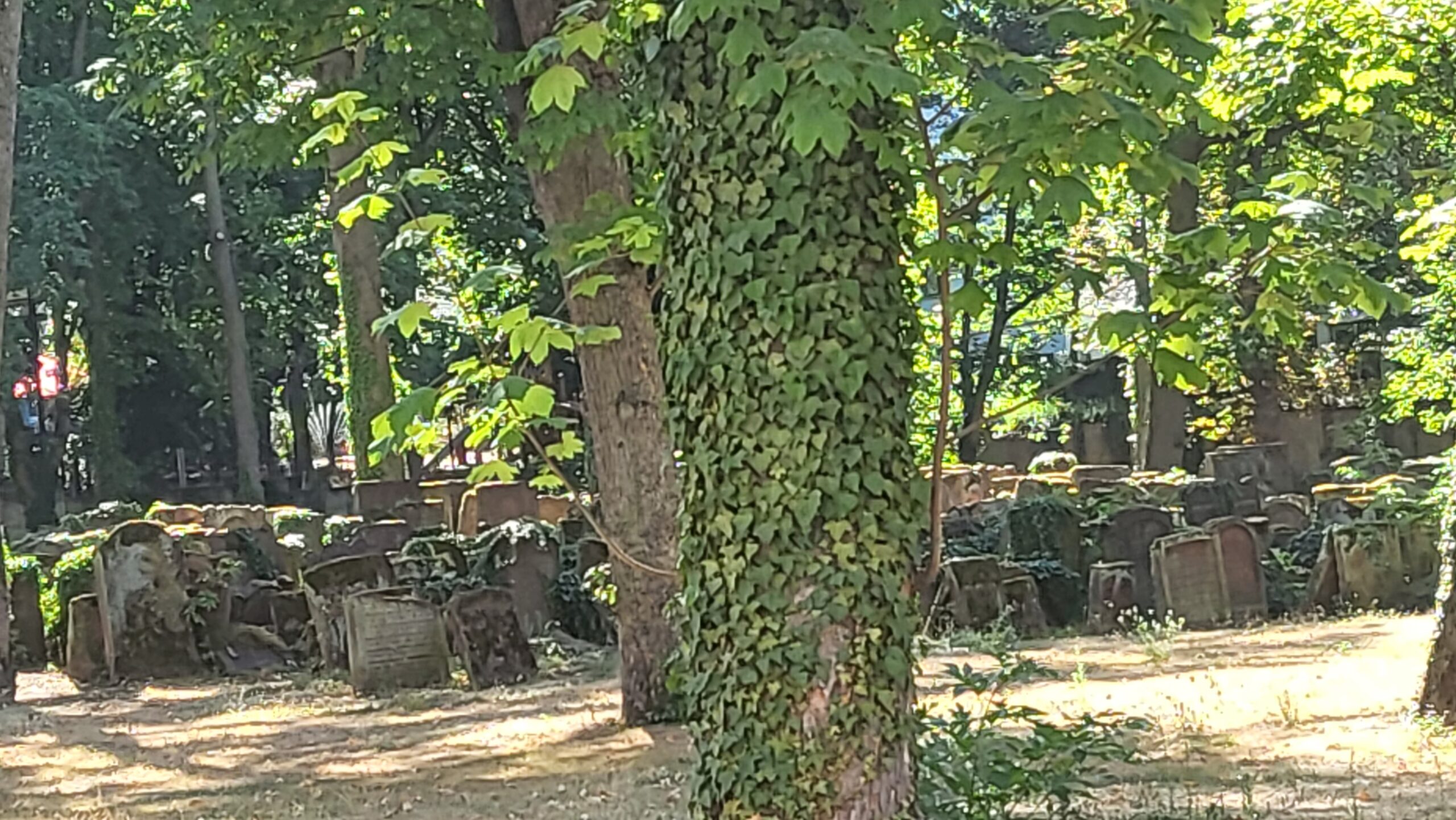
Additional gravestones found their place along the inner side of a concrete wall. In the heart of the cemetery, small heaps of fragmented gravestones hint at potential future endeavors to reconstruct these pieces into their original forms, creating a mosaic of remembrance

Other Famous Rabbis Buried Near the Pnei Yehoshua
Towards the southwest side, approximately 50 meters from the gate, a cluster of significant monuments stands. Among them, the gravestone of Pnei Yehoshua holds paramount importance. Adjacent to it rests the grave marker of Rabbi Pinchas Halevi Horowitz, known as 'Ba'al Hafela'ah', who served as the rabbi of Frankfurt for 33 years from 1771 until his passing in 1805, finding his final resting place within this hallowed ground
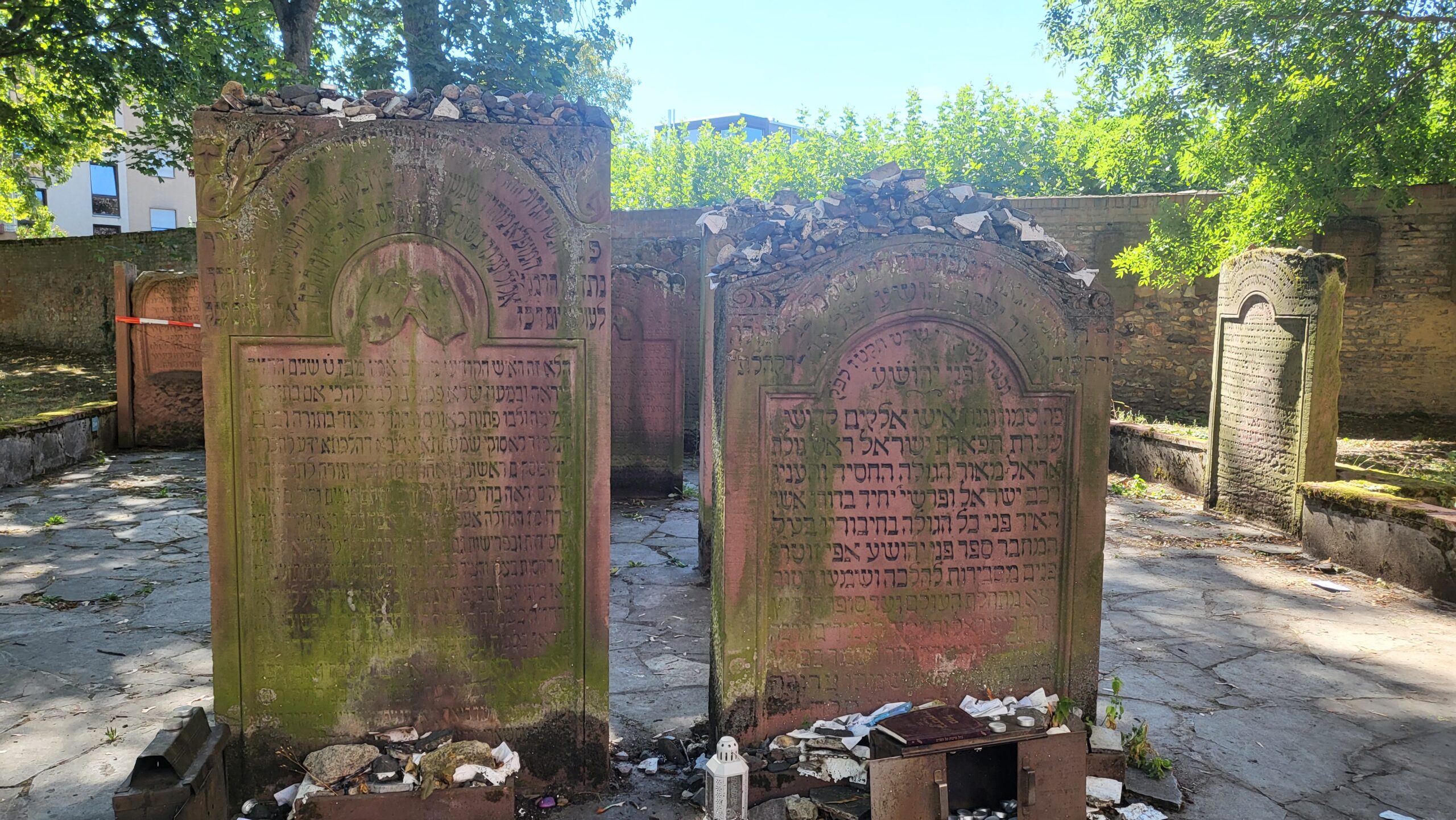
Rabbi Shneur Zalman of Liadi, the founder of Chabad, corresponded with him in a letter upon his release from prison in Petersburg. In the letter, he humbly expressed his admiration and awe for Rabbi Pinchas Horowitz's greatness, seeking his prayers and referring to him as "the light of Israel and His devoted servant, the eminent Gaon of the generation." Rabbi Shneur Zalman cherished the time he spent in the Maggid's congregation, where he received blessings every Sabbath during the Maggid's lifetime
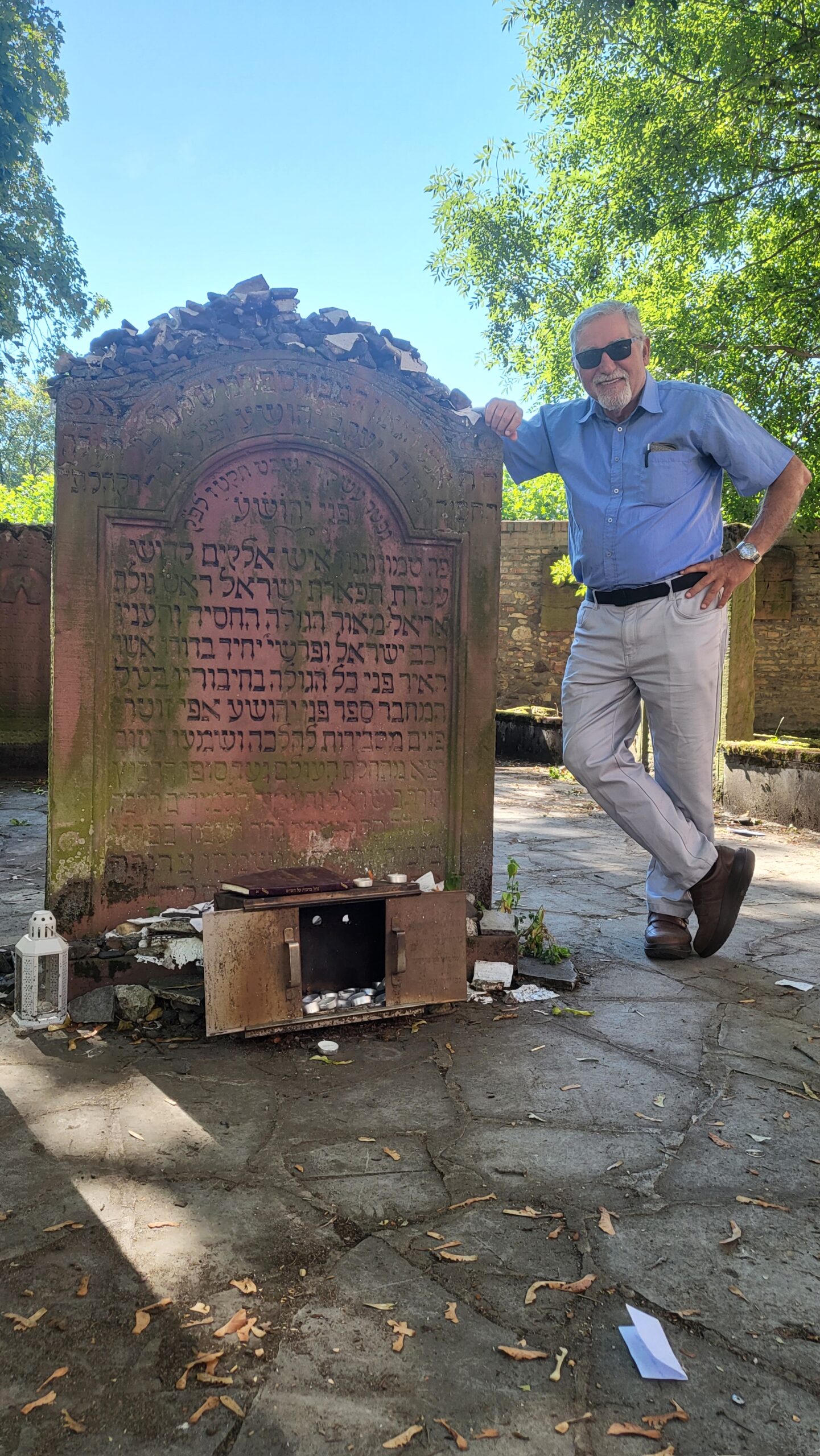
Beside Pnei Yehoshua's gravestone stands the monument of Rabbi Pinchas Halevi Horowitz, Ba'al Hafla'ah. During his youth, he studied under the Gaon of Vilna, a fervent adversary of Chassidut. However, he later embraced Chassidic teachings, becoming a student of the Maggid of Mezritch
In that corner of the righteous section rests the unassuming yet significant monument of Rabbi Meir Anshel Rothschild, the patriarch who founded the illustrious dynasty of wealth

Adjacent to his humble resting place, approximately ten more monuments honor revered rabbis and leaders. Noteworthy figures interred here include:
Rabbi Nathan Adler, esteemed teacher of the Hatam Sofer
Rabbi Avraham Broda, acclaimed author of 'Hiddushey Geonim', 'Hiddushey Halakhot', 'Eshel Avraham' and more
Rabbi Meir ben Yaakov Hacohen Schiff, is renowned for 'Hiddushey Maharam Schiff.'
Rabbi Zvi Hirsch Levi Horowitz, revered author of 'Mahaneh Levi.'
Rabbi Nathan Meisel of Frankfurt, known for 'Binyan Shlomo.'
Rabbi Avraham Avish of Frankfurt
About 30 meters away stands the restored tombstone of Rebbetzin Rizl Sofer, mother of the Hatam Sofer. Originally shattered by explosions, devoted students meticulously reconstructed an identical tombstone based on preserved photographs
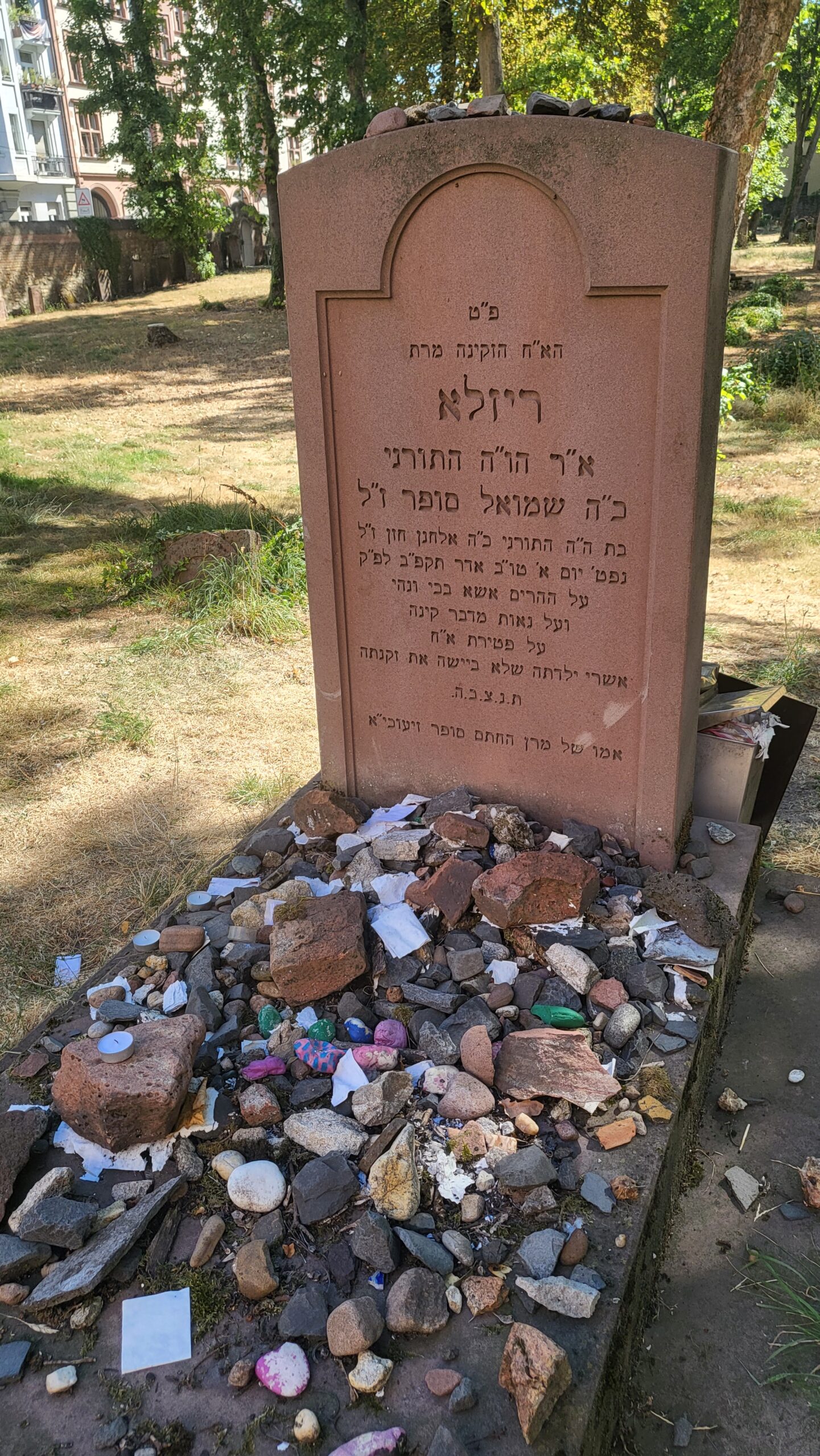
Though the exact original location remains elusive, a stone plaque was affixed at its base bearing the inscription 'Her burial place is maintained in the vicinity of this place.' Rebbetzin Rizl's tombstone draws numerous visitors, especially unmarried women and those seeking matches, evident from the abundance of Yiddish notes adorning it

Visiting Frankfurt’s Historic Jewish Cemetery Today
The cemetery is surrounded by a stone wall. As mentioned, on its inner side, there are tombstones and fragments of tombstones
Holocaust memorials and practical visitor information
On its outer side facing the street, 1,300 metal cubes measuring 6 by 4 cm each bear the names of Jews from Frankfurt who perished in the Holocaust
Among these commemorations are cubes dedicated to Anne Frank and her mother, Frankfurt natives deported from Amsterdam

Many travelers, including Jewish visitors en route to the Black Forest or touring the Rhine cities, as well as Israeli businesspeople attending the International Trade Fair Center in Frankfurt, find merit in dedicating a few hours to visit the Jewish cemetery. Located at Battonnstraße 47, the gate welcomes visitors from 11 am to 2 pm. Outside these hours, the key can be obtained from the nearby Jewish Museum office. For coordination, contact: +49 69 21270790 or visit the office at the new cemetery, Eckenheimer Landstr. 238
The Pnei Yehoshua grave in Frankfurt remains one of the most moving Jewish heritage sites in Germany. Even without certainty about the exact burial place, the cemetery preserves something deeper than stone or marble: the memory of generations of Torah scholarship, exile, destruction and spiritual endurance that still echoes through the narrow paths of Frankfurt’s old Jewish quarter.
FAQ
Where is the Pnei Yehoshua buried?
Rabbi Yehoshua Falk was buried in the old Jewish cemetery in Frankfurt, Germany. However, the precise location of his grave was lost after World War II destruction and bombings.
Why is the Pnei Yehoshua important in Jewish learning?
The Pnei Yehoshua is considered one of the most influential commentators on the Talmud. His writings are still studied intensively in yeshivot around the world.
Can visitors enter the old Jewish cemetery in Frankfurt?
Yes. Visitors can access the cemetery during limited daytime hours or coordinate entry through the nearby Jewish Museum office.
Which other famous rabbis are buried in Frankfurt’s old Jewish cemetery?
The cemetery contains memorials and graves connected to major rabbinic figures including the Baal Hafla’ah, Rabbi Nathan Adler and members of the Hatam Sofer family.
What happened to the cemetery during World War II?
Parts of the cemetery were damaged during bombings, and many gravestones were shattered or displaced. Later restoration efforts attempted to reconstruct and preserve the site.
Why do Jewish heritage travelers visit the Pnei Yehoshua grave in Frankfurt?
Many visitors come to connect with the legacy of Ashkenazi Torah scholarship and to experience one of Europe’s most historically significant Jewish cemeteries.