
Why Israelis Are Traveling to Baku
Baku Azerbaijan rises from the shores of the Caspian Sea with a skyline unlike anywhere else in the former Soviet world. The Azerbaijani capital blends futuristic architecture, medieval stone alleys, oil wealth, Formula 1 speed, and a surprisingly visible Jewish presence. For Israeli travelers, Baku offers far more than a convenient stopover to Asia. It is a city where the Flame Towers dominate the horizon, synagogues operate openly, and East and West meet in a rhythm entirely their own.
Three glass-clad towers shaped like flickering flames soar 39 stories high. Their curves are soft, almost human. Even at rest, they seem to move. Like an ancient bonfire someone forgot to extinguish.
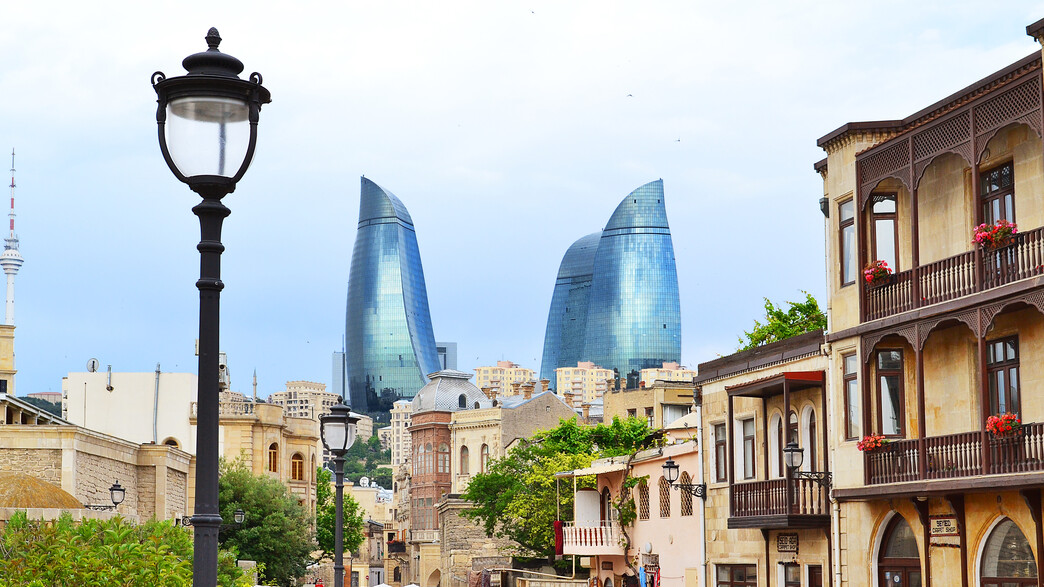
As night falls, Baku changes its mood. Darkness here does not close in; it opens up. The Flame Towers turn into a living screen: technicolor flames ripple across their surfaces, Azerbaijani flags billow in an imagined wind, and bands of blue, red, and green slide into one another like a secular prayer. This is not merely a charming light show. It is a spectacle. Mesmerizing, theatrical, impossible to ignore.
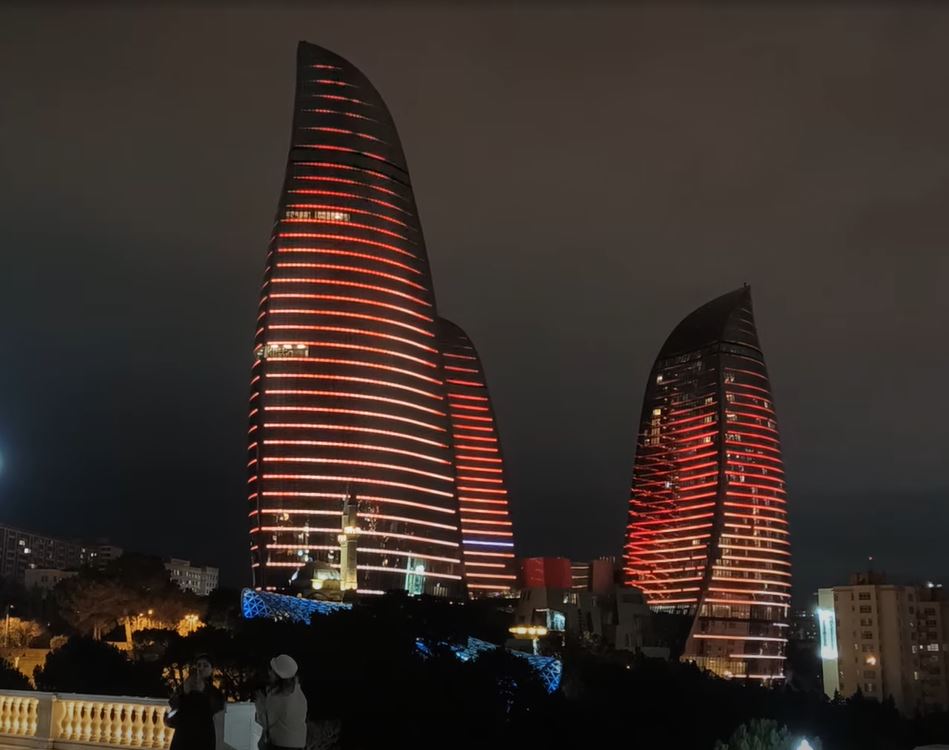
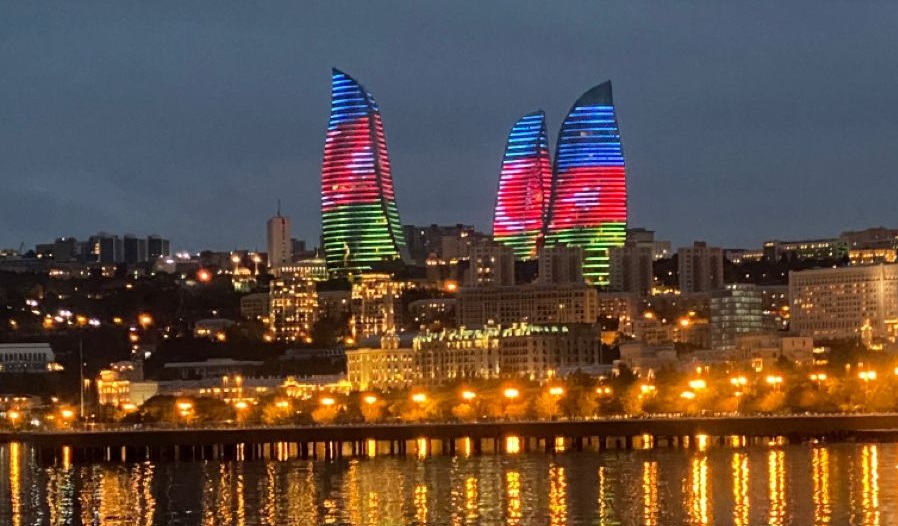
Fire was not chosen as a symbol by chance. The very name Azerbaijan means “Land of Fire.” The country’s economy is based on oil and energy. From here, Israel imports much of the fuel that powers our cars. When the war in Ukraine disrupted global wheat supplies, Israel shared advanced agricultural knowledge with Azerbaijan, in exchange for access to part of the new harvests. Today, a significant portion of Israel’s wheat also comes from Azerbaijani fields. Ancient metaphors of seed and soil quietly find their way into modern geopolitics.
In recent years, Baku has become a favorite destination for Israeli travelers. It's a relatively short flight distance. Just three and a half hours, and at prices lower than in many other European countries. From the beginning of 2025 until the end of November, about 26,000 Israelis visited Baku, an increase of nearly 130% compared to the same period last year.
AZAL and Baku as a Gateway to Asia
Yet these numbers tell only part of the story. The statistics count only Israelis who passed through border control at Baku’s international airport. In reality, many more Israelis pass through the city in transit, continuing onward on connecting flights without ever stamping their passports. Azerbaijan Airlines (AZAL) has positioned Baku as a major hub to the Far East, offering remarkably affordable fares with a stopover in the city. Demand has grown so rapidly that the airline now operates two daily flights on the Israel-Baku route, and soon they will increase to three daily flights, totaling 21 flights per week.
Quite a few Israelis choose to turn this technical stop into a small adventure, stepping out of the terminal and into the city. My recommendation: don’t rush onward. Extend the stopover. Even a single day or two can reveal a city of unexpected depth, contrasts, and quiet charm. Here are a few ideas for exploring Baku if you decide to linger.
Walking Along the Caspian Boulevard
Begin along the Boulevard, the graceful promenade tracing the edge of the Caspian Sea. Scattered along its length are attractions such as the Swan Fountain, whose long, elegant necks echo the curves of the Flame Towers above. At the southern end lies Mini Venice, a small amusement park where gondolas glide through artificial canals. A touch of kitsch, perhaps, but undeniably charming.
The Carpet Museum and Jewish Azerbaijani Art
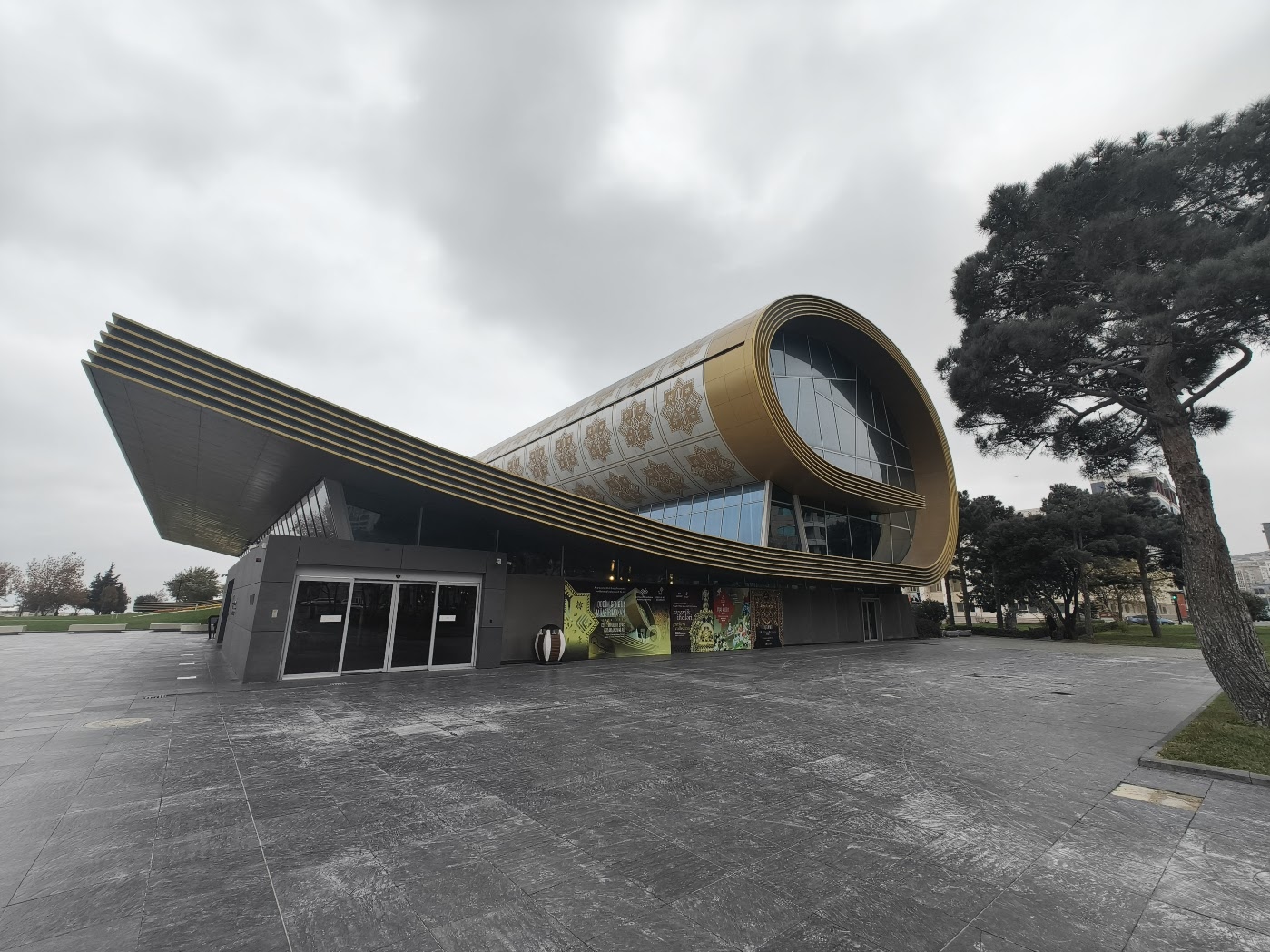
Standing proudly on the promenade is the Carpet Museum, housed in a building shaped like a rolled carpet, as if a story were moments away from being unfurled. In Azerbaijan, carpet weaving is not merely a craft; it is a language passed from mother to daughter, from grandmother to granddaughter. The museum holds more than 6,000 carpets dating from the 17th century to the present.
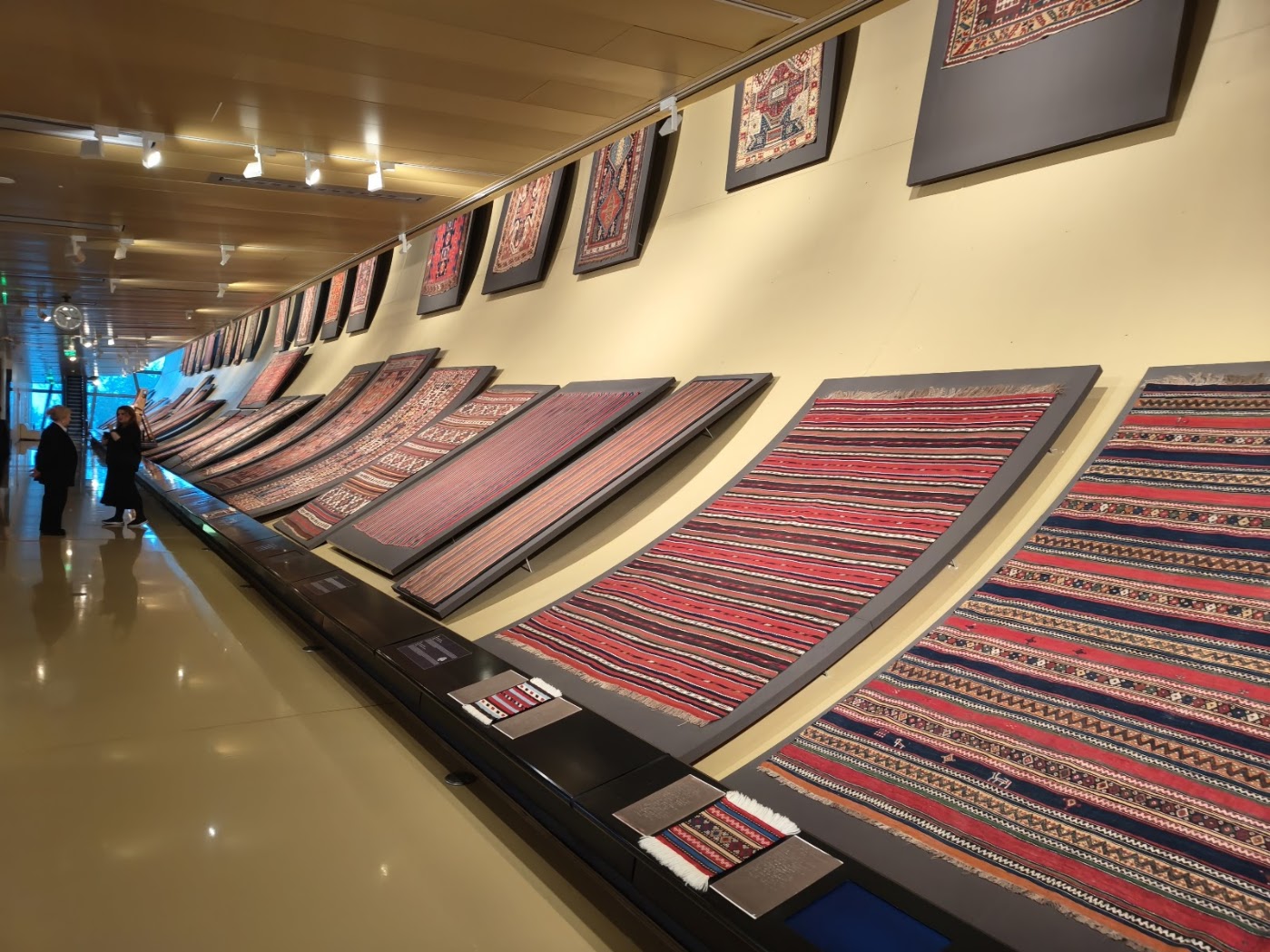
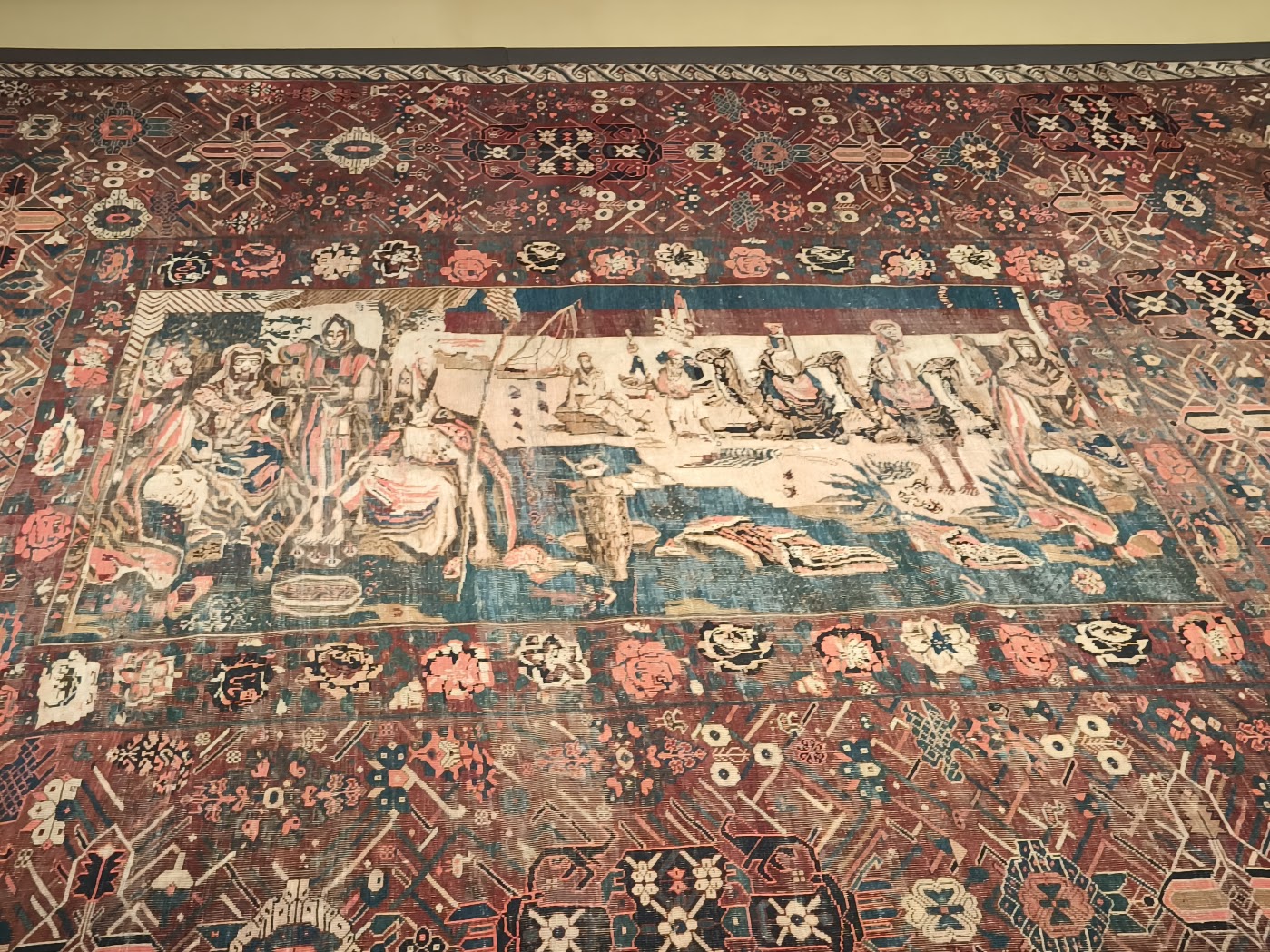
I admit: I am no expert. But in the faces of others, I saw reverence. One carpet stopped me cold- a piece woven in the Jewish town 'Red Village'. At its center is a biblical scene: Eliezer, servant of Abraham, meeting Rebecca at the well as she offers, “Drink, my lord, and I will draw water for your camels also.” In that moment, I understood: even a carpet can be a midrash of Torah.
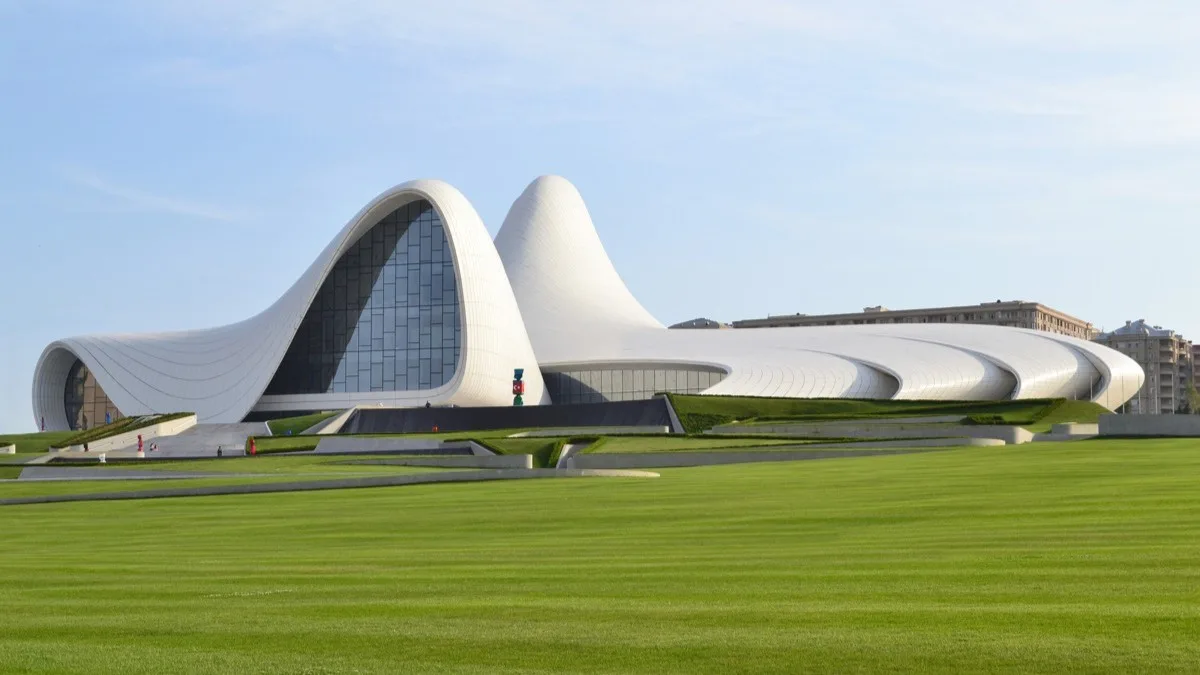
At the far end of the promenade rises the Heydar Aliyev Center. A white, flowing, cornerless structure, as if shaped by wind rather than by hand. Azerbaijani tradition dressed in ultra-modern futurism. Inside are more than 3,000 manuscripts, rare books, sculptures, miniatures, and literary relics. It is a civic temple to culture, and no less, to hope.
Inside Baku’s Old City
The Maiden Tower and Ancient Legends
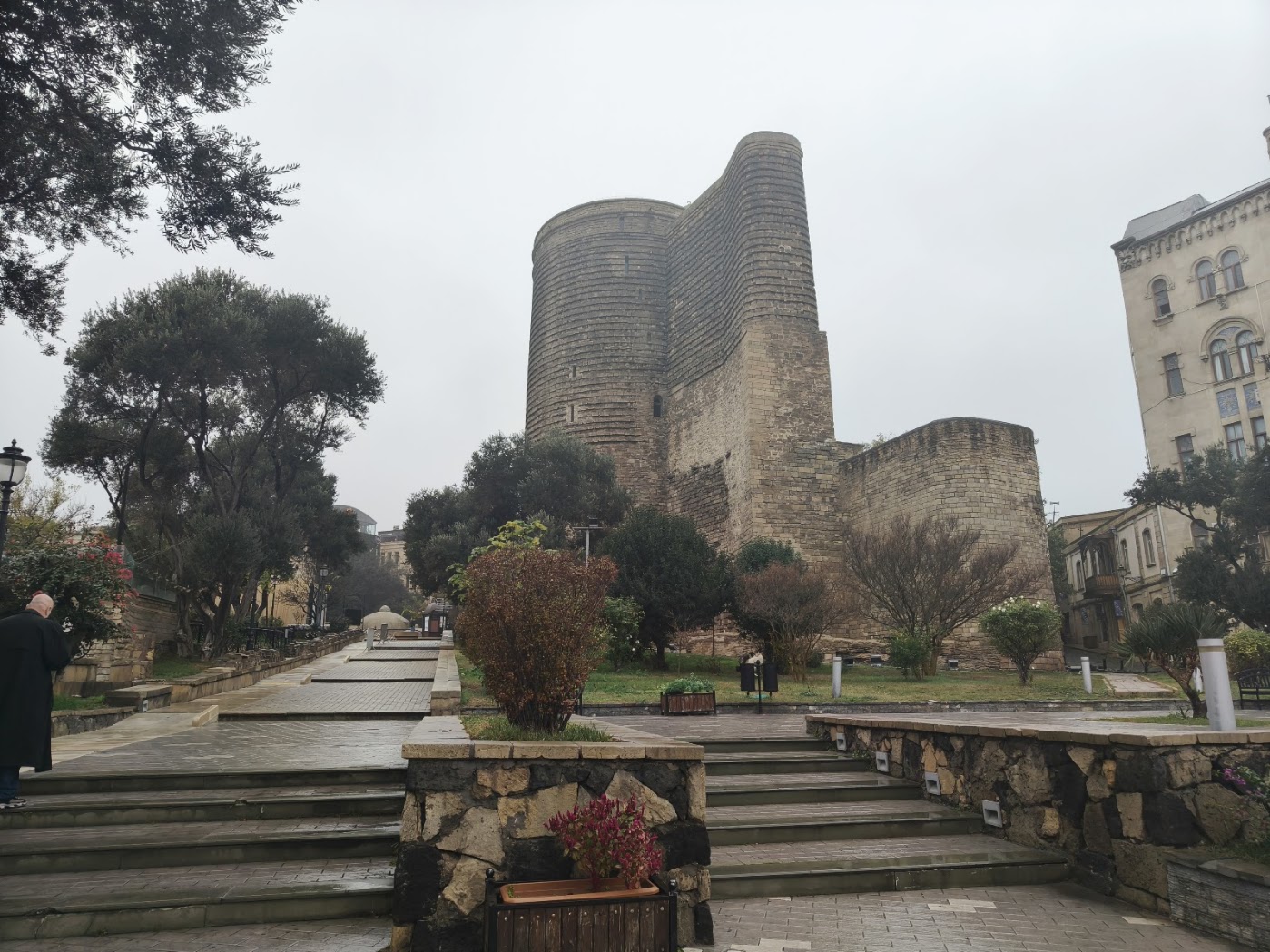
From there, the journey bends backward in time, into the alleys of the Old City. The Maiden Tower greets the visitor: an enigmatic eight-story structure built atop foundations far older than itself. Constructed in the 12th century over remains from the 6th-7th centuries BCE. It may once have served as a Zoroastrian fire temple, or perhaps a 'Tower of Silence', where bodies were exposed to birds of prey. The stone here remembers more than we do. From the summit, the view is commanding, though a tall glass railing complicates photography. Perhaps a reminder that not everything is meant for Instagram.
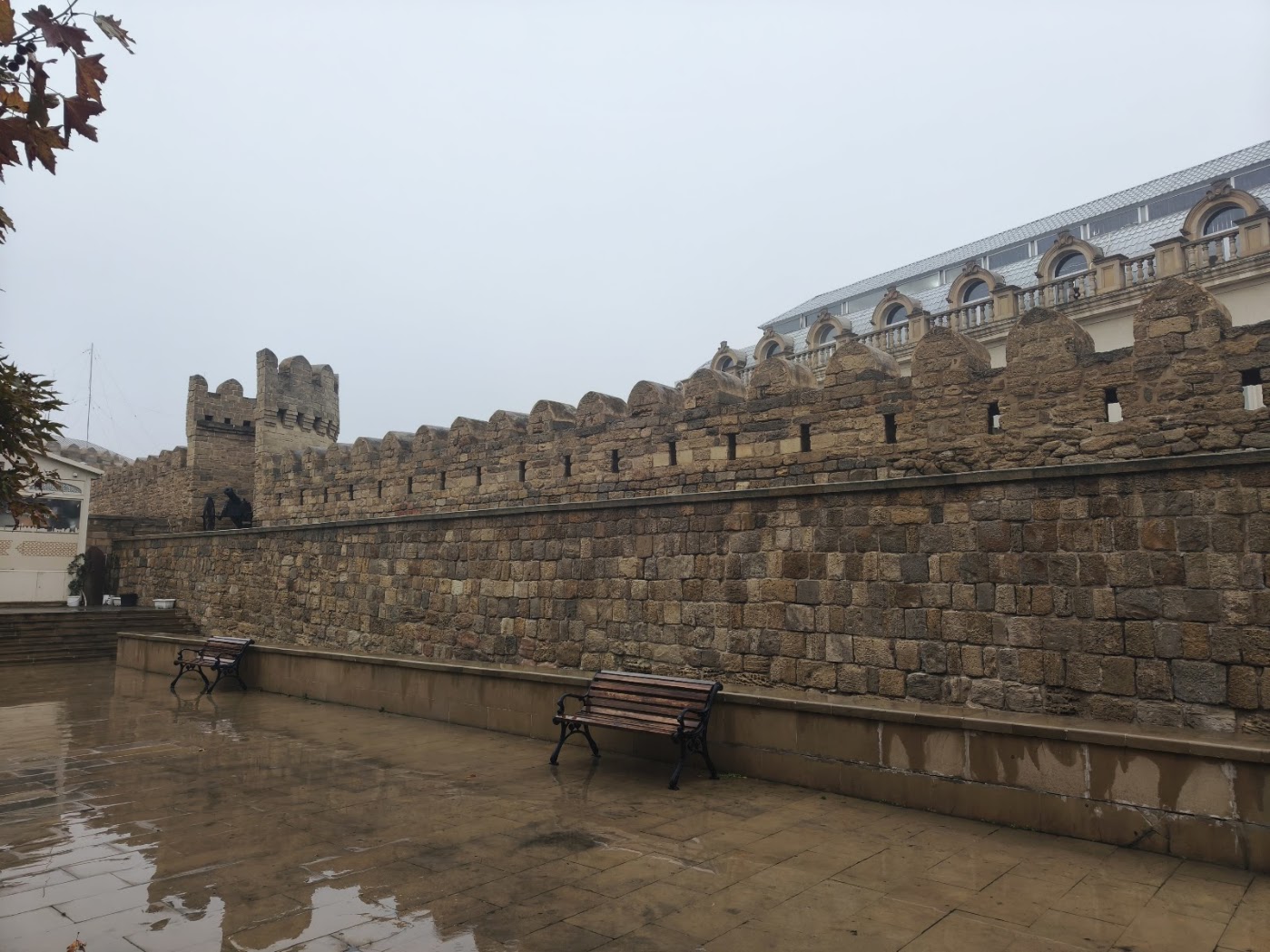
Wandering the Old City’s narrow lanes is a journey through time. Small cafés, carpet shops, and a city wall that evokes Jerusalem walls. Along the inner side of the wall stand ancient cannons, oddly aimed inward rather than outward.
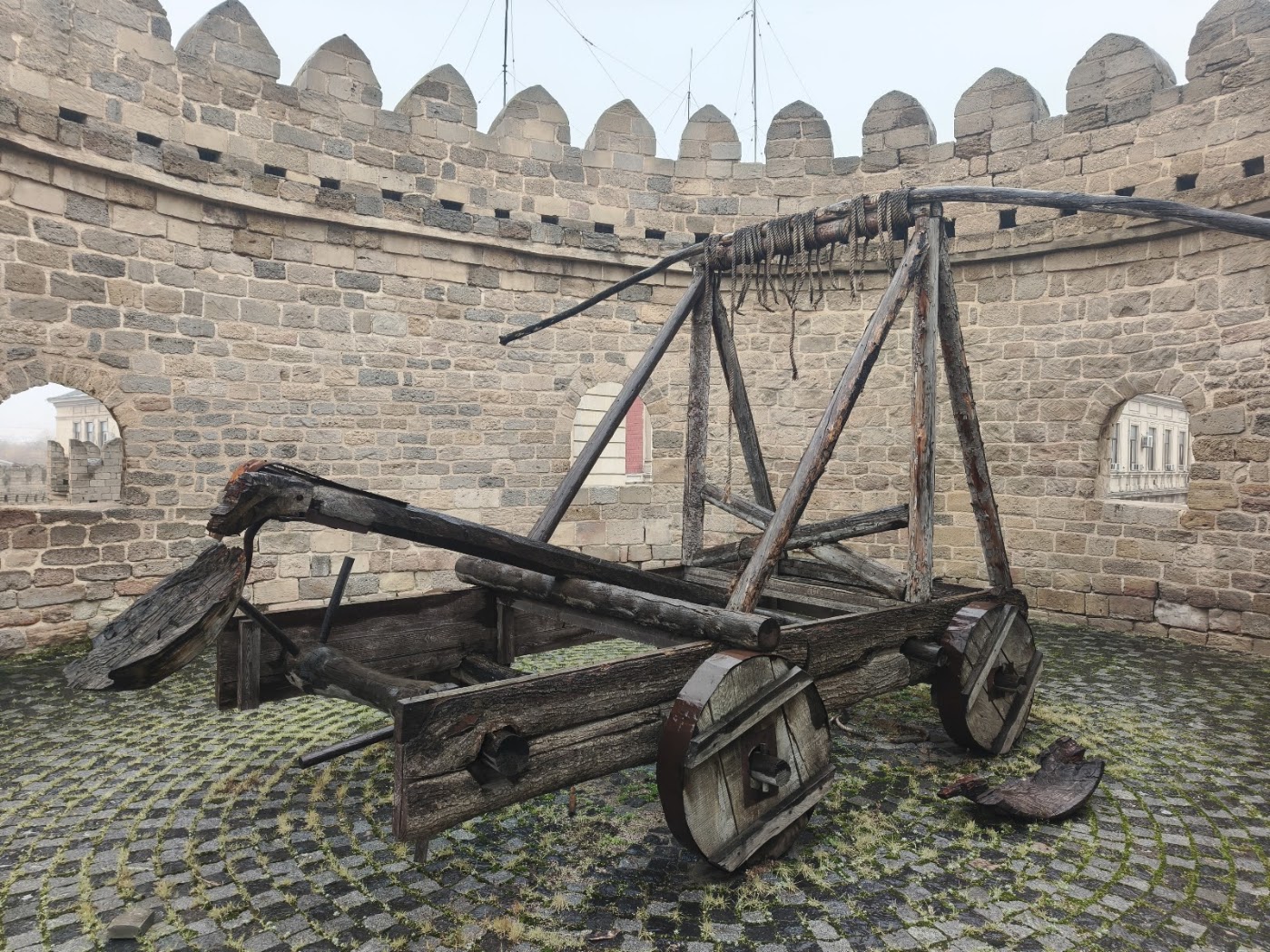
Nearby is a surviving ballista, once used to hurl massive stones over the ramparts. We learned in school that Roman ballistae were used to conquer Jerusalem and Masada. We saw drawings then. Here in Baku, we see one with our own eyes. Children are thrilled. Adults grow thoughtful.
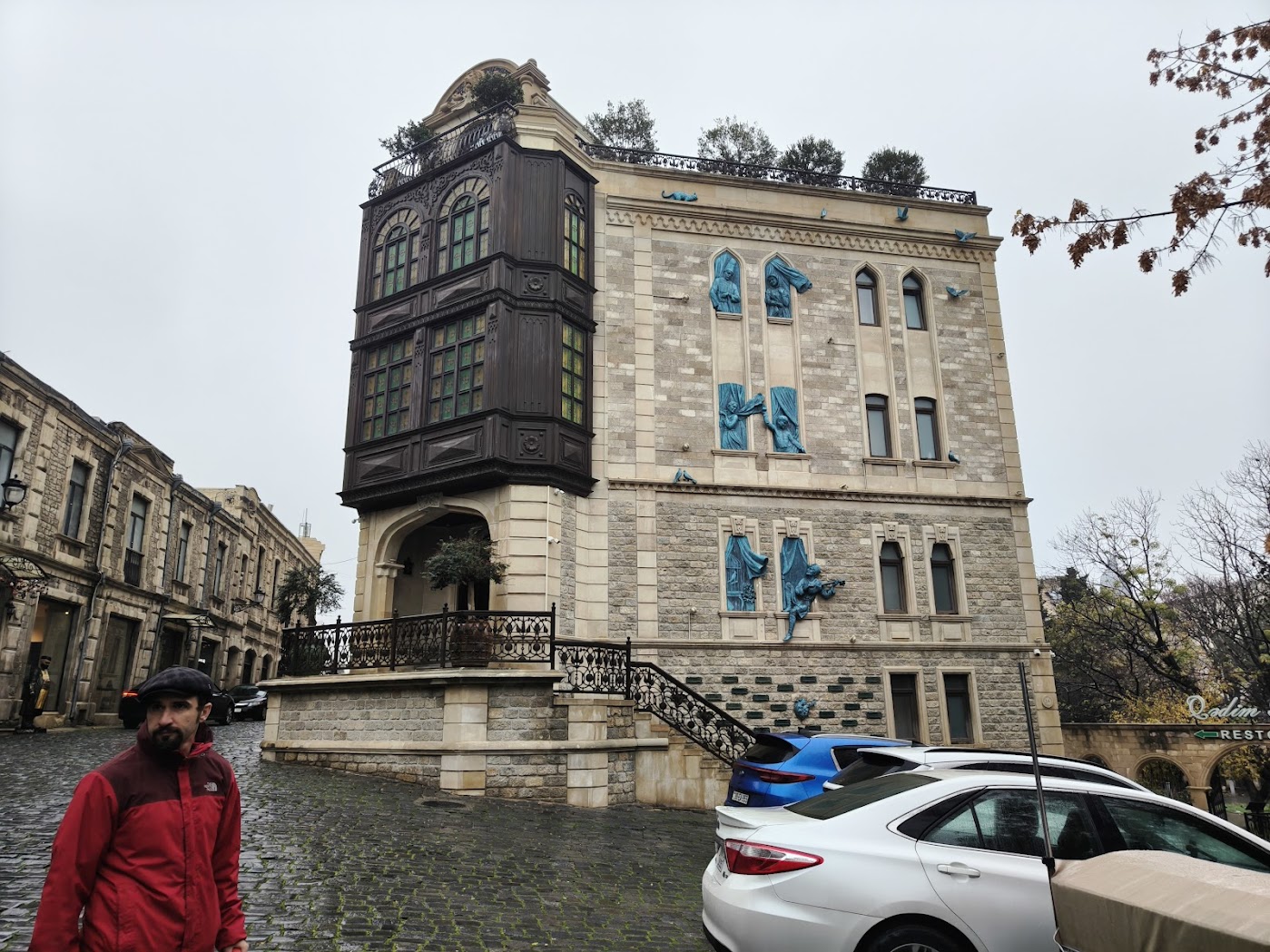
Pause near the Governor’s House, an elegant building whose windows are adorned with green copper sculptures. On an exterior wall hang copper plaques in 23 languages, bearing the words: “Let love blossom in every heart! Let our world be filled with compassion.” Hebrew among them. The quote comes from the Azerbaijani legend of Ali and Nino, the local Romeo and Juliet. Love, it seems, transcends language.


The Shirvanshah Palace and Medieval Azerbaijan
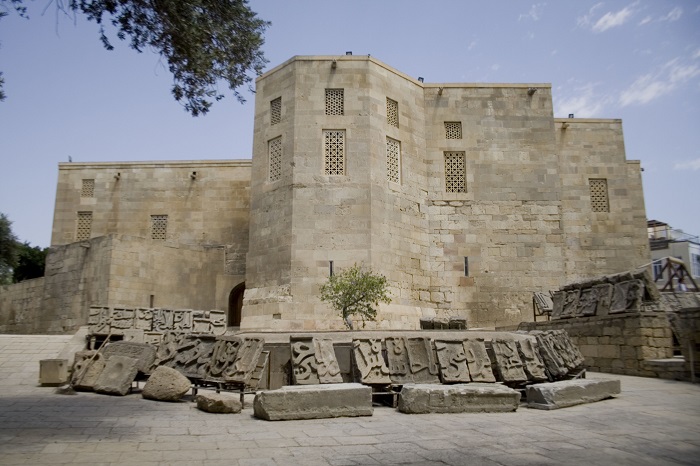
Above the city rises the Shirvanshah Palace, one of the masterpieces of medieval architecture, remarkably preserved. Inside are ancient vessels, garments, jewelry, manuscripts, and many swords. There were once more treasures, but the Soviets looted them for museums in St. Petersburg and Moscow. One hall displays a scale model of the Old City enclosed within its walls, a city remembering itself.

Many of Baku’s most intriguing buildings date to the early 20th century, during the oil boom that reshaped Azerbaijan. These structures form a ring around the Old City and include grand private mansions built by the first oil barons, blending Rococo, Baroque, and Moorish styles.
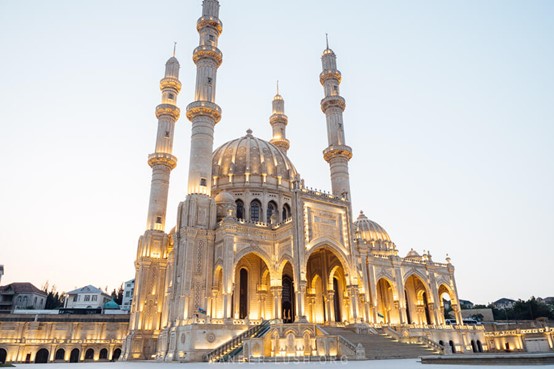
In the western part of the city stands the Bibi-Heybat Mosque. It turns out the Azerbaijanis, too, have a “Bibi.” Originally built in the 13th century, the mosque was destroyed by the Soviets during their war on religion, and rebuilt after the collapse of the USSR. I went out of my way to visit, I admit, by the name alone. Come at twilight, when the lighting lends the mosque an almost otherworldly beauty.
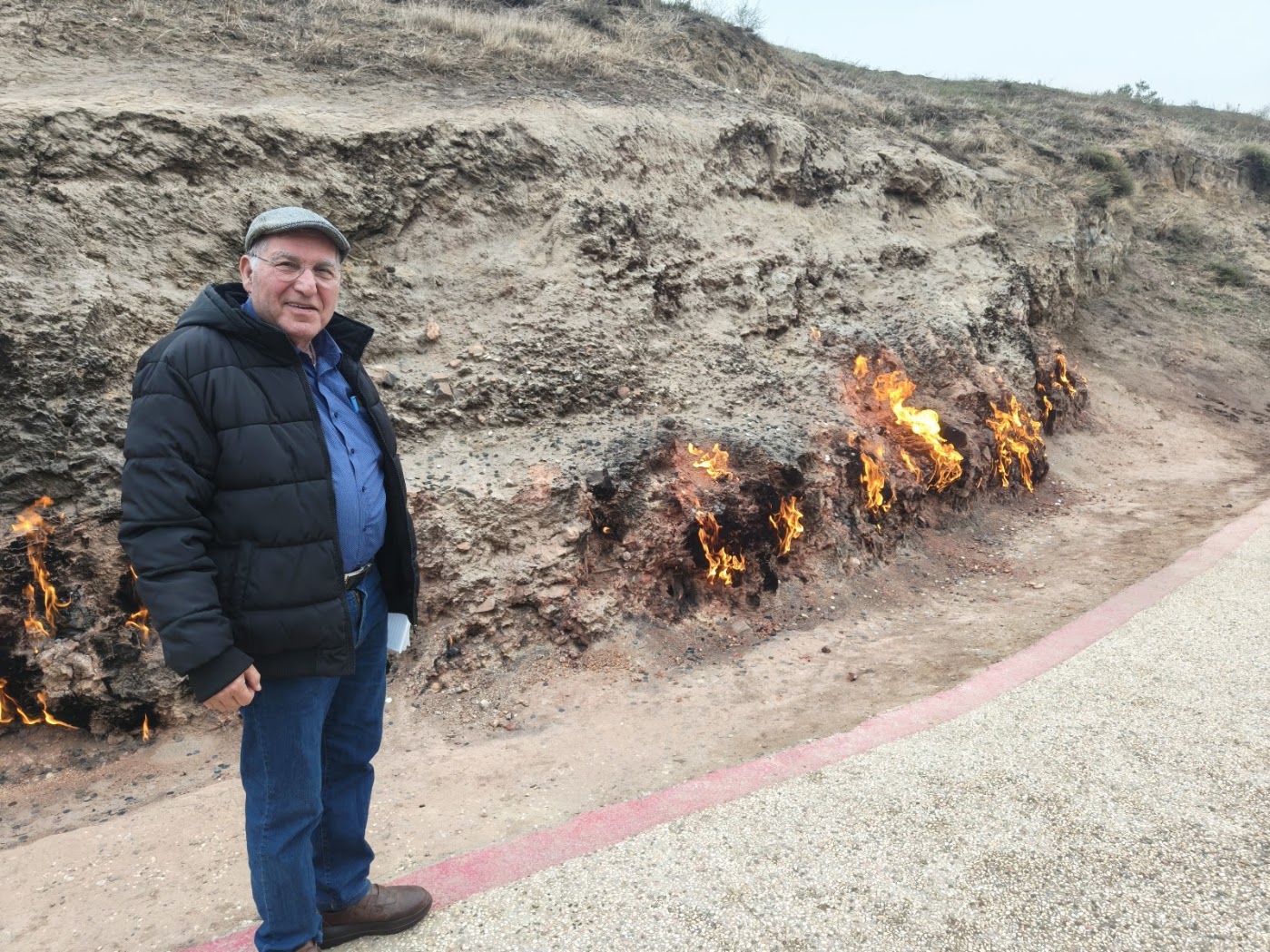
Another unforgettable tourist site is Yanar Dag, the “Burning Mountain”, about half an hour drive from Baku. Here, flames emerge directly from the earth, fed by methane gas that has burned continuously for centuries. Nearby stands an ancient Fire Temple, once a pilgrimage site connected to Hindu worship and Zoroastrianism.
Each autumn, Baku hosts Formula 1 races that make the city tremble. The race consists of 51 laps totaling 306 kilometers. Along the boulevard stretches a straight section more than two kilometers long, where cars reach astonishing speeds, sometimes exceeding 350 km/h. Part of the circuit snakes tightly around the Old City, narrow and unforgiving. Past and future, once again, framed together. If you find yourself in Baku in September, do not miss it.
Jewish Life in Baku Today
Azerbaijan is a Shiite Muslim country with a deeply rooted culture of religious tolerance. I was told there is no issue walking the streets wearing a Kippah or visible Tzitzit. I chose not to stand out, though there is no real danger. Most ethnic Azerbaijanis live in Iran, whose leaders openly call for Israel’s destruction. Yet in Azerbaijan itself, affection for Israel is genuine, and in recent years, increasingly open.
Nagorno Karabakh and Israeli Drones
Azerbaijan has a long-standing territorial conflict with Armenia over the enclave of Nagorno-Karabakh. Three wars were fought for control. Azerbaijan lost the first two, in 1990 and 2016, but emerged victorious in 2020, assisted by drones purchased from Israel. Nearly every Azerbaijani I met, mentioned this with pride and gratitude.
Albert Agarunov and Jewish Azerbaijani Pride
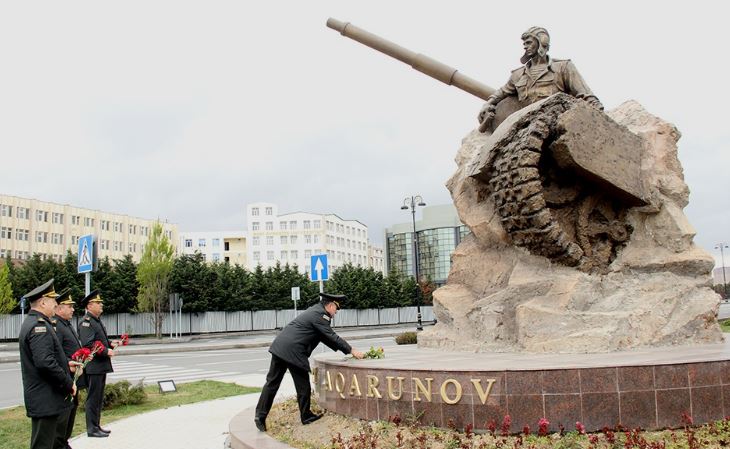
Another source of admiration is a national hero: Albert Agarunov, a Jewish tank commander who was killed in the first Karabakh war. A prominent memorial to him stands in Baku.
In Azerbaijan lives a Jewish community, small in number yet large in presence. About 25,000 Jews reside in the country today. A figure that does not shout, but most certainly speaks. In Baku alone, three synagogues are in operating: three Jewish hearts beating in different prayer rites, yet coursing with the same ancient blood.
The Mountain Jews Synagogue
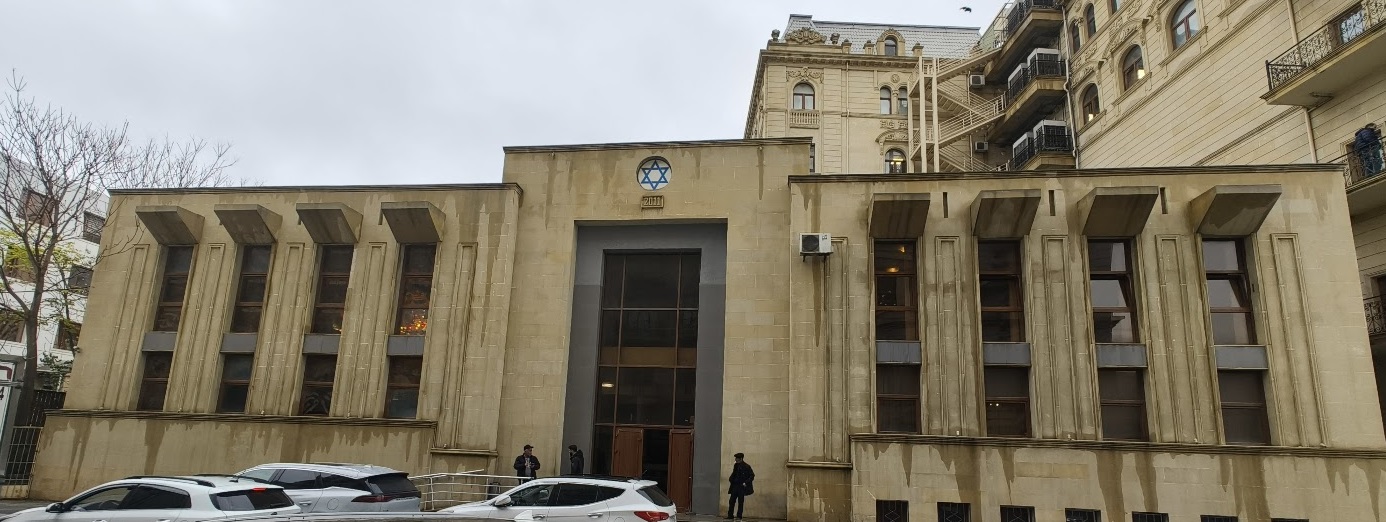
The Mountain Jews’ Synagogue is perhaps the most impressive of them all, not only for its beauty but for its story. It began operating in 1945, during an era when religion was something to be concealed, not displayed. Then, as if history itself sought to make amends, President Ilham Aliyev ordered the old structure demolished and rebuilt. Since 2011, the synagogue has stood here as a declaration: an unapologetic Judaism. Prayers here are inthe Nusach Caucasian rite.
Inside, one enters a world of quiet grandeur. The furnishings are modern, almost meticulously refined, crafted from and coated in lacquer that reflects light like a cherished memory. Above the Torah ark are 2 Parochets, and above them rises a vast wooden arch, hand-carved by a master artisan. Like a ceremonial gateway between the everyday world and the realm of prayer.
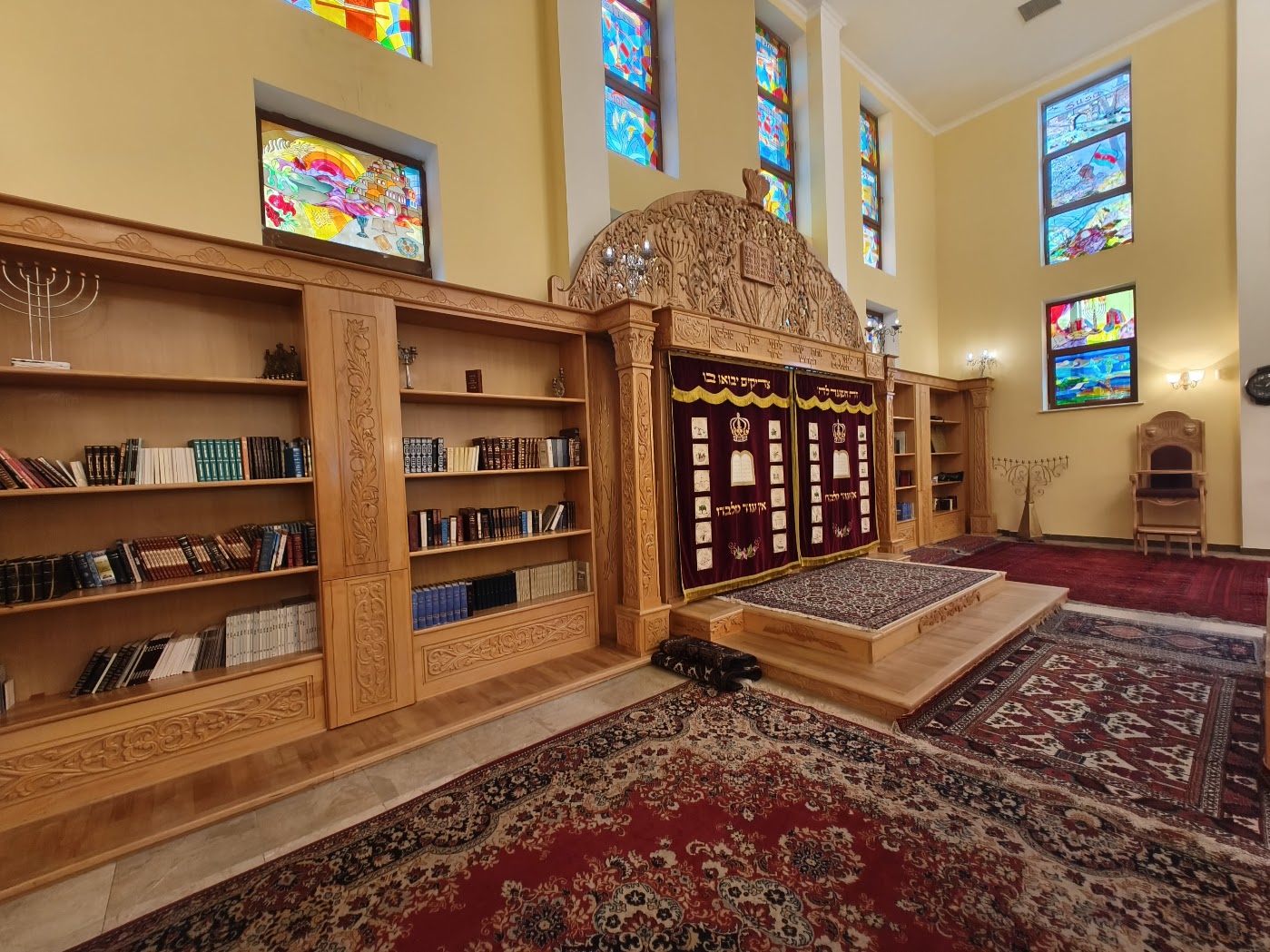
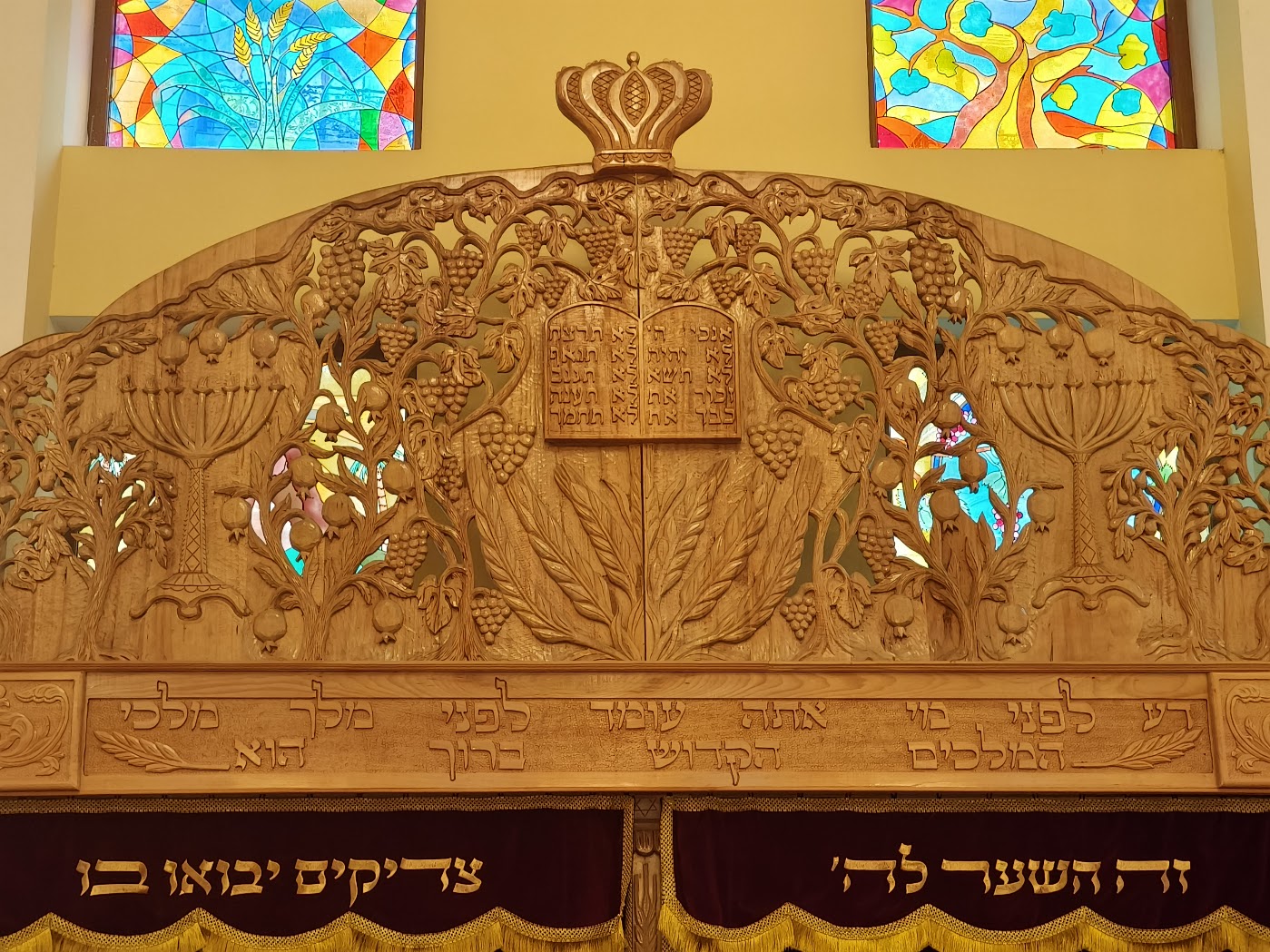
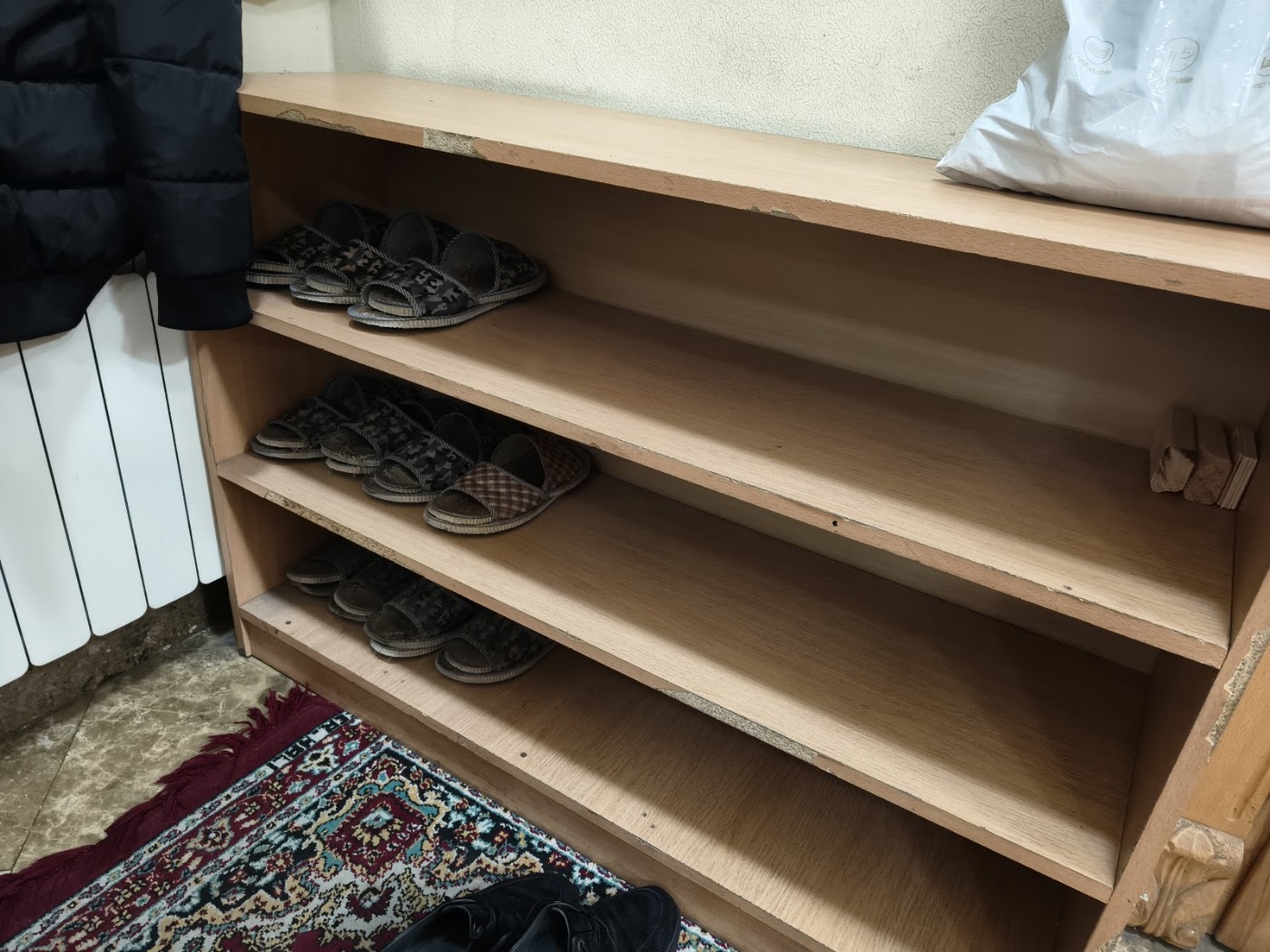
The floor is covered with thick colorful Azerbaijani carpets, textiles that tell stories even without words. As a small gesture of respect, and to preserve them, prayers and visitors remove their shoes at the entrance and slip into fabric house slippers, neatly arranged in cabinets by the door.
Across the street lies a public garden where children run freely and elders sit quietly on benches. Beside the other end stands a single building housing two additional synagogues, one above the other. Layers of Jewish identity stacked within one structure.
Rabbi Zamir Isayev and the Sephardi Georgian Community
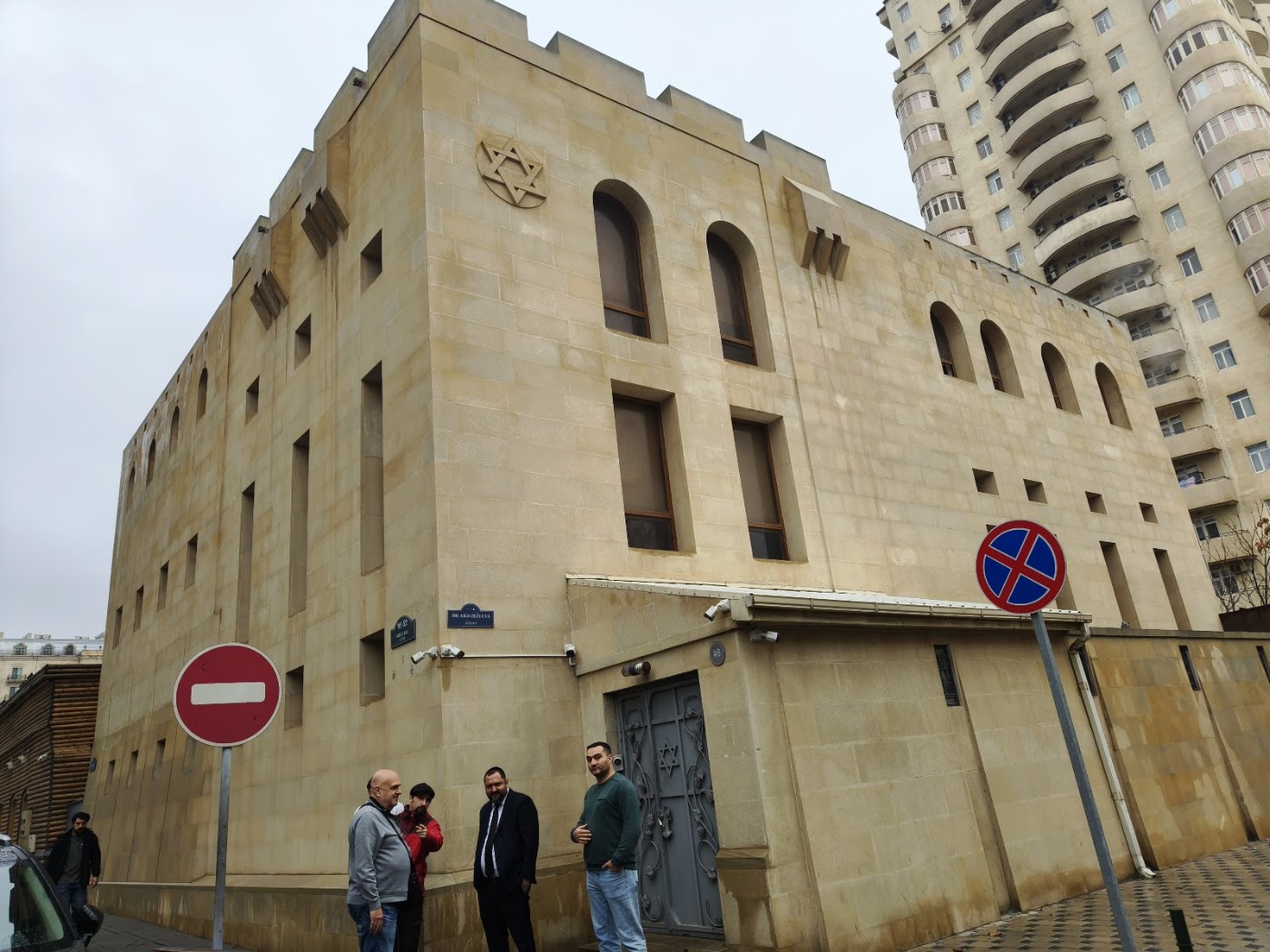
On one floor operates the Sephardi-Georgian synagogue, led by Rabbi Zamir Isayev, a figure who embodies the bridge between Baku and Jerusalem. A native of the city, a graduate of Israeli yeshivot, a former IDF soldier, he is today a rabbi, educator, and paternal presence within the community. Rabbi Zamir also runs the local Jewish school, where about one hundred students study not only mathematics and English, but also Juhuri, the language of the Mountain Jews. In the synagogue itself, some thirty worshippers gather daily for morning Shacharit prayers in the Sephardi rite, using Yechaveh Da’at prayer books.
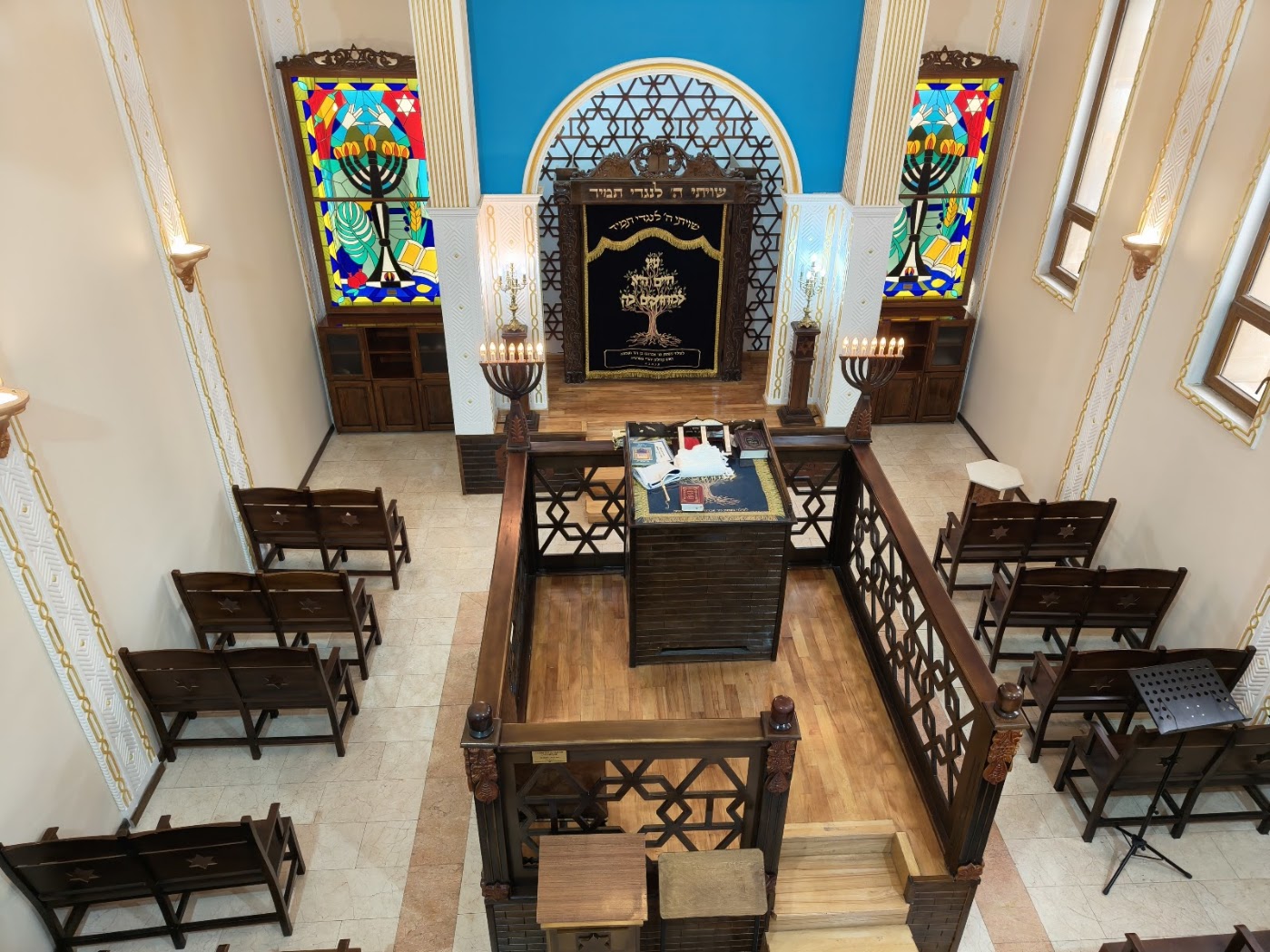

Rabbi Zamir speaks of customs unique to Azerbaijani Jewry. On Hanukkah, dreidels are fashioned from walnuts. On Passover, a giant round matzah, nearly a meter in diameter, is baked and hung on the wall of the Seder room, like an edible sun gazing down upon the table.
Beyond this, Rabbi Zamir also serves as a member of the rabbinical court, whose jurisdiction extends as far as Tbilisi. He notes that in Baku there are Muslims who seek conversion, studying Judaism in his synagogue. The conversion certificates issued by the court are recognized by Israel’s Chief Rabbinate. The same court also grants kosher certification to local food factories that export to Israel.
The Ashkenazi Synagogue and Chabad in Baku
On the floor above stands the Ashkenazi synagogue. Its roots reaching back to the early twentieth century, during the boom-rush for black gold. Oil drew businesspeople from across Europe to Baku, including Jews from Poland and Lithuania, who arrived with capital, nostalgia, and their own prayer version. They built a synagogue in the Ashkenazi tradition, though today prayers follow the Ari rite.
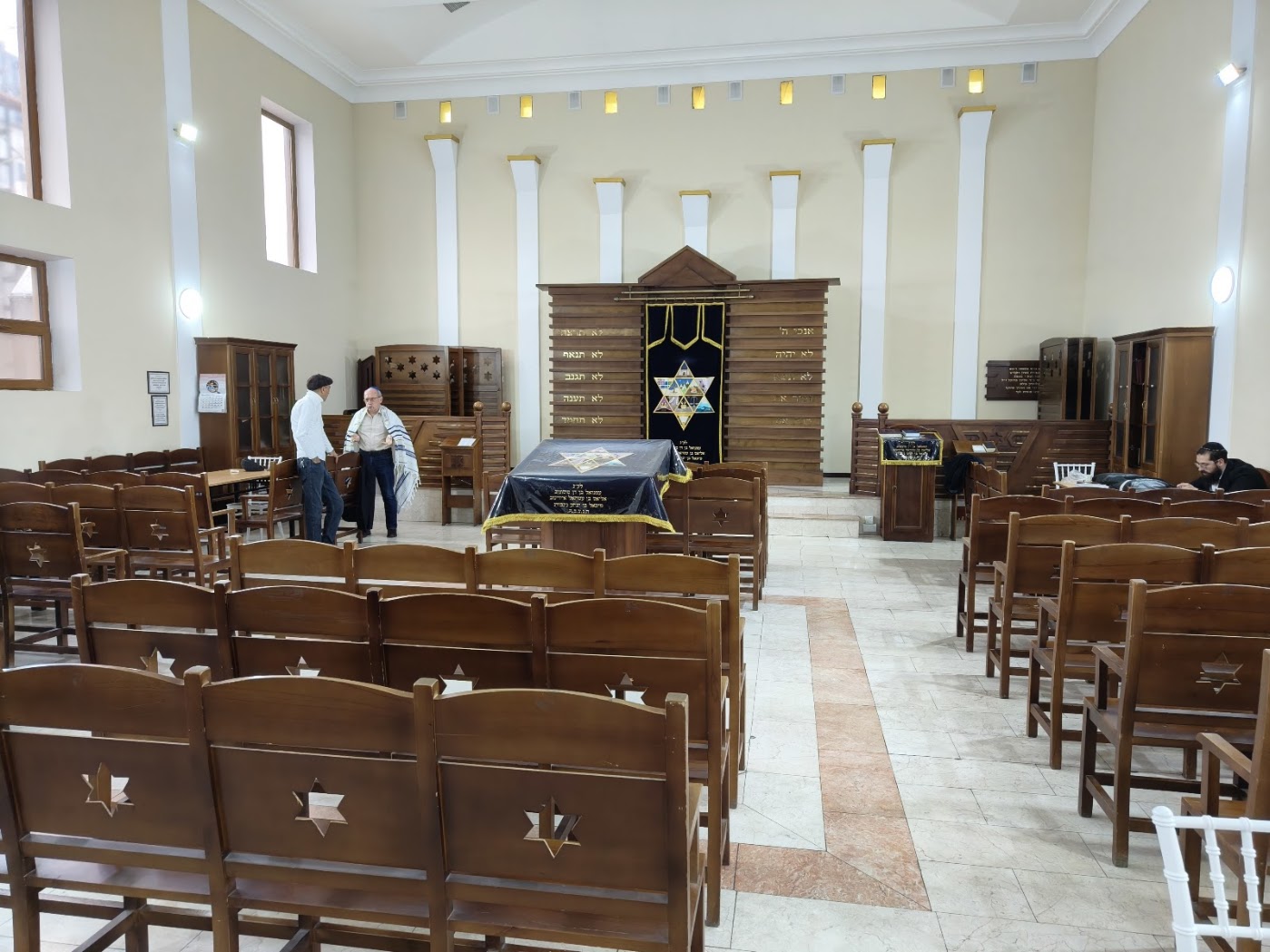
In 2003, the building moved to its current home, one floor above the Sephardi synagogue. Perhaps not by chance, but as a symbol of historical layers.
Today it is led by the Chabad emissary, Rabbi Schneur Segal. On Shabbat, around seventy worshippers gather here, some of them Israelis. During the High Holidays, some four hundred people came to hear the sound of the shofar. A single call that crossed rites, identities, and passports.

“But this is not a religious community,” Rabbi Segal says with a trace of sorrow. “Most of Baku’s Jews do not observe Torah and mitzvot.” And yet, between holiday celebrations and cultural activities, between Hanukkah and Purim, the Chabad House continues to light a Jewish flame. Sometimes that is all that is needed. Not a majority, but continuity; not numbers, but the stubborn persistence of identity.
Three synagogues, three stories, and one community that continues to stand upright between the Caucasus and the Caspian Sea, with a quiet yet profound pride of belonging.
As my plane lifts off from Baku, the Flame Towers shrink into a small light on the horizon, like a Hanukkah candle on the eighth night. It feels as though the city is not truly saying goodbye, only nodding in farewell. Baku does not ask you to remember its streets, but a feeling. That past and future can coexist, that fire can warm without burning, and that Judaism can flourish far from Jerusalem, if only it is given space. And those who know how to listen will understand: this is not a transit stop. It is a station of the heart.
But Azerbaijan is not just Baku. Beyond the capital’s polished façades lies a land that resists haste, mountains that unfold slowly, villages that move at the tempo of centuries, roads that reward those willing to linger. My brief tour as a journalist allowed only a glance, a polite introduction rather than a genuine acquaintance. Since returning, a quiet restlessness remains: a desire to go back, to spend time in the country’s heart and along its western routes, where history and landscape speak in softer, deeper tones. Some journeys feel complete. This one, clearly, is only beginning.
Baku lingers in the mind not because of a single monument, but because of its contradictions. Ancient walls stand beside glass towers. Shiite mosques coexist with active synagogues. Soviet scars meet oil wealth and modern ambition. For Israeli travelers, the city offers something increasingly rare: a destination that feels both unfamiliar and unexpectedly welcoming. Long after the Caspian shoreline disappears beneath the airplane window, the sensation remains that Baku is not merely a city visited, but a place still waiting to be understood.
FAQ About Visiting Baku and Jewish Azerbaijan
Is Baku a good destination for Israeli tourists?
Yes. Baku has become increasingly popular among Israeli travelers because of its short flight time, relatively affordable prices, and welcoming atmosphere. Many Israelis also appreciate the visible Jewish community and the warm diplomatic relations between Azerbaijan and Israel.
Are there synagogues in Baku?
Yes. Baku currently has three active synagogues representing different Jewish traditions, including Mountain Jewish, Sephardi Georgian, and Ashkenazi communities. Visitors can attend prayers, meet local rabbis, and learn about the unique history of Azerbaijani Jewry.
What are the Flame Towers in Baku?
The Flame Towers are the most recognizable landmark in Baku and symbolize Azerbaijan’s identity as the “Land of Fire.” The three skyscrapers dominate the city skyline and become illuminated every evening with moving digital displays. They are considered one of the architectural symbols of the modern Caucasus region.
Is Azerbaijan safe for Jewish travelers?
Azerbaijan is generally considered one of the safer Muslim majority countries for Jewish and Israeli travelers. Jewish communities have existed there for centuries, and visible Jewish life continues openly in Baku and other parts of the country. Many local residents express positive attitudes toward Israel and Jewish visitors.
What are the best places to visit in Baku?
Most travelers begin with the Caspian Boulevard, the Old City, the Flame Towers, and the Heydar Aliyev Center. Many also visit the Carpet Museum, the Burning Mountain of Yanar Dag, and the city’s synagogues. The combination of modern architecture, medieval history, and Jewish heritage makes Baku unusually diverse for a relatively compact city.
Can Baku be visited as a stopover destination?
Absolutely. Many travelers flying with Azerbaijan Airlines choose to spend one or two days in Baku before continuing onward to Asia. The city is compact, easy to explore, and offers enough culture, food, history, and atmosphere to justify extending the stopover into a short urban vacation.