
A Kosher Resort in Cyprus is no longer just a dream for observant travelers seeking sun, relaxation, and complete peace of mind. On the northwestern edge of Cyprus, where citrus groves spill down toward the Mediterranean and fishing boats drift across blue coves like forgotten brushstrokes, a curious experiment is unfolding.
It is called The Greek Village of Yonas, and at first glance it resembles countless other Mediterranean resorts scattered across southern Europe. There are swimming pools, trees, sun-bleached terraces, and the familiar scent of sunscreen floating through the afternoon heat.
Yet beneath the postcard exterior lies something remarkably different.
This is not simply another hotel that happens to serve kosher meals. It is an entire resort reimagined from the ground up for religious and traditional Jewish families, a place where the practical challenges of observant travel have been transformed into invisible details. And in a world increasingly obsessed with luxury, that may be the rarest luxury of all.
A Place Reborn
When you arrive at the Greek Village today, it is almost impossible to believe that only a few months ago the property stood abandoned.
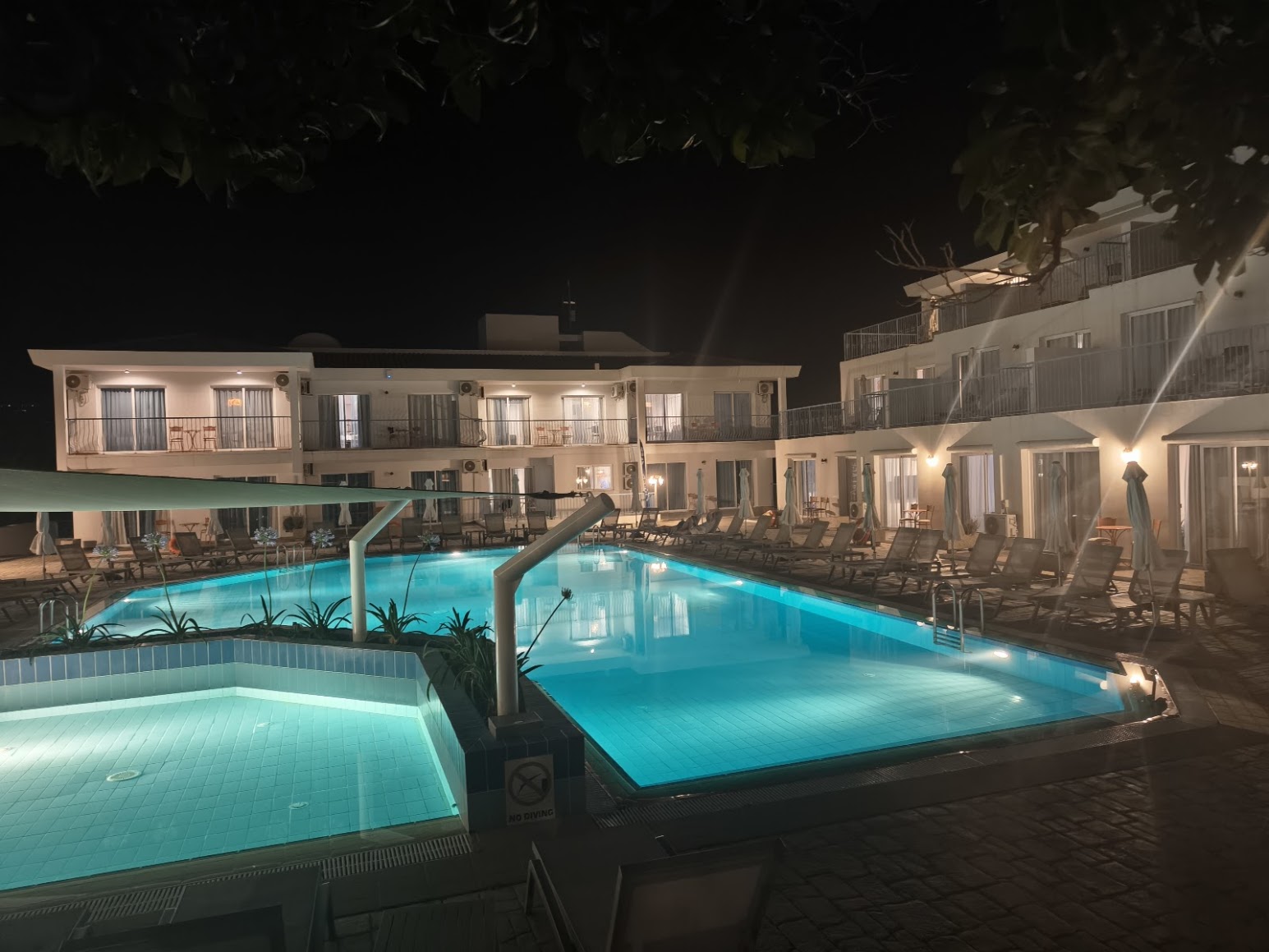
Children race across lawns that were once overgrown with weeds. Families gather beside the pool. The dining hall hums with conversation as the aroma of freshly baked challah drifts through the air. Just beyond the resort grounds, the nearby Chabad House fills the morning with familiar Hebrew prayers.
Life has returned.
The transformation is so complete that visitors would never suspect the place had spent years slowly surrendering itself to neglect.
During my stay, August was already nearly sold out while July still offered a handful of vacancies. The popularity was hardly surprising.
The resort operates on a rhythm that feels increasingly rare in modern tourism. Guests typically arrive for a full week, Monday to Monday. There are no frantic two-day escapes, no hurried weekend breaks.
The concept is simple: Come. Unpack. Forget the clock. And slowly allow yourself to enter a different pace of life.
The Cyprus Effect
The package prices, including flights from Israel and airport transfers, generally range between $600 and $1,000 per person, depending on travel dates and family composition.
But price is not the story here. The story is atmosphere. The Mediterranean Sea looks much the same whether you stand on the beaches of Tel Aviv or on the shores of Cyprus. The water carries the same salt. The waves roll in with the same ancient rhythm. The horizon pulls at the imagination with the same irresistible force.
Yet around the fishermen villages of Latchi and Polis, time itself seems altered. Slower. Kinder. More generous.
At dawn, the air carries the scent of sea salt, lemon trees, and earth gently warmed by the first rays of sunlight. White fishing boats rock lazily in the marina. In the distance, the green ridges of the Akamas Peninsula emerge slowly from ribbons of morning mist.
Forty minutes after leaving Israel, followed by another forty-minute drive from Paphos International Airport, you find yourself somewhere that feels vastly farther away. The Greek Village is located just 1 kilometer from the municipal beach of Polis and 28 kilometers from the Paphos Zoo. The resort also provides shuttle transfers for its guests from Paphos International Airport, which is situated 47 kilometers away.
For a brief moment it becomes possible to imagine a world without headlines. Without politics. Without breaking news alerts. Without mobile phones reminding us every few minutes how busy we are supposed to be.
Perhaps this explains Cyprus's growing appeal among Israelis. It is close enough to reach on a whim and distant enough to feel like genuine escape.
The Missing Piece
In recent years Cyprus has become one of the preferred holiday destinations for Israeli families. Some arrive seeking sunshine and beaches. Others come searching for quiet.
Religious and traditional families, however, often seek something more complicated. They want a vacation where they do not have to spend every waking hour wondering where they will pray, what they will eat, and how they will navigate the practical realities of Jewish observance.
The Greek Village was built around precisely that challenge. Every building rises only three floors, making stairways a natural way on Shabbat. Room doors open with ordinary mechanical keys rather than electronic cards. Motion sensors have been deliberately avoided. Electric gates are absent.
To many guests these details may seem insignificant. To observant families they represent freedom. Freedom from constant calculations. Freedom from compromise. Freedom to relax. That freedom, more than any swimming pool or spa treatment, has become the resort's defining feature.
The Man Behind the Vision
The driving force behind the project is Mr. Jonas Chrysis, a Cypriot businessman who loves Israel. A mechanical engineer by training, Chrysis owns ZandX, one of Cyprus's major construction companies. For decades his firm has built office towers, factories, commercial centers, hotels, and residential developments across the island.

Over the years he watched a growing number of Israelis choosing Cyprus over Turkey. He met many of them. Became friends with some. And gradually began to understand their needs.
"Cyprus economy is based on agriculture and tourism," he told a group of visiting Israeli journalists. "It was natural that I would eventually become involved in tourism myself. I have built many villas for tourism over the years. I sold most of them, but kept some under my ownership. Today, I own 25 holiday villas out of the hundreds I have built throughout my career. But this resort is a completely different story.”
Then he smiles and begins to tell a story that perhaps no screenwriter would have dared to invent.
One day he asked an artificial intelligence system a simple question:
"What do Cyprus and Israel have in common?"
The answer surprised him.
"Genetics."
The AI elaborated- Cypriots and Israelis, it suggested, are warm people. Family-oriented. Natural hosts. Different from some of the colder cultures found elsewhere in Europe.
Intrigued, Yonas asked a second question. "So what should I do with that?"
The answer consisted of a single word: "Kosher."
He laughs as he recalls the moment. "I didn't even know exactly what kosher meant," he admits. "So I started learning."
There is something wonderfully symbolic about a resort intended to bring Cypriots and Israelis together being born from a conversation with a computer. But machines do not build communities. People do.
And so Yonas began meeting Israeli friends, consulting Jewish community leaders, speaking with rabbis and kashrut authorities, and gradually shaping a vision that would eventually become the Greek Village.
At the beginning of last winter he returned to a neglected property he had known decades earlier. About twenty years ago, he was involved in various projects at this very site, including the construction of the swimming pool and the installation of infrastructure systems.
Now, the sight shocked him. Peeling walls. Broken windows. An abandoned swimming pool. Weeds swallowing pathways.
"I almost cried," he recalls. "To see a place that had once been full of life standing empty for ten years."
Some buildings resemble people. Neglect them long enough and they wither. Believe in them again, and they awaken. That is precisely what happened here.
Jonas and his two Israeli partners decided to bring the place back to life. Within just a few months, one hundred rooms were renovated, the swimming pool was completely rebuilt, and two kosher kitchens were established in record time. The work is still ongoing. Currently, the resort consists of four three-story buildings. Once the project is completed, it will offer a total of 130 rooms. One hundred are already open to guests, with an additional thirty expected to be ready by next winter.
Rooms with Breathing Space
The Greek Village invited a group of journalists and social media creators to experience the property firsthand. I joined them.
The room assigned to me was intended for a couple. By Israeli standards, it could easily have been marketed as a suite. Spacious. Bright. Uncluttered. Its balcony overlooked the central swimming pool and beyond it a patchwork of orchards and fields climbing gently toward the nearby hills.
There was enough room for additional beds, a baby crib, and still plenty of space to move comfortably.
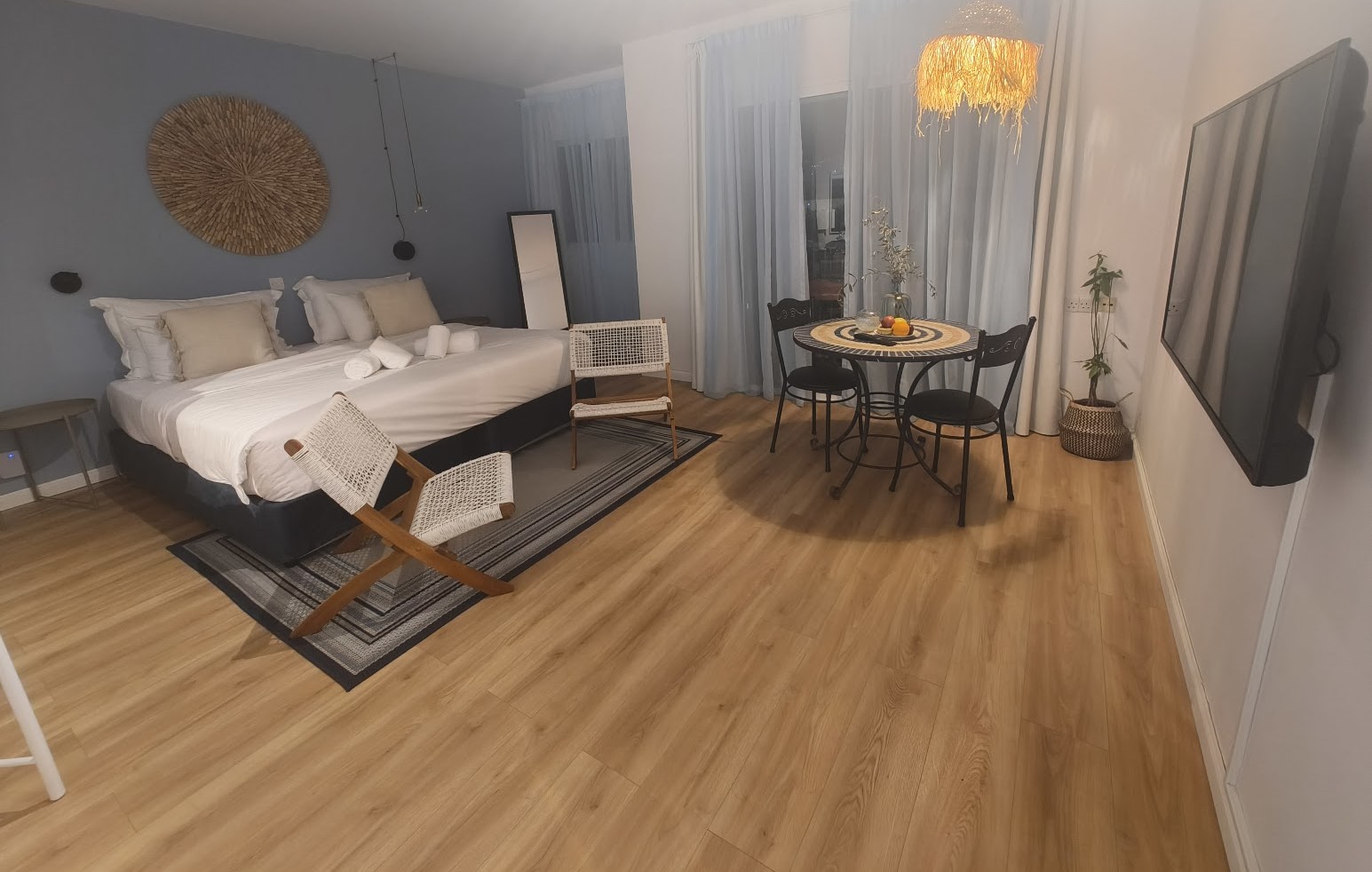
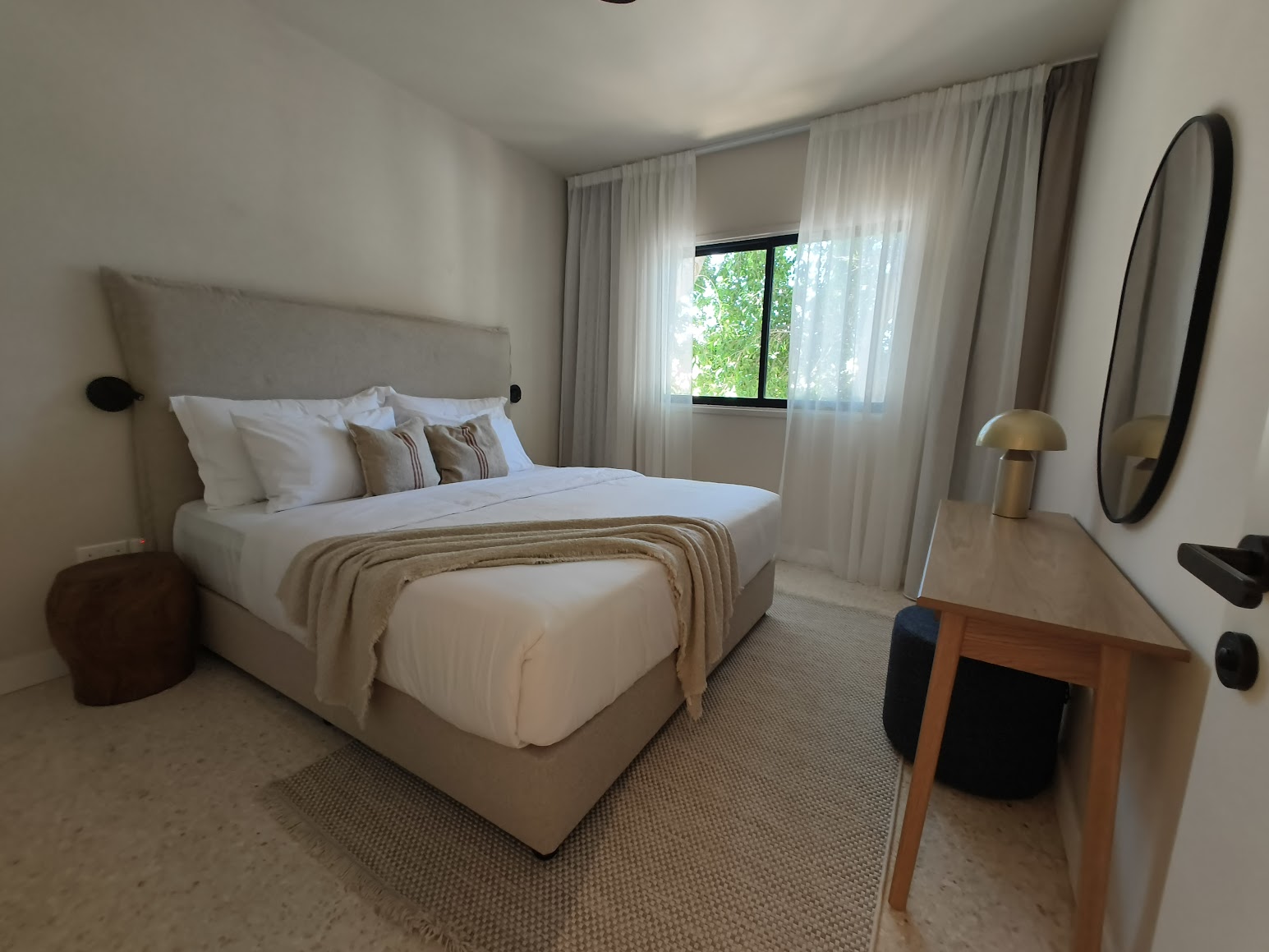
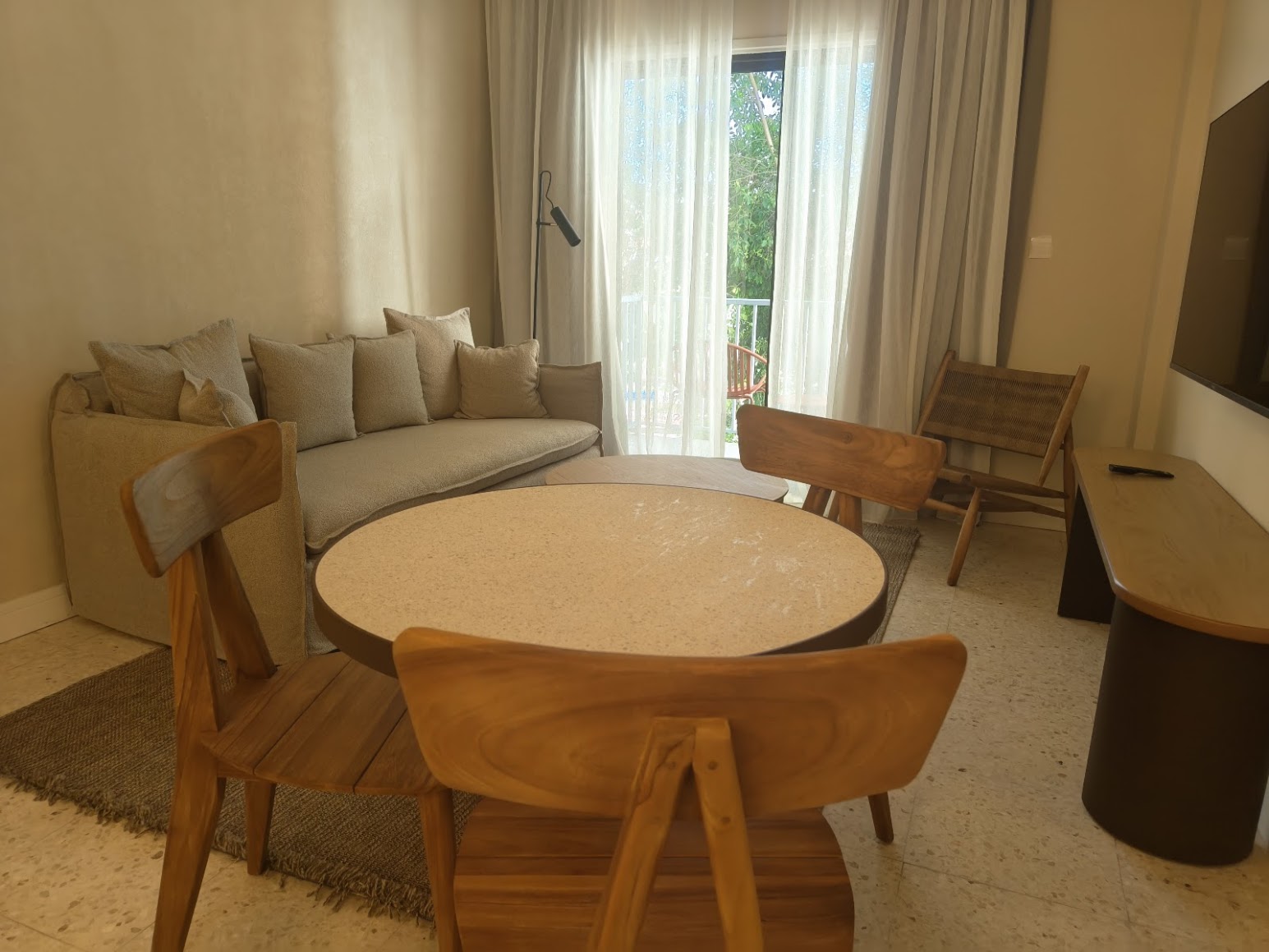
The family accommodations are even larger, reflecting the resort's understanding of its primary audience. Large families are not treated here as logistical challenges. They are the core clientele. The design reflects that reality.
The Sound of Silence
One morning I opened my balcony door shortly after sunrise. The first sound I heard was birdsong. No traffic. No sirens. No construction. Just birds. It struck me how unusual that had become.
Israel is a country that uses every available square meter. Space is precious. Development is relentless. Cyprus, by contrast, still possesses room to breathe.
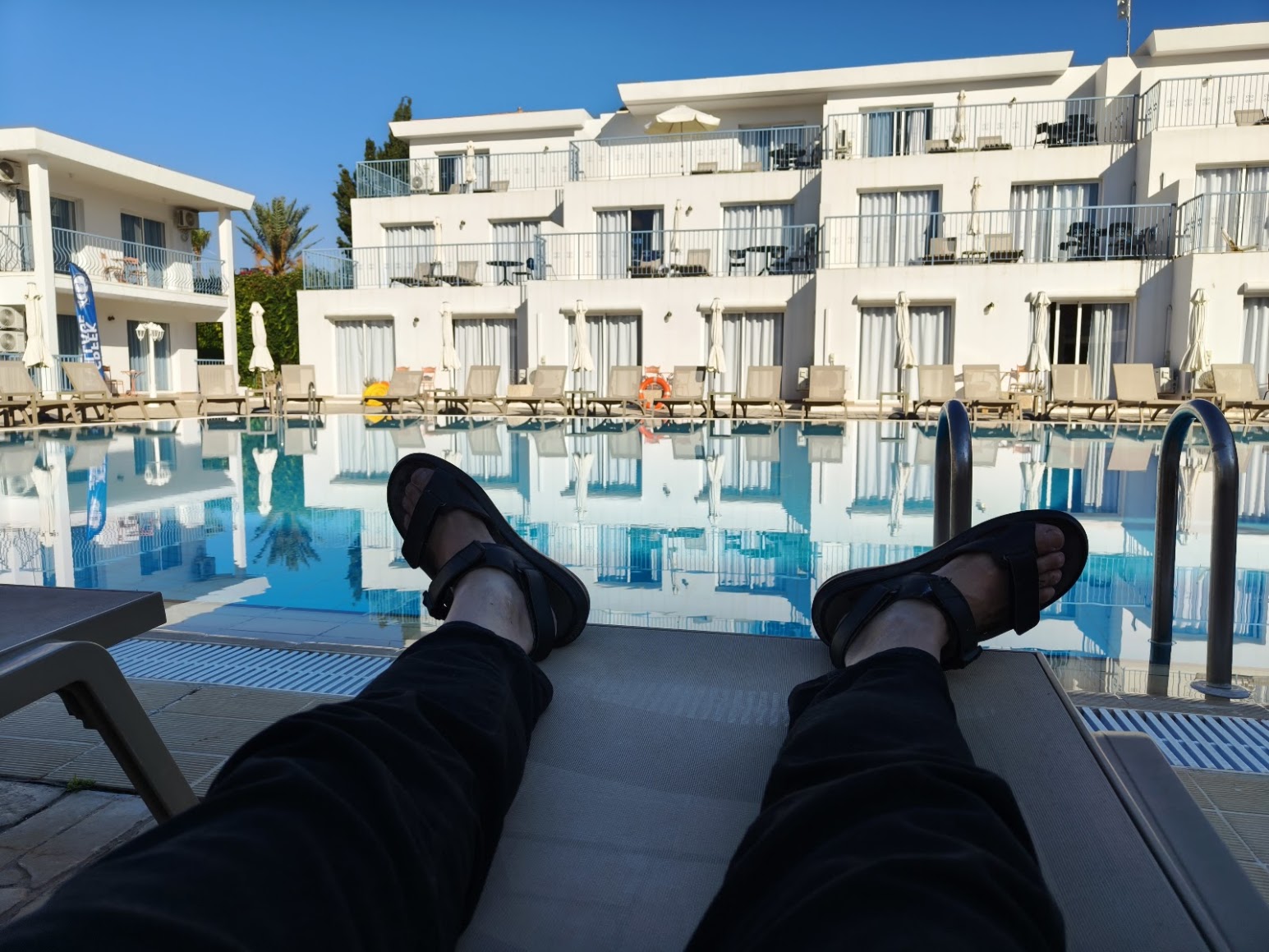
The silence here is not absolute. Mediterranean silence never is. There are rustling leaves, distant conversations, barking dogs, and church bells carried by the wind. But the island offers something increasingly rare in the modern world: Mental space.
A place where your thoughts can finally catch up with you.
No More Suitcases of Canned Food
Most families preparing for a holiday fill their luggage with swimsuits, sandals, children's toys, medications, and perhaps a few books they never quite get around to reading. Religious Jewish families often pack something else. Food. Lots of it. Cans of tuna. Vacuum-sealed sausages. Crackers. Frozen meat wrapped in layers of insulation. Culinary insurance against uncertainty. Anyone who does not observe the kosher dietary laws can never fully grasp this phenomenon.
For many observant travelers, this ritual is so familiar that it hardly seems strange anymore. Jonas Chrysis noticed it immediately.
"I've seen families arrive with an entire suitcase dedicated to food," he told me. "I want to eliminate that need completely. I want them to travel like every other tourist."
It sounds simple. In reality, it required an extraordinary investment of time, money, and education.
The resort did not merely hire kosher chefs. Every employee, from waiters and receptionists to gardeners and maintenance workers, underwent training lesson to understand the fundamentals of Jewish life. What is kosher? Why does Shabbat matter? What makes a religious family feel comfortable? How can hospitality become something deeper than service? These questions became part of the staff's education.
The result is subtle but noticeable. Guests do not feel merely accommodated. They feel understood.
That distinction matters.
Letting the Food Speak
To oversee the culinary operation, the resort recruited Israeli chef Rotem Ben Moyal, giving him unusual freedom to design the entire dining experience.
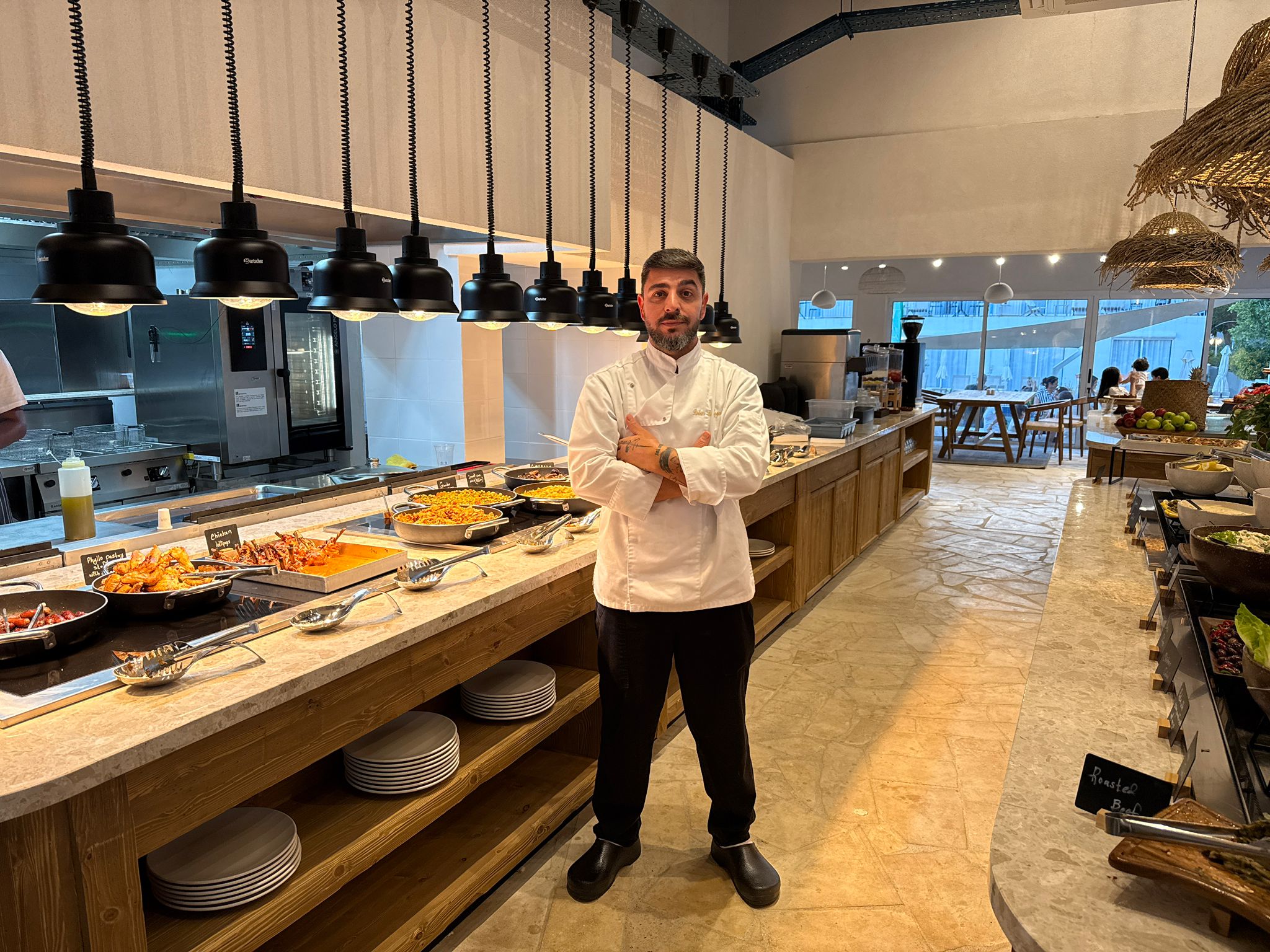
When journalists and influencers ask him about culinary philosophy, he waves away the question. "I'm not very good at public speaking," he says with a smile. "I let my food do the talking."
And the food speaks fluently. It speaks through the aroma of freshly baked challahs emerging from the kitchen before breakfast. Through bowls of colorful salads gleaming beneath olive oil. Through slow-cooked stews whose fragrances drift through the dining room long before they reach the table. Through desserts that persuade even the most disciplined guests to abandon their promises of moderation. Every meal offers abundance. Fresh vegetables. Fish. Meat dishes. Traditional comfort foods. Pastries. Desserts. Gluten-free options. Special dishes for picky children.
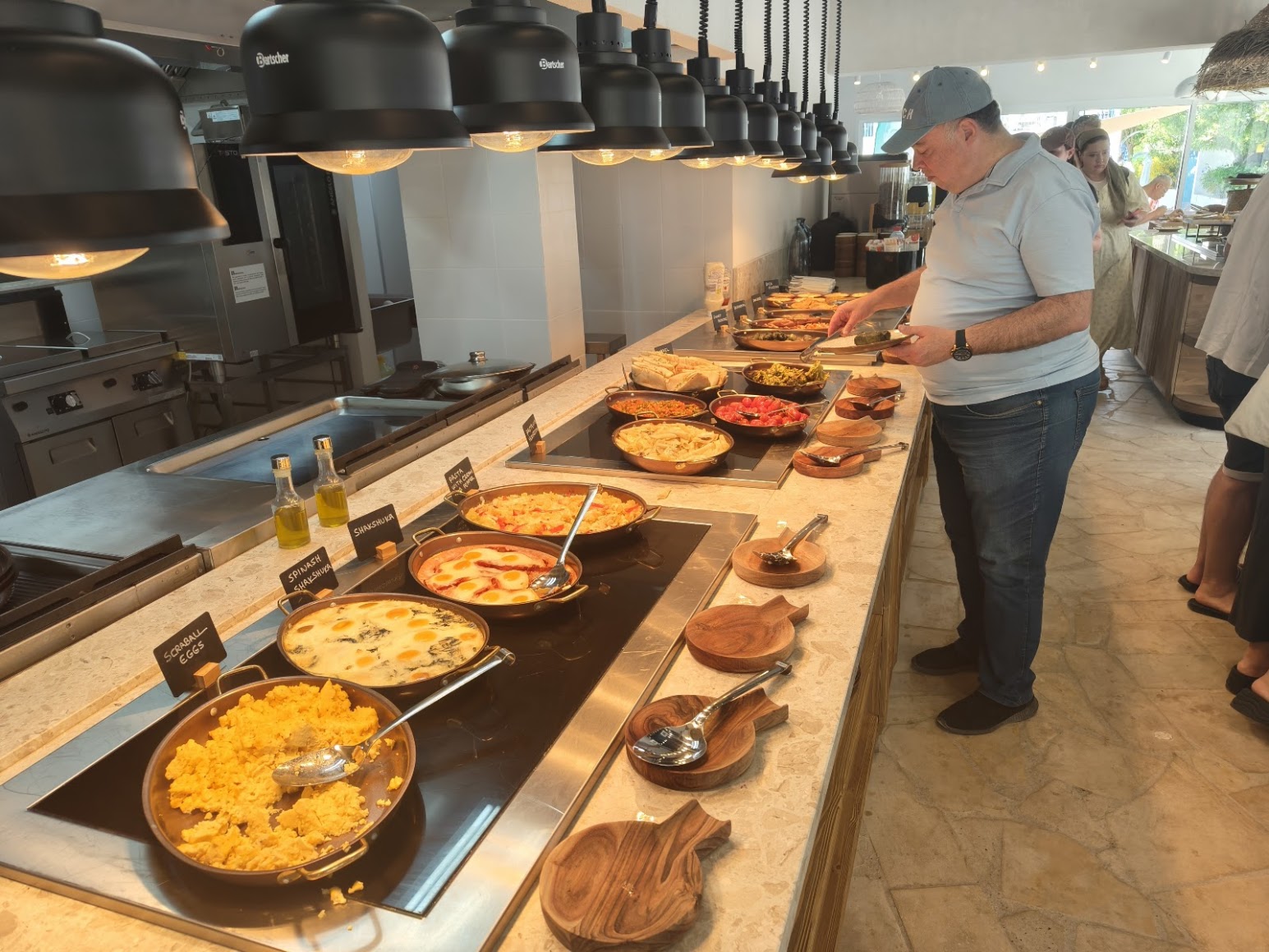
The dining room itself often becomes a small theater of family life, filled with grandparents carrying plates for grandchildren, exhausted parents finally relaxing, and children negotiating one more dessert before bedtime.
Once a week, the atmosphere shifts entirely. The dining room transforms into a Greek tavern. Musicians arrive carrying bouzoukis and guitars. Traditional melodies float through the room. Some guests remain seated and listen. Others rise from their chairs and begin to dance.
Personally, I found the music slightly louder than my taste allows. But judging by the smiling faces around me, I was clearly in the minority.
Travel, after all, is partly about surrendering control and allowing other cultures to set the rhythm.
The Luxury of Familiarity
The resort's two kitchens operate under strict Mehadrin Kosher supervision. There are no exceptions. Non-Jewish guests receive the same meals as everyone else. There is no alternative menu hidden somewhere in the kitchen. No pork. No shellfish. No compromises. Yet what impressed me most was not the kashrut. It was the absence of apology.
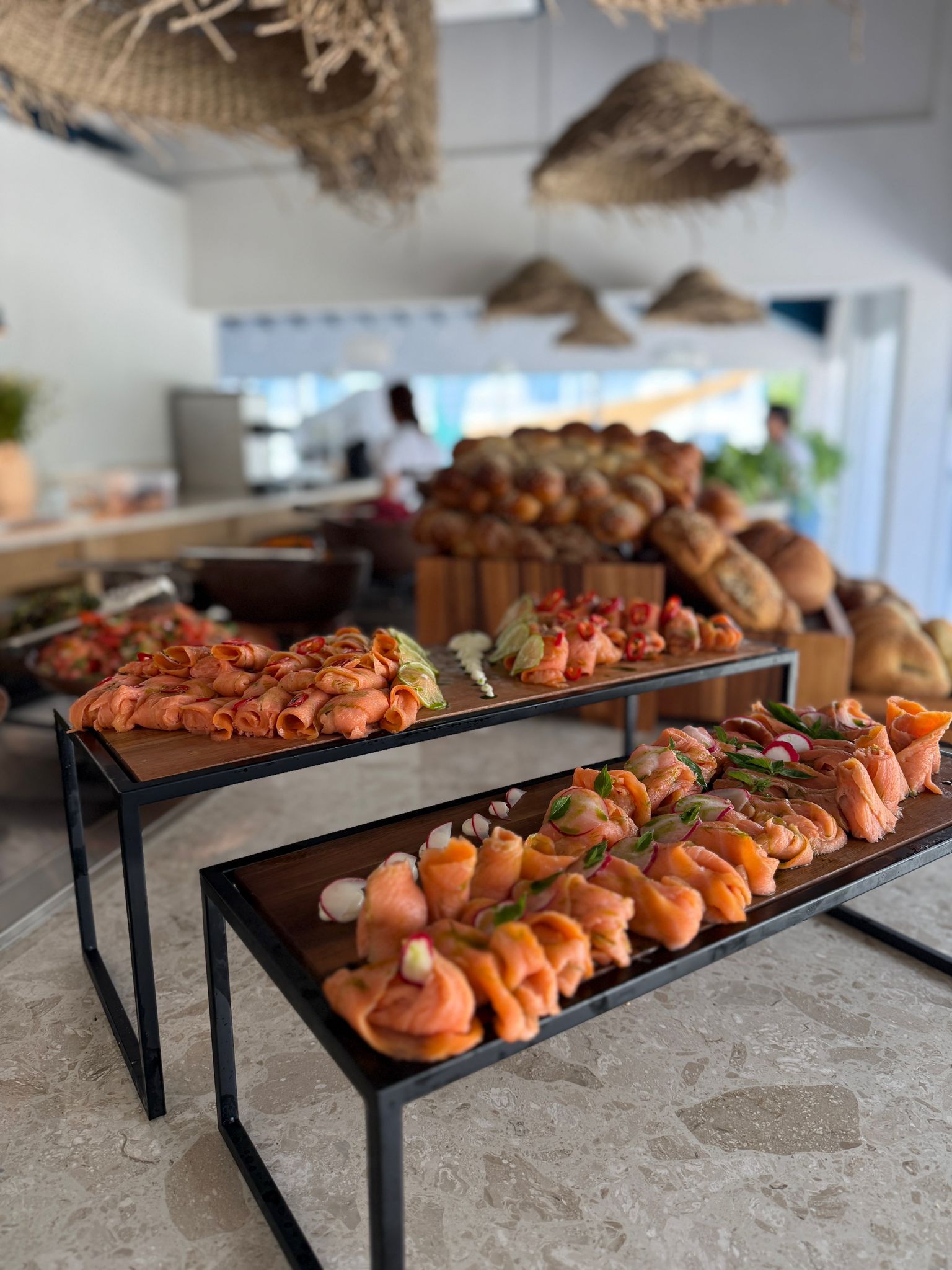
In many hotels, kosher dining feels like a concession, something added reluctantly to satisfy a niche market. Here, kosher food is not an accommodation. It is the foundation. The cuisine does not aspire to Michelin stars. It aims for something infinitely more difficult. It tries to make people feel at home.
Any chef will tell you that creating excitement is easier than creating comfort. Comfort requires trust. And trust takes time.
If the Children Are Happy
Every parent understands a simple law of family travel: If the children are happy, parents are happy too.
Many resorts advertise themselves as "family friendly" while offering little more than a swing set and a shallow pool. The Greek Village attempts something more ambitious. A dedicated children's pool sits beside the main swimming area. An old tennis court is being converted into a large inflatable playground. Kids' clubs are scheduled to open during peak season, divided by age groups. Daily activities and evening performances are planned throughout the summer.
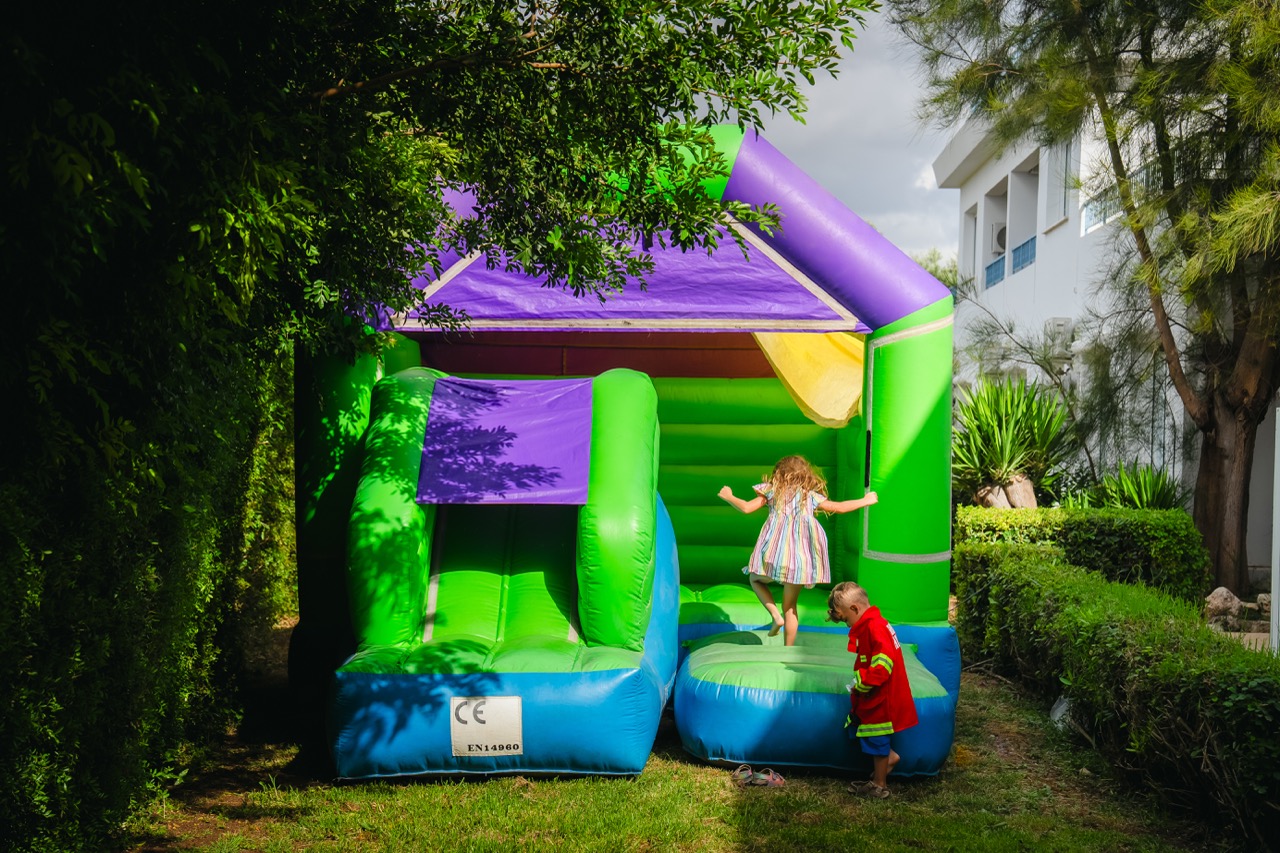
The philosophy is refreshingly straightforward. Children are not distractions from the vacation. They are central to it.
And when children are busy creating memories, parents gain something equally valuable: The chance to create their own.
Three Times 770
Sometimes a place reveals itself through tiny details. At the reception desk, guests receive their room key. Along with it comes the Wi-Fi password: 770770770
Many Israeli visitors immediately smile. For those familiar with Chabad symbolism, the reference requires no explanation. It is a tiny gesture. Yet it perfectly captures the spirit of the resort.
The details matter here. Not because they are grand. But because they signal understanding.
And understanding, more than luxury, is what transforms a hotel into a home away from home.
Travel is often measured in distances. Miles traveled. Countries visited. Landmarks checked off a list. Yet some of the most memorable travel moments happen not because we have gone somewhere new, but because something unexpectedly familiar finds us there.
One such moment arrived on a quiet morning in Latchi. A pleasant surprise for guests of the Greek Village is the proximity of the newly established Chabad House. The walk takes barely two minutes.
The building itself is simple, elegant, and unmistakably welcoming. White walls gleam beneath the Cypriot sun. Palm trees sway lazily nearby. The sea is close enough that the air carries its scent.
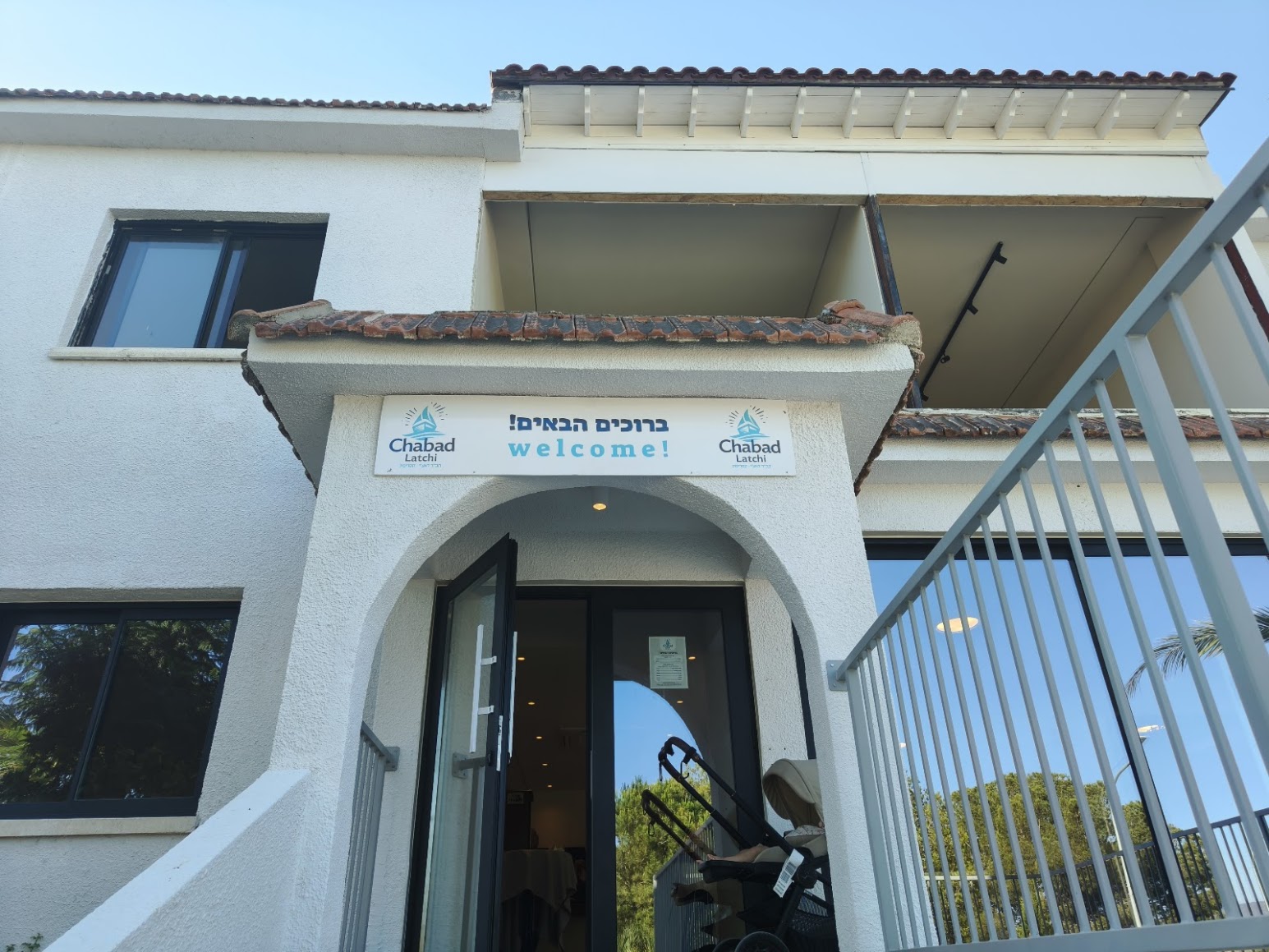
Shortly after sunrise, I joined a stream of guests making their way there. The marina was beginning to wake. Golden light spilled across fishing boats moored in the harbor. A gentle breeze drifted in from the Mediterranean. Seagulls circled above the water. And then, amid all this Mediterranean scenery, another sound emerged.
Hebrew.
Ancient Hebrew prayers rising into the Cypriot morning. It was one of those moments that catches you unexpectedly. Hundreds of kilometers from Israel, surrounded by Greek signs and Orthodox churches, the familiar cadence of Jewish prayer suddenly creates a bridge between worlds.
During my stay, daily services were attended by resort guests and visiting tourists. I did not encounter local Jews among the worshippers. Yet the minyan was strong, the atmosphere communal, and the feeling remarkably intimate.
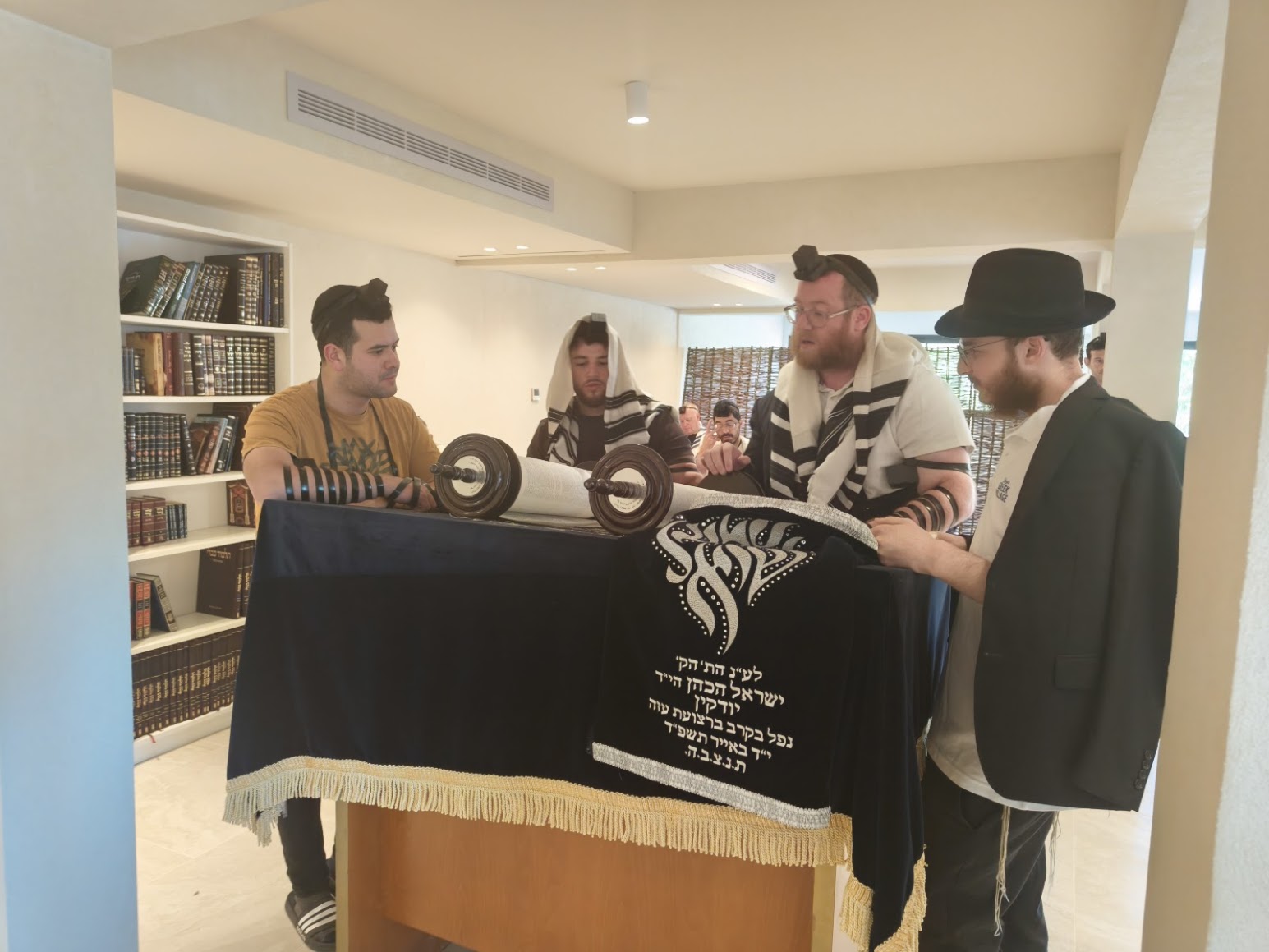
Home, I realized once again, is not always a place.
Sometimes it is simply the presence of people who share your language, your traditions, and your understanding of the world.
The Blue Lagoon and the Color That Doesn't Exist
No matter how comfortable a resort may be, eventually curiosity wins. Guests begin to venture beyond the hotel grounds. The Greek Village offers several optional excursions, but one stands above the rest in popularity.
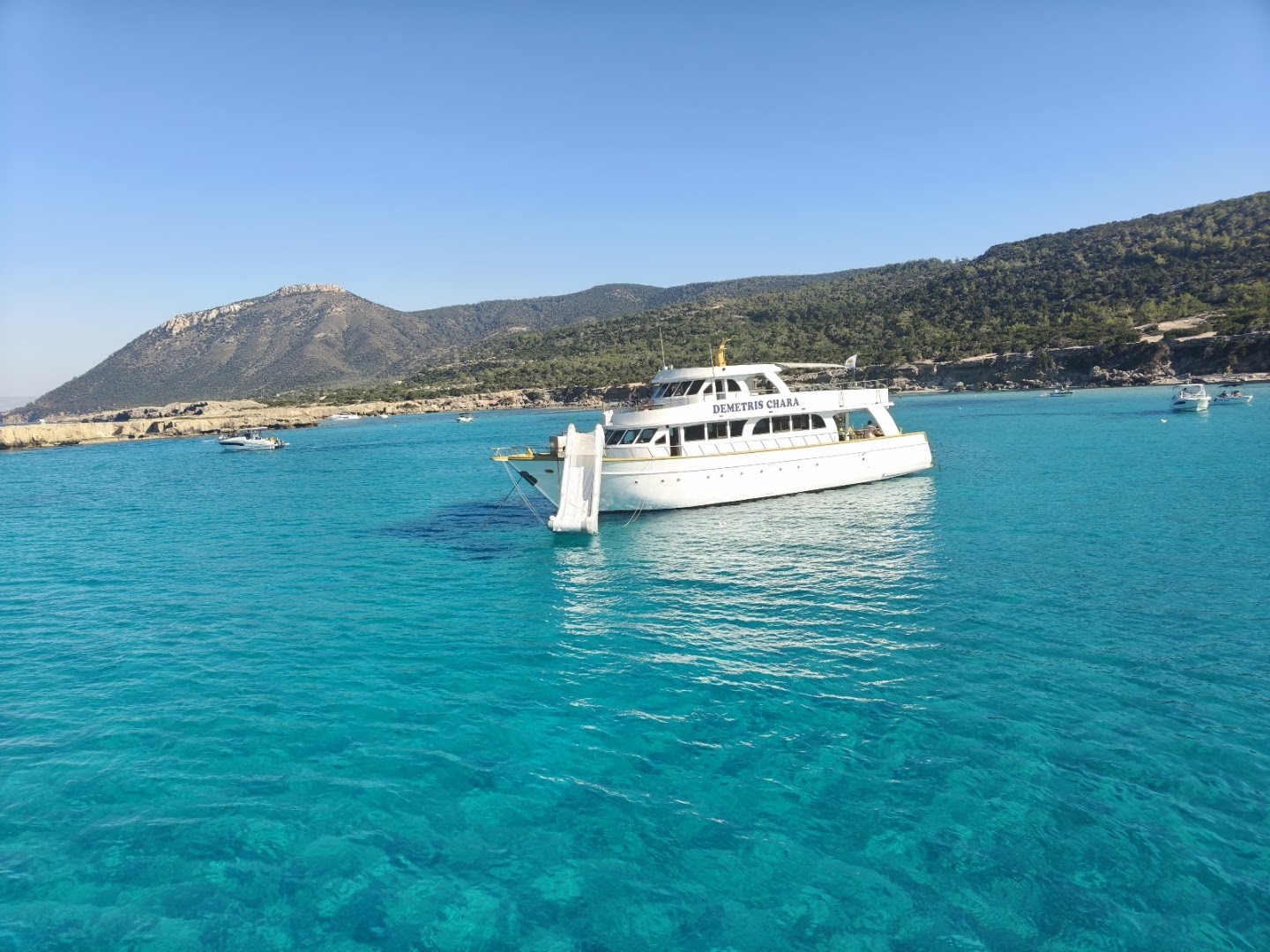
The voyage to the Blue Lagoon- The journey begins at the marina in Latchi, where excursion boats wait for passengers eager to explore one of Cyprus's most celebrated natural treasures. Part of the lagoon's appeal lies in its isolation. You cannot simply drive there. The absence of roads has protected it from the fate that has overtaken so many beautiful coastal locations around the Mediterranean.
The approach is dramatic. Rocky coastline gives way to increasingly transparent water. The sea shifts through an astonishing spectrum of colors. Turquoise. Aquamarine. Emerald. Sapphire. Shades so vivid they seem digitally enhanced.
Eventually the captain drops anchor.
And then comes the moment everyone has been waiting for. Passengers leap into the water. Children scream with delight. Parents follow. Even grandparents, after a brief hesitation, often surrender to temptation.
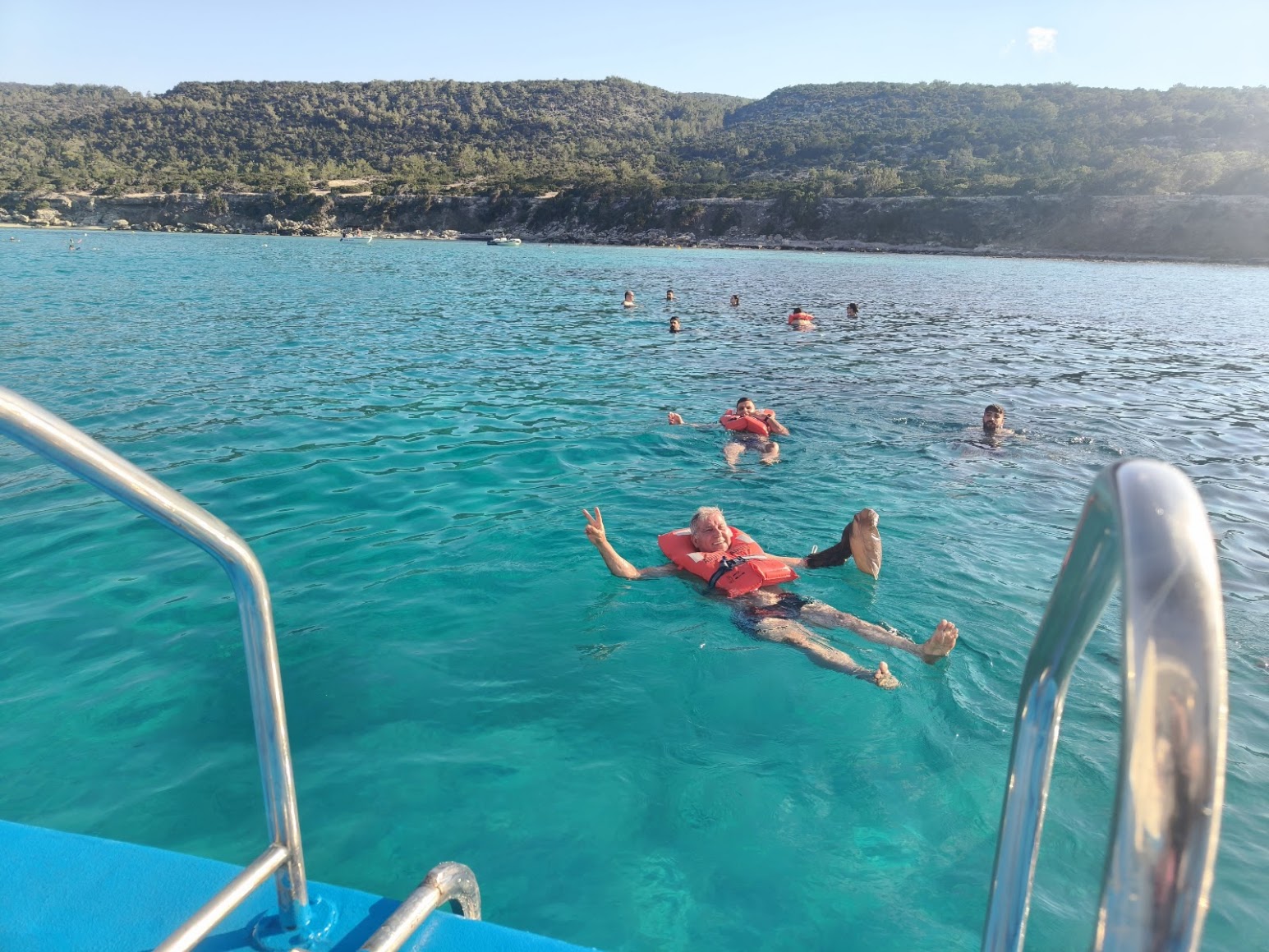
The water is so clear that the anchored vessel appears suspended in midair, floating above invisible depths.
The Blue Lagoon suffers from a peculiar problem. It is too beautiful to look real. The colors seem invented. As though some extravagant painter had mixed pigments unavailable to ordinary mortals.
Perhaps that is why visitors remember it so vividly. Not because it looks like paradise. But because it looks like an impossible version of paradise.
Watching adults dive into the water, laughing with the abandon of children, I found myself thinking that successful travel may have less to do with discovering new places than rediscovering forgotten parts of ourselves.
The Blue Lagoon excels at that.
Into the Wild Akamas
The Greek Village also offers its guests the opportunity to explore the region on a jeep safari adventure. If the lagoon reveals Cyprus at its most serene, the Akamas Peninsula reveals it at its most untamed. The contrast is striking. Here the island sheds its resort persona. The landscape becomes rugged, unpredictable, and gloriously wild.
Our jeep bounced along dusty tracks winding through hillsides scented with thyme and wild herbs. Ancient olive trees twisted toward the sky. Stone terraces climbed distant slopes.
The road threaded through sleepy villages seemingly untouched by the relentless acceleration of modern life.
This was a different Cyprus. Older. Quieter. Perhaps more authentic.
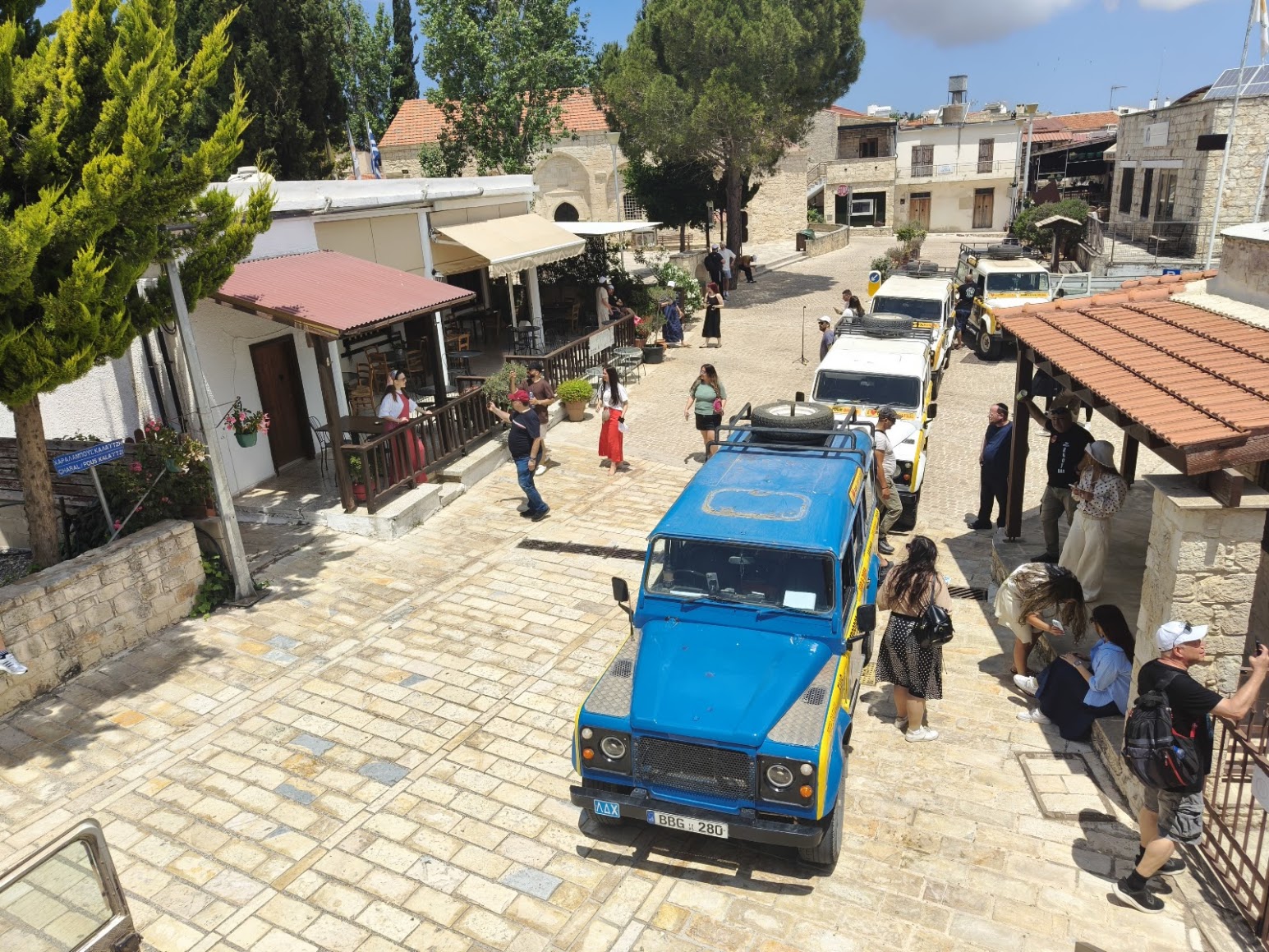
One of our stops was the village of Kathikas, often regarded as one of the most beautiful villages in the region. Walking through its streets felt like stepping into a photograph from another era. Stone houses lined narrow lanes. Flower pots overflowed with color. Doorways stood open to the afternoon air. The streets were astonishingly clean, as though someone had polished them before dawn.
Nothing here appeared staged. Nothing seemed designed for social media. The beauty came from permanence rather than performance. Kathikas possesses the confidence of a place that does not need to impress anyone.
Adonis, Aphrodite, and the Gods of Water
From Kathikas we continued toward one of the island's most famous natural sites- The Baths of Adonis.
According to mythology, this secluded pool was a meeting place for Adonis and Aphrodite, Cyprus's legendary lovers. Whether one believes the stories is beside the point. The setting itself is enough to inspire mythology. The pool lies hidden among dense vegetation. High rock walls rise around it. Water tumbles from above into a deep natural basin.
The air feels cooler here. Moist. Almost enchanted.
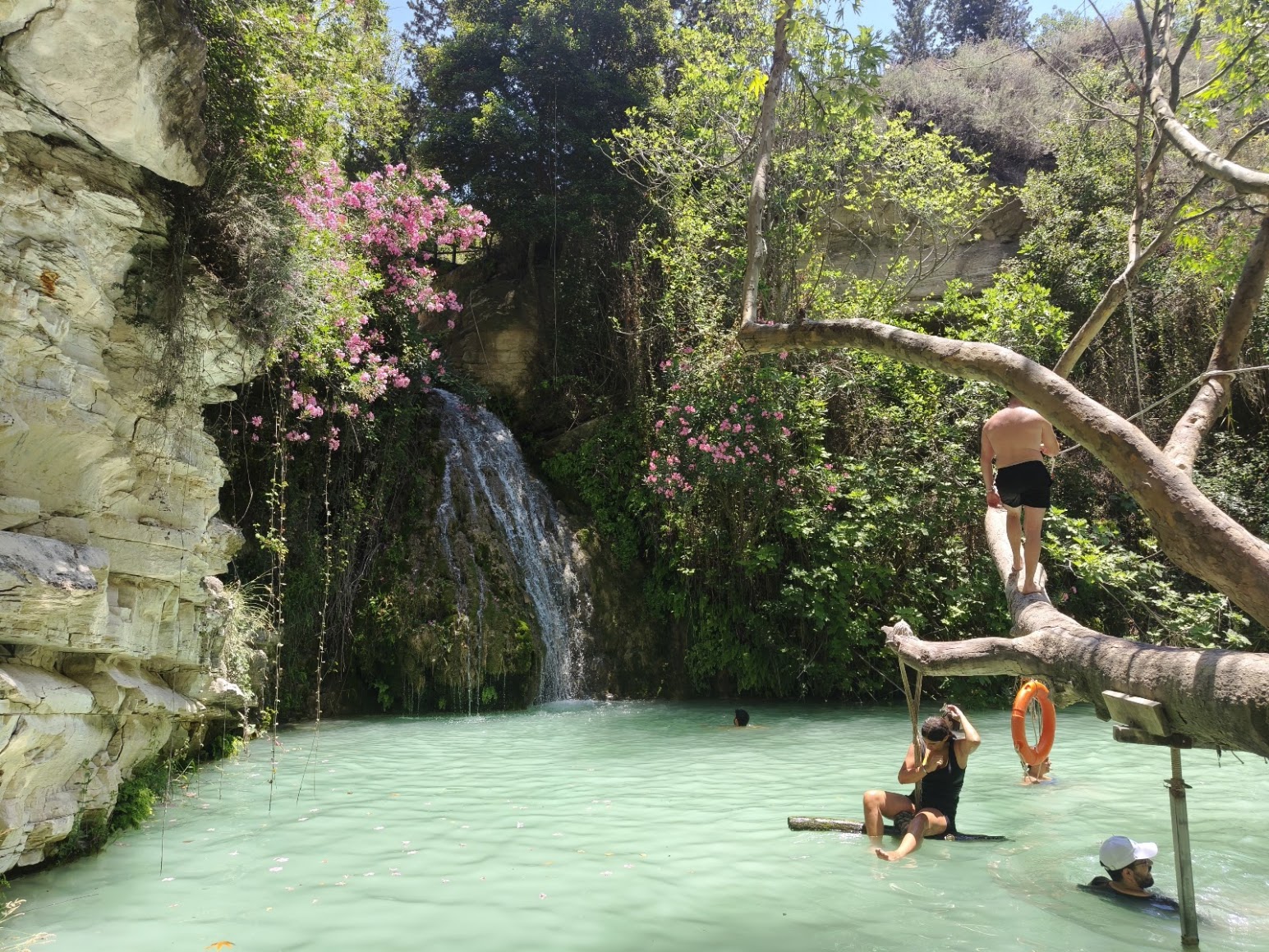
The brave visitors plunge into the cold water. The truly adventurous climb beside the waterfall using a rope ladder before leaping back into the pool below.
Laughter echoes off the cliffs. Water splashes. Children challenge their parents. Parents try to prove they are still young. For a few hours everyone becomes part of the landscape.
Later we visited another site linked to Cyprus's mythology. The Baths of Aphrodite. This quieter location attracts visitors for different reasons. Less dramatic than the Baths of Adonis, it carries a sense of gentle mystery. A shaded grotto. A spring
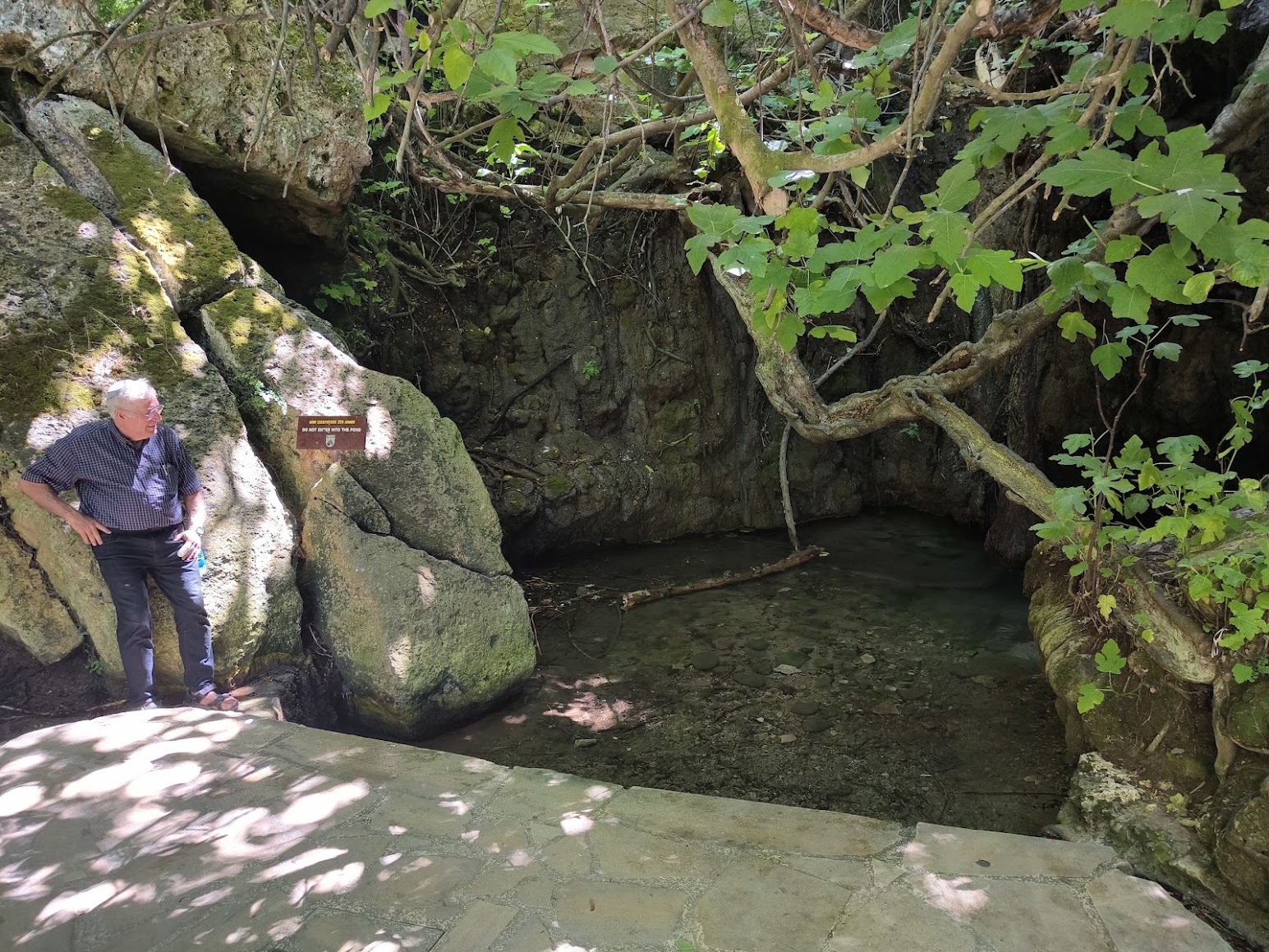
Ancient stories lingering beneath the trees. Cyprus has always understood the power of storytelling. Its myths are woven into the landscape itself. Every spring has a legend. Every cliff has a tale. Every bay seems to hide a god.
Between Cyprus and Jerusalem
What surprised me most during my stay was not the scenery. It was a strange familiarity. How could a Greek resort, on a Mediterranean island, sometimes feel so profoundly Jewish?
The answer lies in history.
For more than two thousand years, Jewish and Greek civilizations have been intertwined. During the era of the Second Temple, Greek culture spread throughout the Land of Israel.
Its influence became so pervasive that Their influence was so profound that many Jewish sages and Rabbis in the Mishna bore Greek names. Like Rabbi Tarfon, Antigonus of Socho, Summchus, and many others. Even the High Priest Jonathan, son of Mattathias, was also known by the Greek name Apphus. And let us not forget the Tanna Paphos ben Yehuda, whose name is familiar to every student of Jewish tradition from the famous Talmudic parable of the fox and the fish. Also, some of the kings of Judea during the Hasmonean period also bore Greek names, including Johanan Horcenus, Judah Aristobulus, Mattathias Antigonus, and others.
This illustrates one of the great paradoxes of the Hasmonean dynasty: the very family that fought against Hellenization eventually adopted Greek names in later generations. It reflects the profound extent of Hellenistic influence on the Land of Israel during the second and first centuries BCE.
History is rarely as simple as we imagine. Cultures clash. But they also mingle. Borrow. Influence one another. And sometimes, centuries later, those ancient connections quietly reappear in unexpected places.
Standing on the hills above Paphos, gazing across landscapes not unlike those seen by generations before us, it becomes easier to appreciate how deeply intertwined the eastern Mediterranean has always been.
The sea separates countries. Yet it also connects them.
Perhaps that is why so many Israelis arrive in Cyprus feeling strangely comfortable. Not like strangers. But like distant cousins returning to visit family they had almost forgotten.
More Than a Business
Toward the end of my stay, I sat down once more with Jonas Chrysis. When I ask Jonas about his business model, his answer is anything but conventional.
"Money matters," he says, "but it is only my second priority."
His first priority, he explains, is to make Israelis feel at home.
From a businessman responsible for one of Cyprus's largest construction companies, this was not the answer I expected. Normally, such statements trigger a journalist's skepticism. The travel industry is full of carefully crafted slogans.
It would be easy to dismiss such a statement as a marketing slogan. But then I remember something. This resort represents only a tiny fraction of Jonas's business empire. And yet, of all his projects, this is the one he chose to put his name on. That says something. Perhaps about pride. Perhaps about commitment. Or perhaps about the fact that the most meaningful projects are not always the largest ones.

Perhaps that is the true gift of places like the Greek Village. They do not teach us something new about the world. Rather, they remind us of something we have forgotten about ourselves. In an age when we move endlessly between screens, headlines, and notifications, it sometimes seems that the greatest distance is not between countries, but between a person and the quiet place within.
And when the plane finally lifts off for the short flight back to Israel, the most valuable souvenir we carry with us may not be a photograph of the Blue Lagoon or a suitcase filled with gifts. It may simply be the knowledge that even in a noisy and restless world, there are still places where one can simply be.
In Conclusion
Travel journalists are frequently invited to experience hotels and resorts. I am no exception. It is part of the profession. Some readers may therefore wonder whether my praise for the Greek Village is influenced by the fact that I was freely hosted here as a guest.
The answer is no.
The true test of any destination comes after the article has been published. One simple question remains: would I return at my own expense?
In this case, the answer is unequivocal.
Yes!
Not only would I return, I am already planning to do so. Next time, I will come with my entire family and pay the full rate, just like you.