
Coconut aromas and exotic spices, the rhythms of African music, and an ancient language connecting people filled the Tanzanian ambassador's residence in Israel last night, as International Swahili Day was marked at a festive event bringing together diplomats, ambassadors, and numerous guests from across the international community.
Among the participants at the event, held at the ambassador's residence in Herzliya, were representatives from the embassies of Kenya and Rwanda in Israel, the Chief of Protocol at the Ministry of Foreign Affairs, Ambassador Gil Haskel, former Israeli ambassador Itzhak Eldan, alongside members of the diplomatic corps and public figures.
Afterward, guests embarked on a small virtual journey through East Africa without ever leaving israel. The reception tables offered tastings from Tanzanian cuisine, which blends African and Indian influences. Coconut, green bananas, cassava, aromatic spices, and tropical fruits such as mango, pineapple, and papaya created a celebration of colors, aromas, and flavors. In the background, traditional Tanzanian music played alongside contemporary compositions, completing the experience and lending the event the atmosphere of Zanzibar and the shores of the Indian Ocean. Unfortunately, the chicken and meat dishes were not kosher, so many of the Israeli guests were unable to enjoy them.

The ceremony opened with the playing of the national anthems of Israel and Tanzania.
Tanzania's ambassador to Israel, Alex Gabriel Kallua, delivered his address in Swahili, but guests were given printed English translations of his remarks in advance, allowing everyone to follow along. In his speech, he emphasized that Swahili is not merely a language but a bridge connecting peoples, cultures, and economies across Africa. According to him, this year's theme for International Swahili Day is "Peace, Solidarity, and Economic Diplomacy" - values that reflect the language's role in promoting cooperation and understanding between nations.
Ambassador Kallua noted that Tanzania seeks to deepen its friendship with Israel and expand cooperation in tourism, culture, and the economy. He invited the Israeli public to discover his country, which offers a unique combination of some of the world's most impressive safari reserves, the peak of Kilimanjaro, the white beaches of Zanzibar, and a rich encounter with local cultures.
The Israeli government was represented by Mr. Gil Haskel, Chief of Protocol at the Ministry of Foreign Affairs. In his remarks, he noted that Israel's good relations with East Africa date back to biblical times: the Queen of Sheba traveled from East Africa to Jerusalem to meet King Solomon, and their shared son founded a new Jewish royal dynasty. According to him, these good relations have continued ever since, up to the present day.
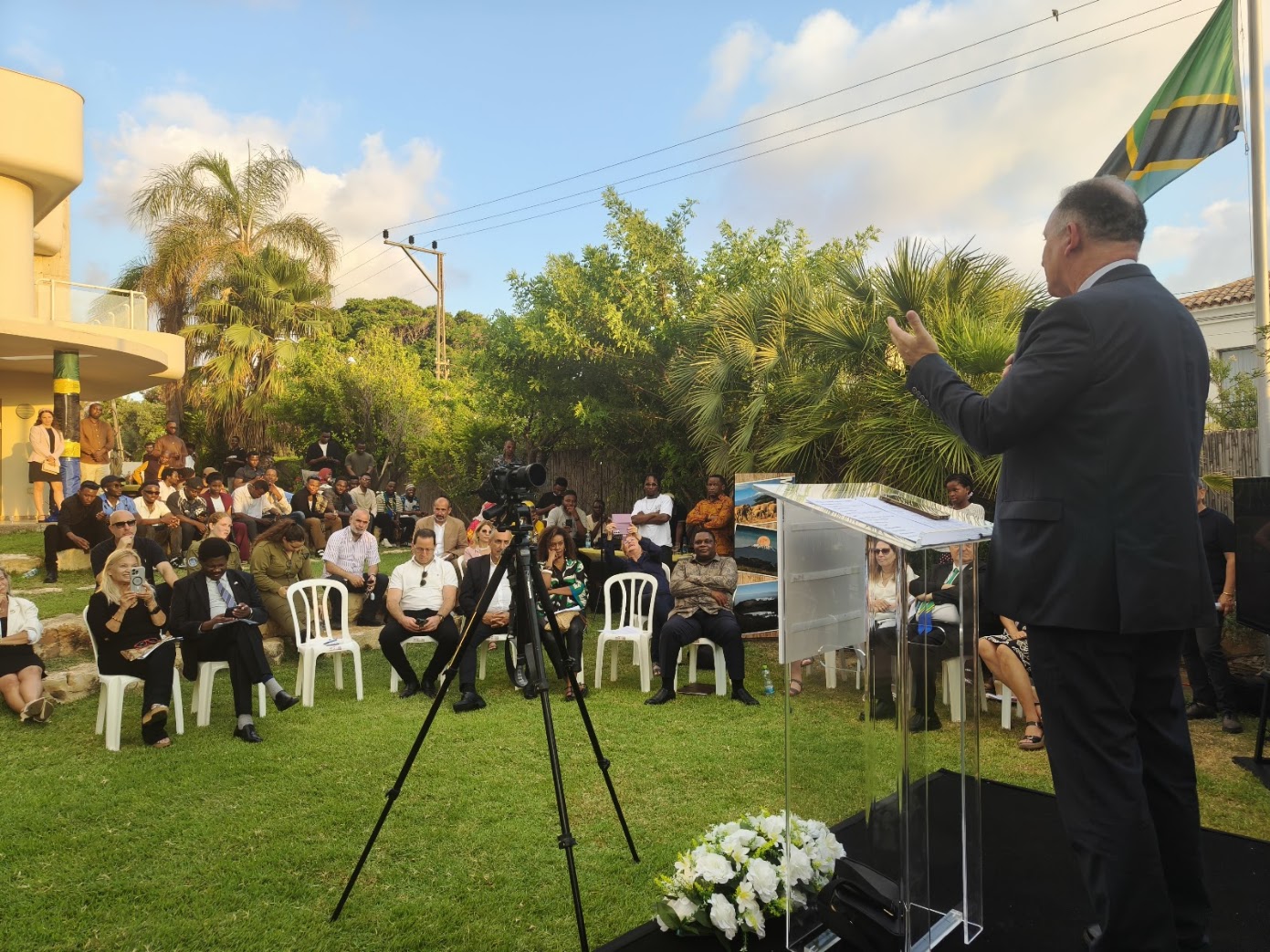
A particularly moving moment came when the ambassador presented a certificate of appreciation to former Israeli ambassador Itzhak Eldan, who surprised the audience by closing his thank-you speech with a song in Swahili, earning prolonged applause. An additional token of appreciation was presented to the Chief of Protocol at the Ministry of Foreign Affairs, Ambassador Gil Haskel.
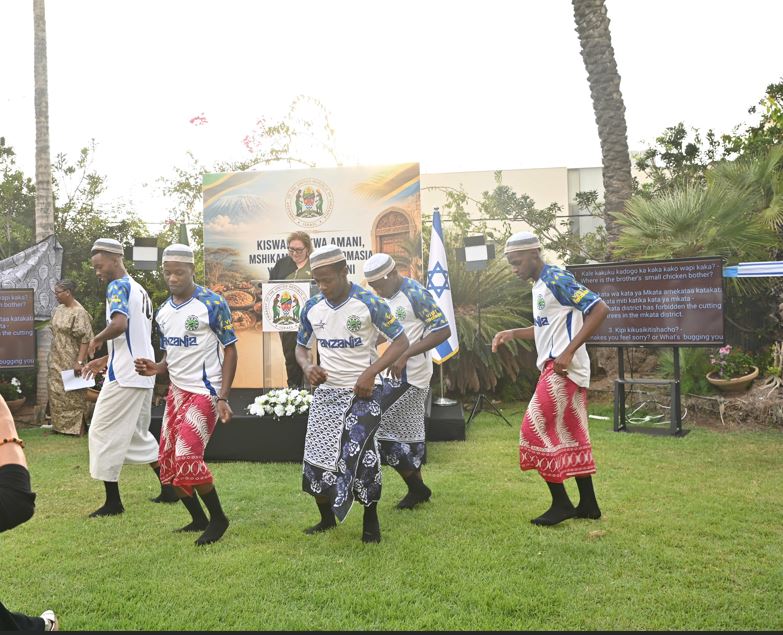
The ceremony was also attended by Tanzanian students currently studying and training professionally in Israel, who danced to the sounds of Tanzanian music on the lawn of the ambassador's residence.
It is worth noting that every summer, dozens of Israeli high school students also travel to Tanzania as part of educational and volunteer delegations run by various nonprofit organizations. One of the best-known programs is run by the nonprofit Pico Kids, which sends delegations of high school students, mostly from Jerusalem, to villages in Tanzania. (Disclosure: two of my own grandchildren took part in these delegations). They help renovate schools, build vegetable gardens, kitchens, and playgrounds, run educational activities for children, and work side by side with members of the local communities.
But the purpose of these delegations goes far beyond volunteer work. They aim to cultivate a generation of young people who come to know other cultures through listening, respect, and partnership, not through a sense of superiority or "rescue." For the participants, the encounter with the villages, with members of the Maasai tribe, and with the Tanzanian way of life becomes a living lesson in leadership, social responsibility, and the understanding that bringing hearts together between peoples begins with simple human contact. In this sense, the relationship between Israel and Tanzania is built not only through official diplomacy or tourism, but also through young people who create bridges of friendship and familiarity that stay with them for years after they return home.
At the close of the evening, Ambassador Kallua praised the work of Kasbian Nuriel (Chirichi), the Consul General of Tanzania in Israel, for his ongoing contribution to strengthening relations between the two countries and advancing cooperation in tourism, culture, and diplomacy.
International Swahili Day, marked every year on July 7th, is not simply a celebration of language. It is a reminder of the power of culture to open doors, bring people closer together, and turn words into bridges between continents.
As the guests left the ambassador's residence, they carried with them far more than the sweet taste of mango or the rhythm of African music. They carried a reminder that a real journey begins long before boarding a plane. Sometimes it begins with a single word in a foreign language, the scent of an unfamiliar spice, or a song sung on the other side of the world. Perhaps that is the deepest meaning of International Swahili Day: a reminder that the distance between Tel Aviv and Dar es Salaam is measured not only in kilometers, but in curiosity, in listening, and in the desire to know the other. And in days when the world can often seem divided and noisy, it is precisely language, culture, and hospitality that can become the quietest, most stable bridge between human beings.