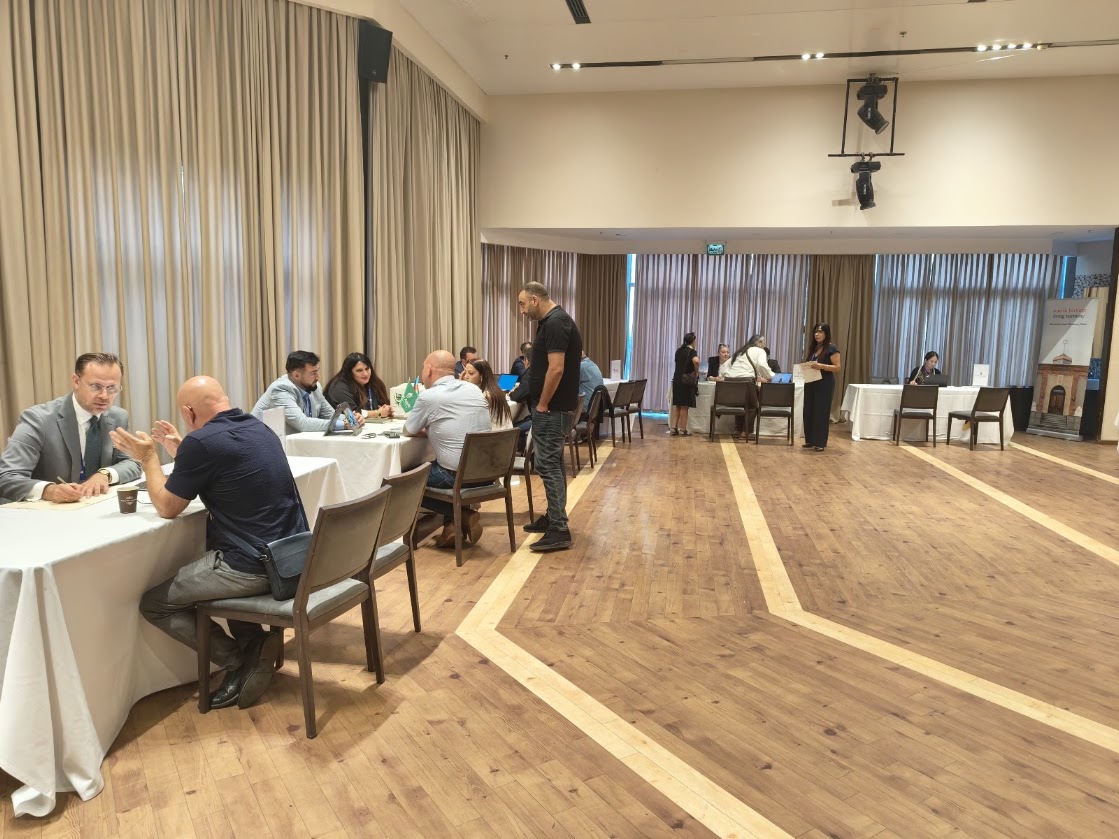
The Azerbaijan Tourism Board in Israel will hold a B2B workshop today to strengthen business ties between Israeli and Azerbaijani tourism professionals. A similar event took place yesterday in Jerusalem. Both workshops were organized with assistance from the Israeli tourism company Terranova.
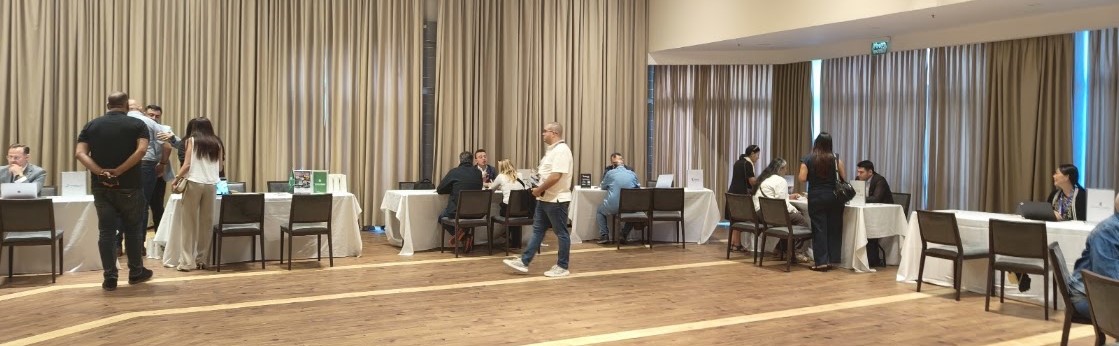
Dozens of Israeli tourism professionals attended meetings with representatives of hotels, airlines, attractions and destination management companies (DMCs) from Azerbaijan. Around 20 booths and tables filled the ballroom, where Azerbaijani representatives presented their offerings and sought new business partnerships.
Amid promotional materials, hotel photographs and promises of holidays in the Caucasus, the gathering meant more than the tourism deals being discussed. Azerbaijani delegations had come to Israel to meet travel agents and tour operators, showcase their country and encourage Israelis to keep visiting.
In a tourism industry where airlines can cancel flights in response to a single news headline, the willingness to travel to Israel, shake hands and discuss future business sends a message in itself. Tourism often begins with a small table, a cup of coffee and someone willing to give you a few minutes. Before a hotel room can be booked or a holiday package sold, someone on the other side must believe that making the effort is worthwhile.
Three Minutes from the Synagogue
Most overseas representatives at the workshops represented hotels in Baku and other Azerbaijani destinations. Farah Mansimova, sales manager at AHC, presented the company's portfolio of ten hotels in the country. One is the Country Yard Hotel in Baku, located about a three-minute walk from the synagogue.
For an ordinary tourist, three minutes may seem insignificant on a city map. For an observant Jewish traveler, however, that short distance can shape an entire visit. It may determine whether Shabbat becomes a day of rest and prayer or one spent worrying about routes and distances.
This illustrates an important truth: tourism is not a one-size-fits-all product. Sometimes the difference between a suitable hotel and an unsuitable one lies not in the swimming pool or the view, but in the distance to a synagogue, the availability of kosher food or the ability to observe Shabbat without logistical complications.
Azerbaijan's national airline (AZAL) also participated. Other exhibitors included representatives of attractions such as Shahdag Mountain Resort, the country's mountain ski destination, presented by Mr. Igor Shaulov, as well as DMCs specializing in ground services, excursions, transfers and tailor-made itineraries.
The goal is not simply to sell hotel rooms. It is to build a network of reliable local partners who could help Israeli travel agents offer clients well-organized holidays and provide assistance when problems arise.
The Caucasus Welcomes Kosher Travelers
One particularly interesting table belonged to Green Apple, a tour operator offering services for Jewish travelers who observe kosher dietary laws. The company arranges tours with kosher meals supplied by restaurants in Baku. Its services include Shabbat arrangements and a selection of hotels for individuals and groups at different price levels.
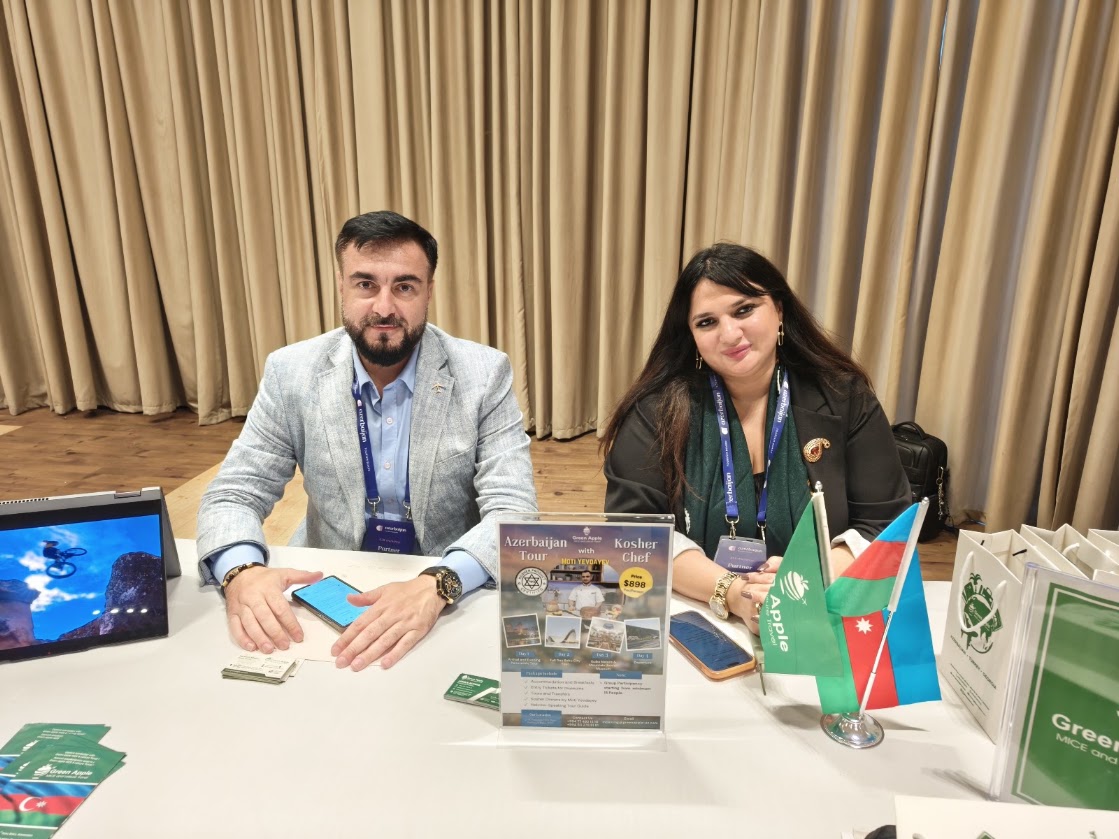
Jamila Aliyeva, the company representative, explained that one of the hotels it works with is located near the synagogue. "This is a major advantage for groups and individuals staying in Baku over Shabbat," she said.
For years, many religious travelers avoided certain destinations not because there was nothing worth seeing, but because kosher food and Shabbat arrangements were difficult to organize. When a local operator can coordinate suitable accommodation, meals and access to a synagogue, a destination that once seemed complicated becomes a realistic option. Good tourism should not require visitors to abandon their way of life. It should allow them to discover a different world without leaving their identity behind at the airport.

The Red Village in the Caucasus
Mr. Igor shaulov presented hotels and tours in the Caucasus Mountains, including the region around the Red Village, known locally as Krasnaya Sloboda. Located near Quba, the village is closely associated with the Mountain Jews, a community with its own history, traditions and language.
The Red Village is one of the world's rare Jewish settlements outside Israel with only Jewish population. Unlike places where little remains beyond an abandoned synagogue or a memorial plaque, the village has an active Jewish presence. It is home to 13 synagogues and a Jewish museum. For Israeli visitors, a trip here can be much more than another stop on a scenic itinerary.
The mountains and villages are not merely a backdrop for photographs. Together with the community's heritage, they tell a story of Jewish life in a world quite different from the one most Israelis know.
Combining Baku, the natural attractions of the Caucasus and the Red Village offers travel agents a varied itinerary, introducing visitors to an Azerbaijan that extends far beyond its capital.
The Numbers Behind the Friendship
The director of the Azerbaijan Tourism Board in Israel, Jamila Talibzade, reports that approximately 70,000 Israelis visited Azerbaijan in 2025. According to her, around 67,000 had already visited between January and the end of September 2026. These figures demonstrate a substantial tourism relationship between the two countries.
Yet Talibzade is not content with the numbers alone. The workshops in Jerusalem and Tel Aviv aim to deepen ties with Israel's tourism industry, introduce new products and encourage cooperation between Israeli agents and Azerbaijani businesses.
Toghrul Rahimov, sales manager at AZAL, offered another perspective. According to Rahimov, between one-third and one-half of Israeli passengers arriving in Baku on the airline's flights continue on connecting flights to Russia, the Far East and India. For them, Baku is primarily a transit point.
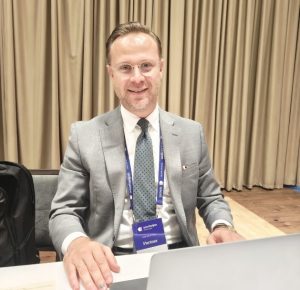
Passenger arrivals, therefore, do not tell the whole story. Not everyone who lands stays to explore the city, sample the local cuisine or venture into the mountains. Some see Baku simply as a transport hub on the way to somewhere else.
The challenge for the tourism board is to turn that transit point into a destination in its own right, persuading travelers to extend their stays and discover what lies beyond the airport terminal.
Who Stays When Others Leave?
The workshops carries significance beyond the number of hotel rooms that might eventually be sold. AZAL was among the few foreign airlines that continued operating flights to Israel during periods of war and security uncertainty, when many other international carriers suspended or reduced their services.
The Azerbaijan Tourism Board also deserves recognition for holding professional meetings in Israel despite the security situation, at a time when many international tourism organizations were reluctant to conduct promotional activities locally.
Tourism depends heavily on trust. Travel agents need reliable contacts, local operators need partners who will continue selling their destinations after the headlines change, and travelers want to feel that someone is looking forward to welcoming them.
Before the COVID-19 pandemic and the subsequent war, Israel hosted numerous workshops organized by foreign tourism boards, including those representing European destinations. Much of this activity has since declined. Against that background, Azerbaijan's initiative stands out.
There is no need to turn every business meeting into a diplomatic declaration. Sometimes it is enough for people to sit around a table, exchange business cards and explore how they might work together. In an unpredictable world, such connections have real value.
Perhaps this is one of tourism's great ironies: the industry talks constantly about distance, yet it depends on closeness. It relies on the ability to meet someone from another country, listen to what they have to offer and discover that commercial interests can coexist with curiosity, familiarity and genuine friendship.
Talibzade and her team chose not to wait until every risk had disappeared. They came to Israel to do business here and now, making a practical commercial decision with a human dimension.
B2B workshops cannot guarantee full aircraft or additional hotel bookings. They can, however, create the conditions for both. They connect people who understand Israeli travelers with those who know Baku, those who can arrange kosher meals with agents serving religious groups, and travel professionals searching for new destinations with a country eager to present itself in a new light.
Azerbaijan wants Israelis not merely to pass through, but to stop and stay awhile. In the hotel ballrooms of Jerusalem and Tel Aviv, its representatives came to open that door.