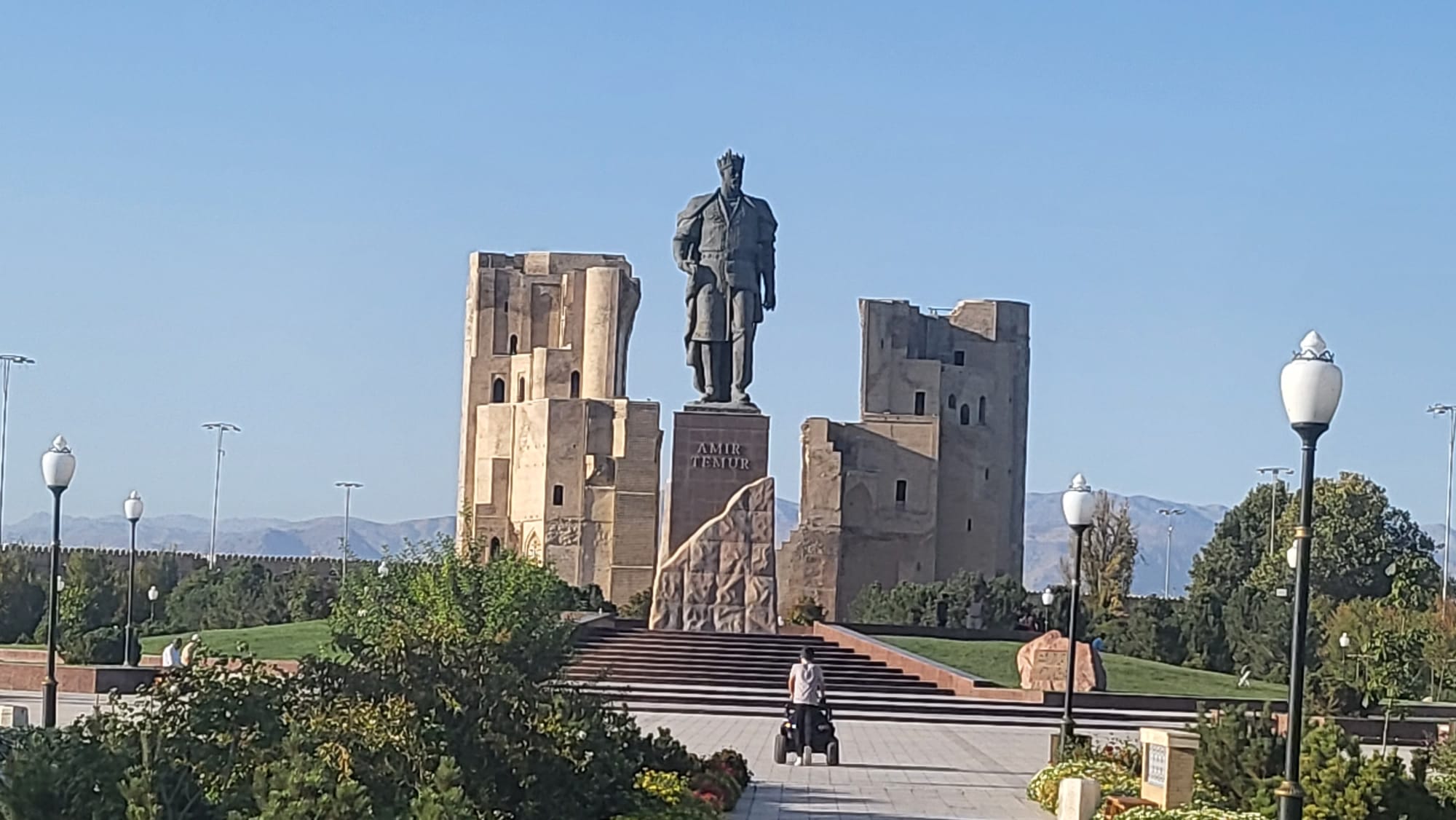
The road to Jewish Shahrisabz cuts through dry mountain passes and broad valleys where shepherds still move their flocks beneath enormous Central Asian skies. Then, almost suddenly, the blue domes appear above the trees and the ruins of Timur’s vanished palace rise from the earth like the remains of an empire still unwilling to disappear. Travelers usually arrive here searching for the legend of Emir Timur, the conqueror who shaped much of Central Asia. Yet beyond the monumental gates, the tiled mosques, and the imperial myths lies another story, quieter and more fragile. Jewish Shahrisabz survives today mostly through memory: an old cemetery, a silent synagogue, fading gravestones, and the devotion of a caretaker tending a community that has nearly vanished from the map. In this ancient Uzbek city, the grandeur of empire and the loneliness of disappearance exist side by side beneath the same desert light.
Jewish Shahrisabz and the Legacy of Emir Timur
In the picturesque environs of Shahrisabz, the cradle of Uzbekistan's national hero, Emir Timur Lang, history weaves a compelling narrative. Born in 1336 in the village of Khoja Ilgar, near the city now known as Shahrisabz (formerly Kish), Timur would rise to shape an empire that left an indelible mark on Central Asian history. His conquests spanned from India to the Middle East, establishing him as the founder of the Uzbek Empire. To this day, the cult of personality surrounding Timur endures, casting its enigmatic aura even over his hometown
Timur's grand vision extended to his own resting place, for he commissioned a mausoleum in Shahrisabz, intending it to be his final abode. However, his plans were altered by the harsh, snow-covered roads of winter, leading to his eventual burial in Samarkand. Yet, the city bears witness to his legacy with grace
The White Palace of Shahrisabz
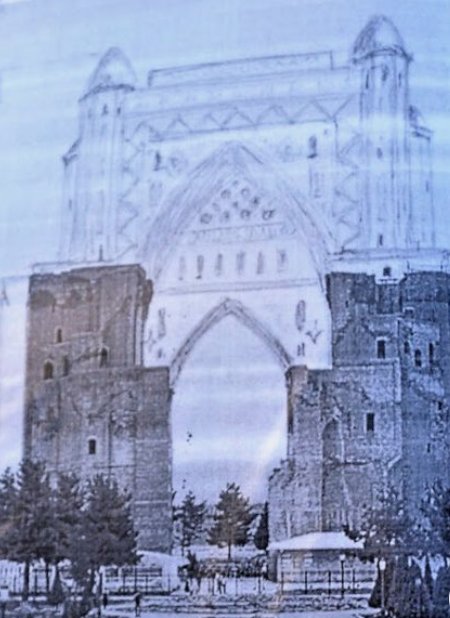
Timur's summer palace, the remarkable Ek Sarai or "White Palace," once spanned a colossal 250 meters in length and 122 meters in width, a space equivalent to four football fields. Its gates, soaring to a height of 70 meters, transcending more than 20 floors, welcomed visitors with opulent blue, white, and gold mosaic embellishments.
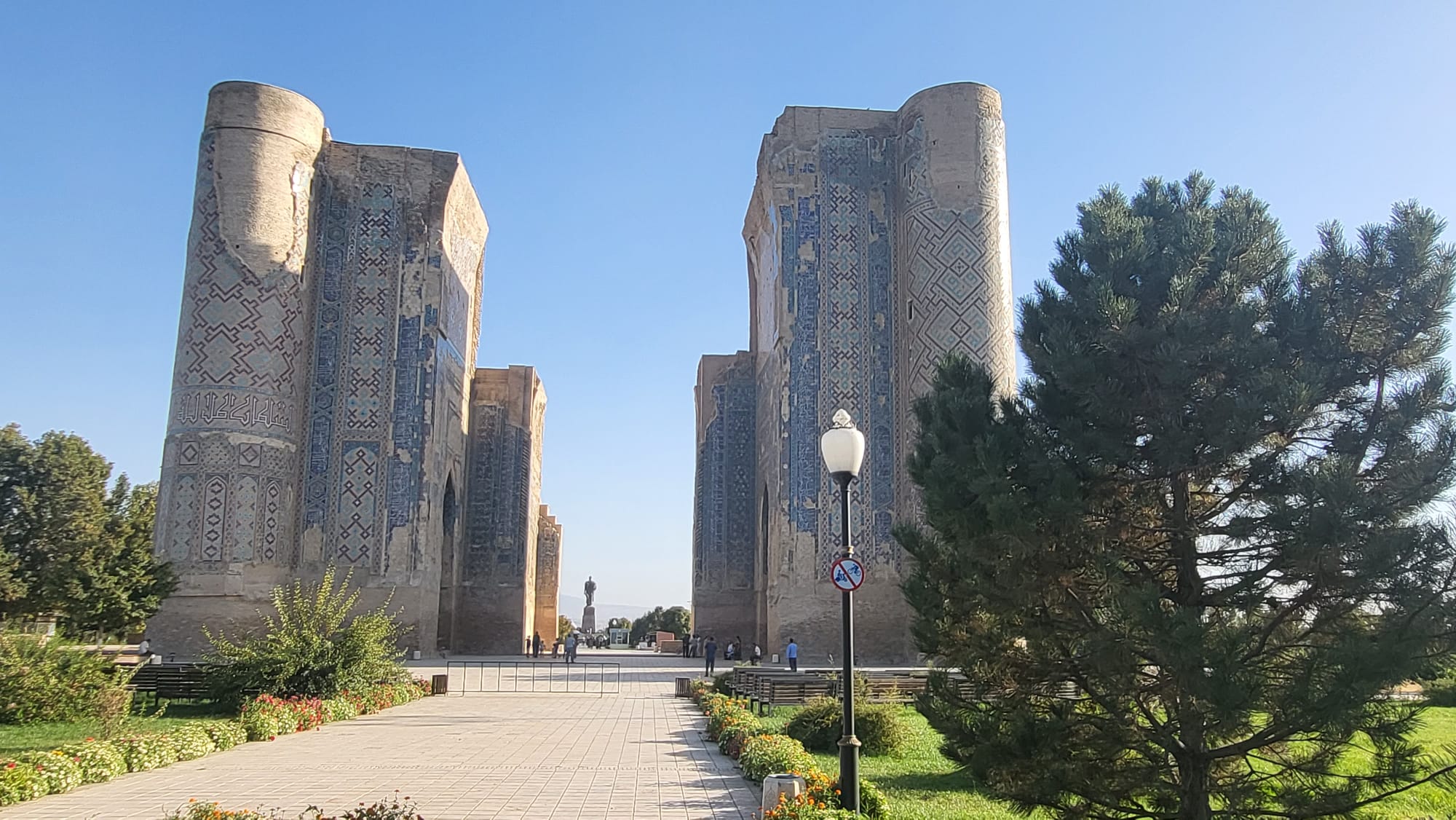
A fascinating reconstruction offers a glimpse into the palace's former grandeur, a testament to Timur's architectural ambition
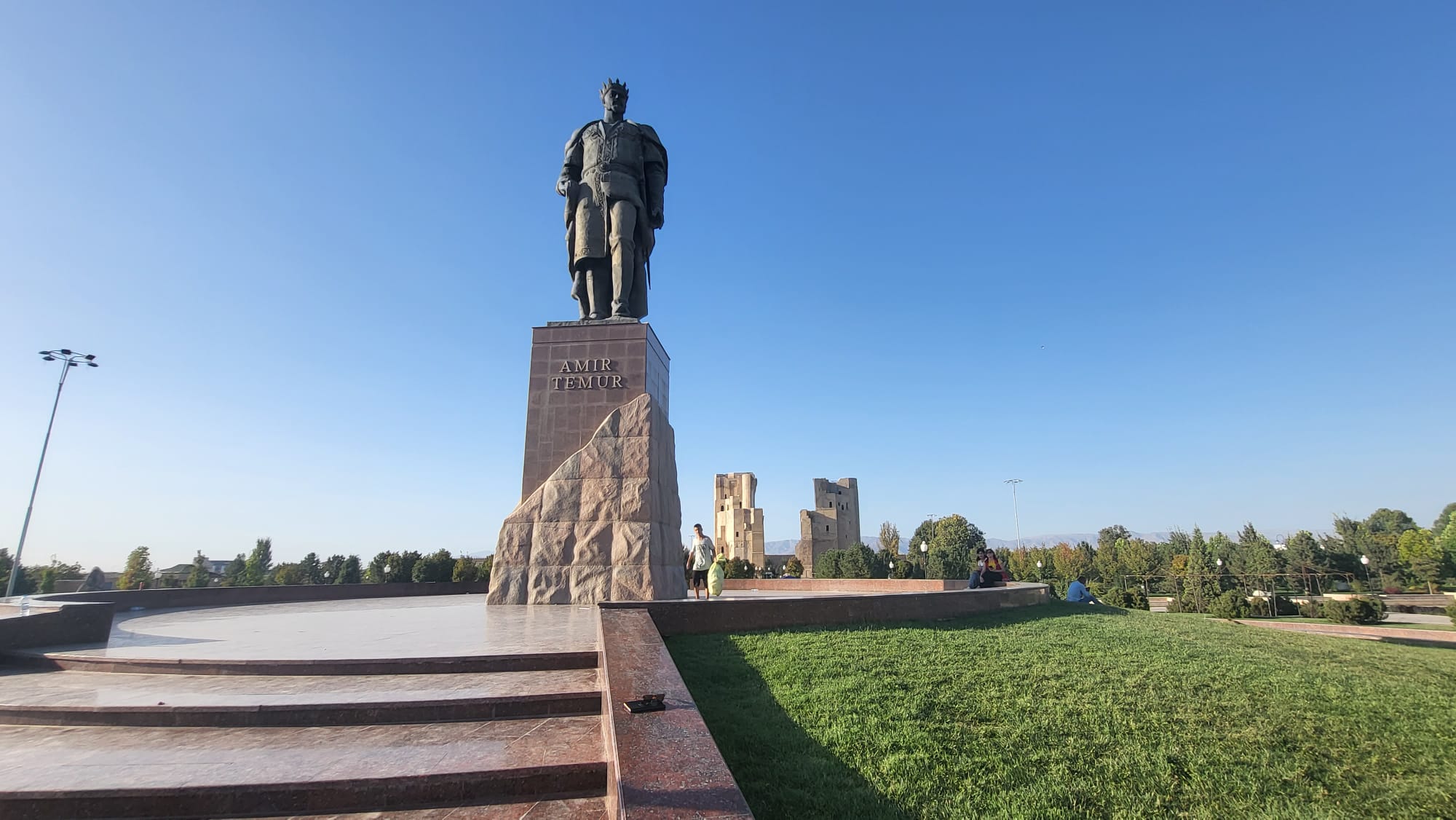
As you traverse the entrance gates, a 300-meter pathway ushers you into the main square, where a majestic statue of Emir Timur reigns. This sprawling space was once the heart of the White Palace, emphasizing the sheer magnitude of the original structure
The Kok Gumbaz Blue Dome Mosque
Further exploration reveals other treasures within the city. The Kok Gumbaz (Blue Dome) Mosque, founded by Emir Ulugh Beg in homage to his father, stands as a testament to architectural prowess. Nearby, the Gumbaz-y-Seydan mausoleum, built by Ulugh Beg for his family, carries an air of mystique, with speculations suggesting it was never used for actual burials
The Hazrat i Imam Complex
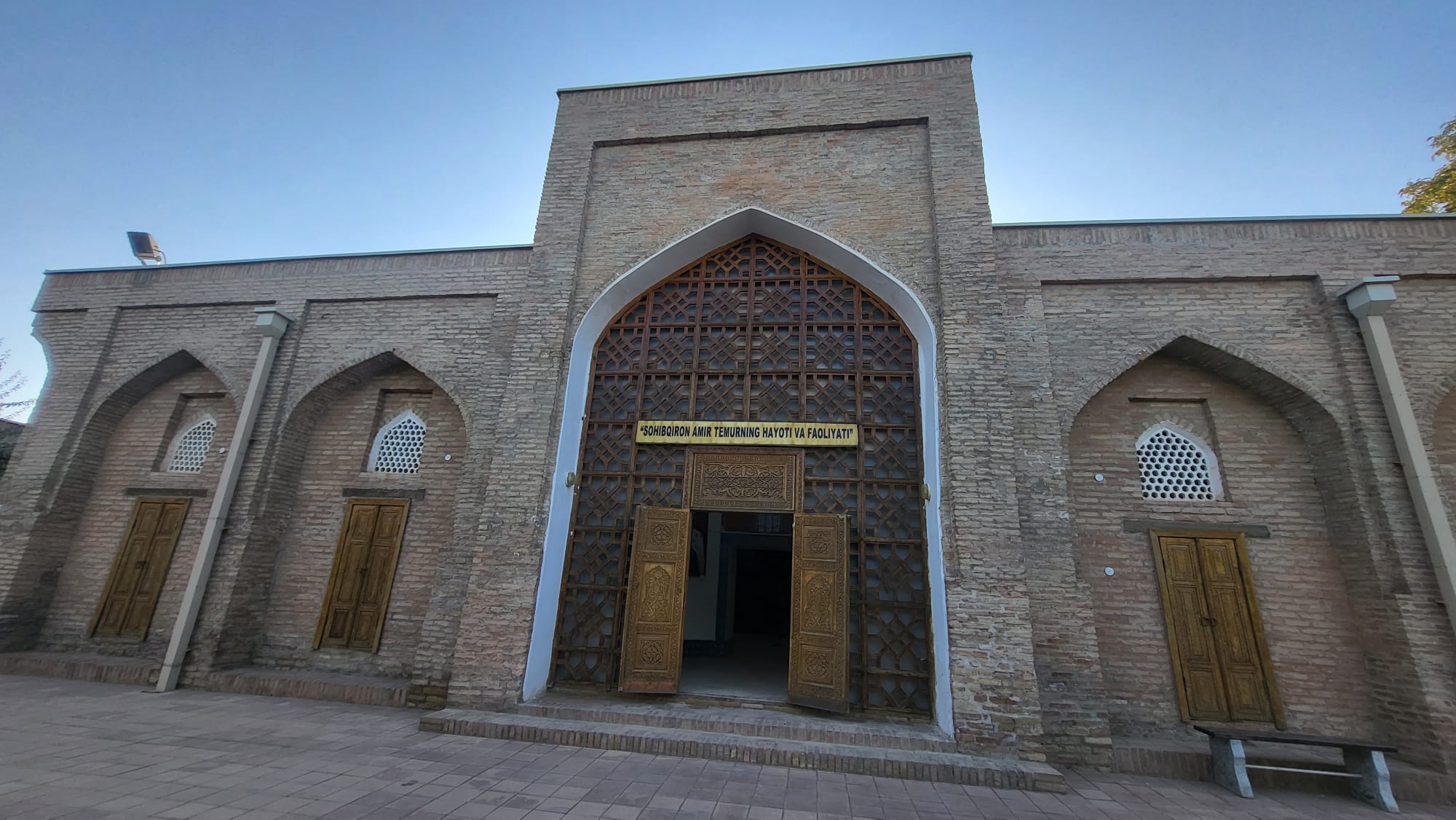
For those with time to spare, a visit to the Hazrat-i-Imam complex, known as the "Seat of Power," is highly recommended. It serves as the final resting place of Jahangir, Timur's youngest son. Adjacent to the complex, an entrance leads to a network of tunnels, once conceived as Emir Timur's potential burial place. The octagonal bazaar presents opportunities to acquire exquisite souvenirs, and adjacent lies a bathhouse
A noteworthy honor graces Shahrisabz as the Economic Cooperation Organization (ECO) designates it as its tourism capital for 2024. Despite the bumpy intercity road trip taking between one and two hours from Samarkand, the question of whether the journey is worth the effort remains a subject of debate among Israeli tour guides. However, those in favor recommend leaving the rented car in Samarkand and enlisting the services of a knowledgeable taxi driver to navigate the roads, bypassing the potholes. Alternatively, one can embark on a train journey to Shahrisabz and secure a taxi upon arrival
Resonating Echoes: The Jewish Legacy
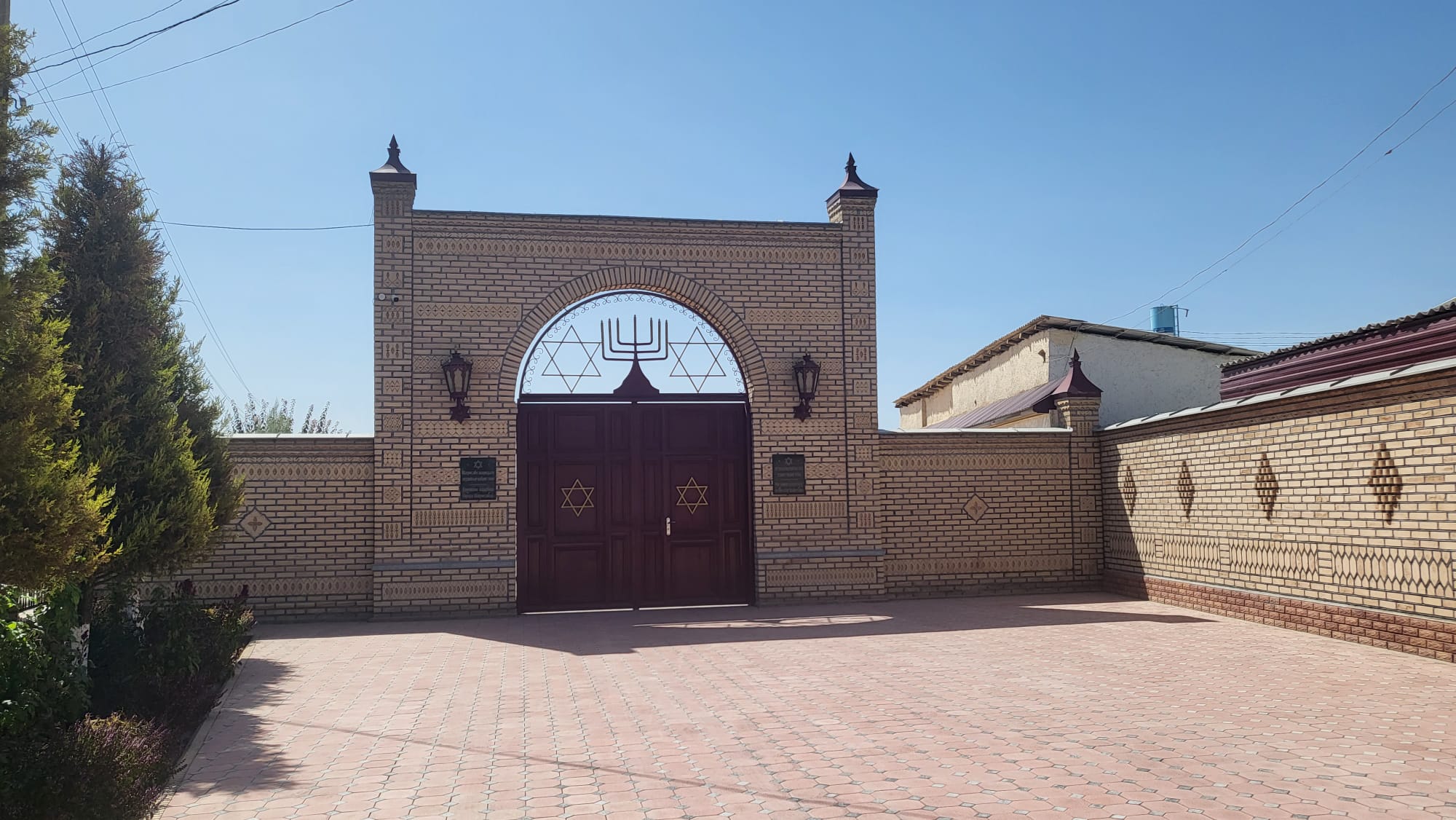
As we traverse the globe, the quest for Jewish heritage sites remains an ever-present thread in our exploration. Shahrisabz once hosted a vibrant Jewish community, even though no Jews call the city home today. The city, however, is a guardian of their memory, and its meticulously maintained Jewish cemetery stands as a testament to their existence
The Ancient Jewish Community
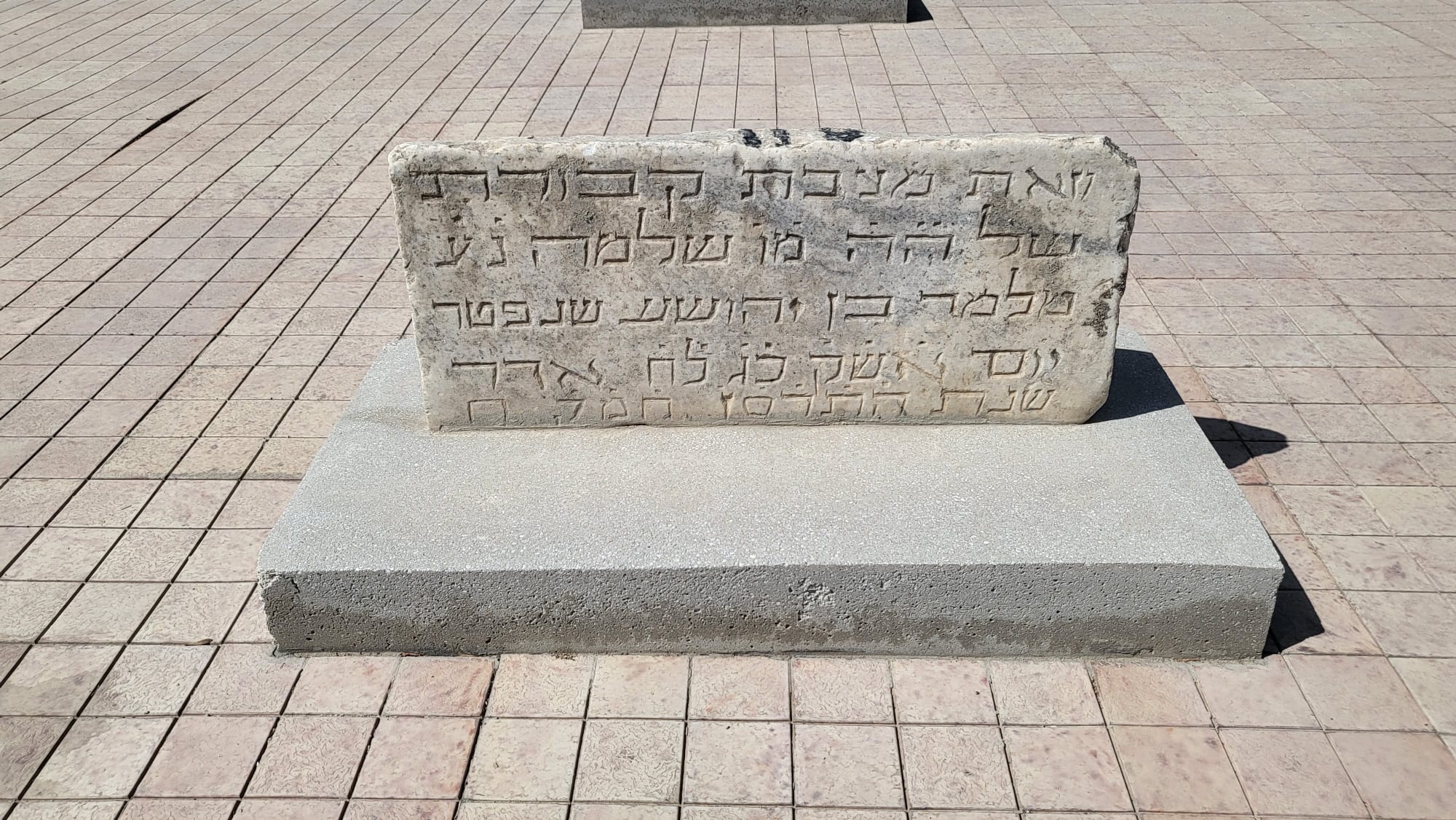
At the entrance, an ancient cemetery complex sprawls over an area roughly 100 by 500 meters, recently revitalized with the placement of 1,200 concrete headstones, arranged in a manner reminiscent of the Holocaust memorial in Berlin. While most tombstones remain unmarked, a few offer inscriptions, though the ravages of time have eroded many of these historical engravings
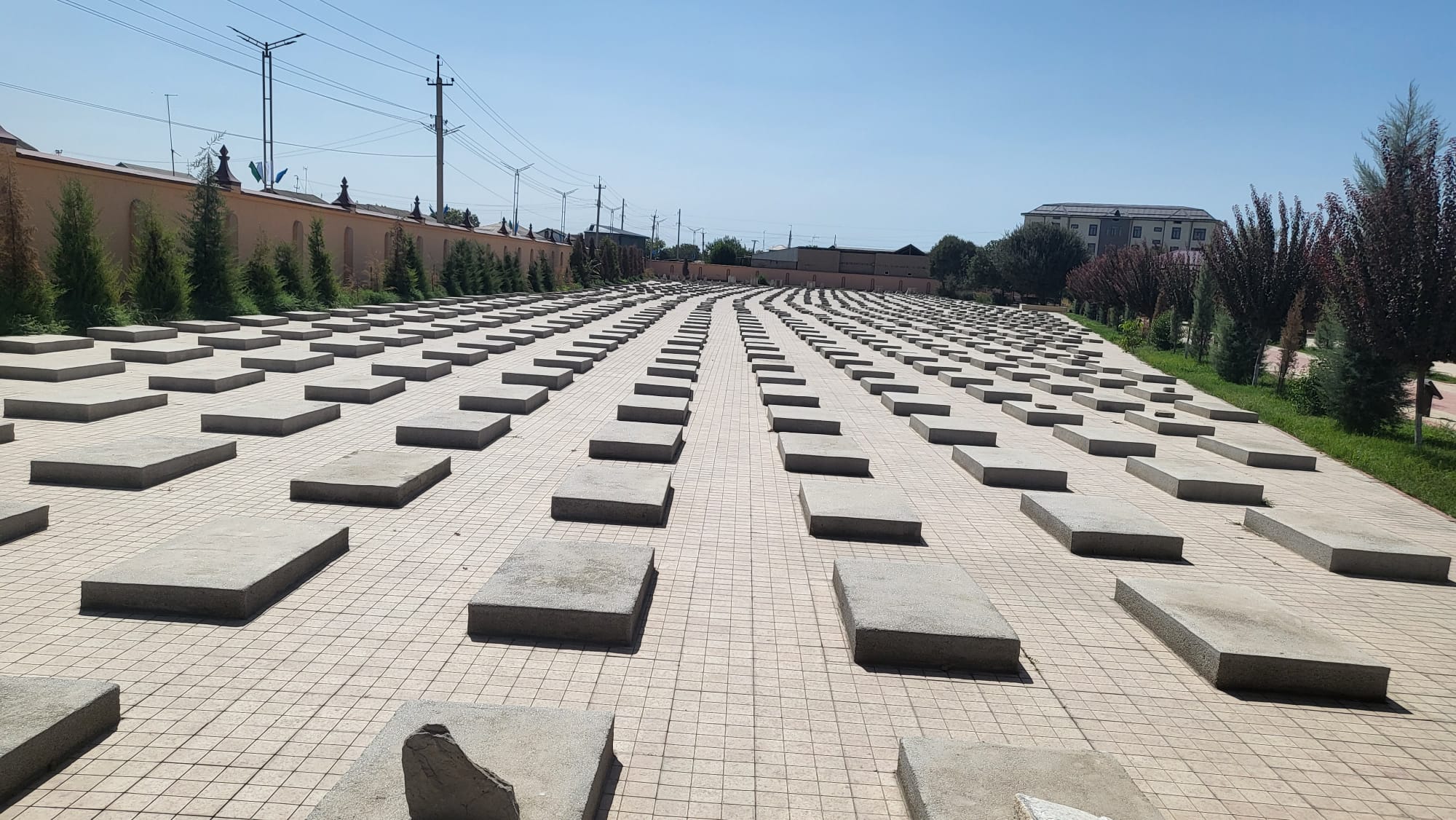
The cemetery's oldest section, located closest to the gate, harks back nearly a thousand years, while the newest tombstones to the far end of the complex bear a 1896 date of death
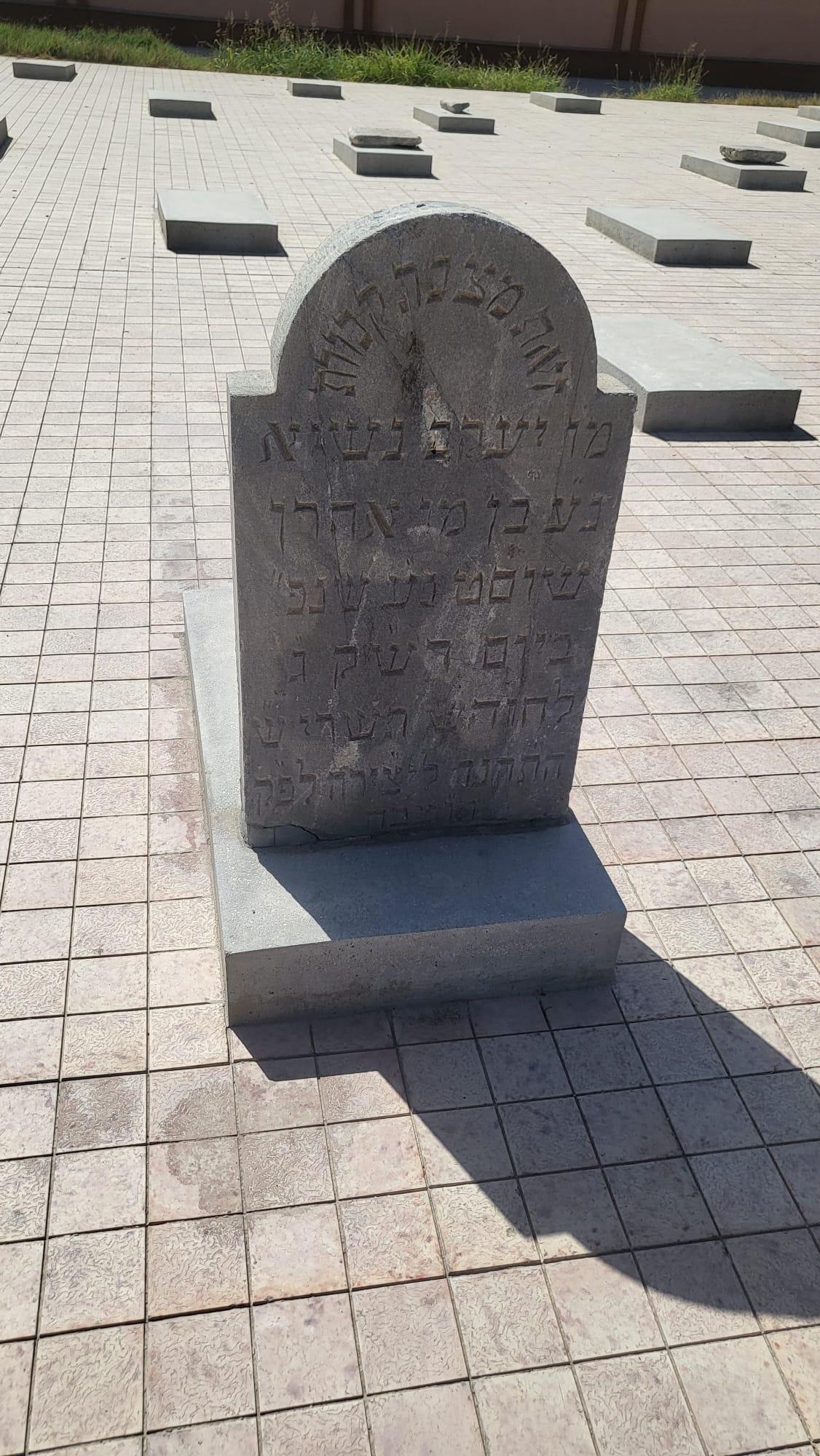
Amidst this history, a dedicated steward, Joly, an Uzbek of non-Jewish, continues a tradition passed down from his grandfather, overseeing the cemetery with immense devotion. His wife is Jewish, and their daughters and grandchildren now reside in Israel's city of Ramla. Joly spends his days meticulously caring for gravestones and pathways, nurturing the grass and trees that grace this hallowed ground
On the wall adjacent to the entrance, black marble tombstones bear the names of community presidents from 1917, along with the community's elders, directors of Jewish schools, and intellectuals
The Former Beit Tahara
Within the complex, an elegant building once served as a Beit Tahara. Today, it houses a synagogue, a haven for families who visit to honor their loved ones and say Kaddish. The synagogue is adorned with rows of new chairs, an Ark of the Covenant veiled in splendor, though it lacks a Torah scroll and prohibits women's section
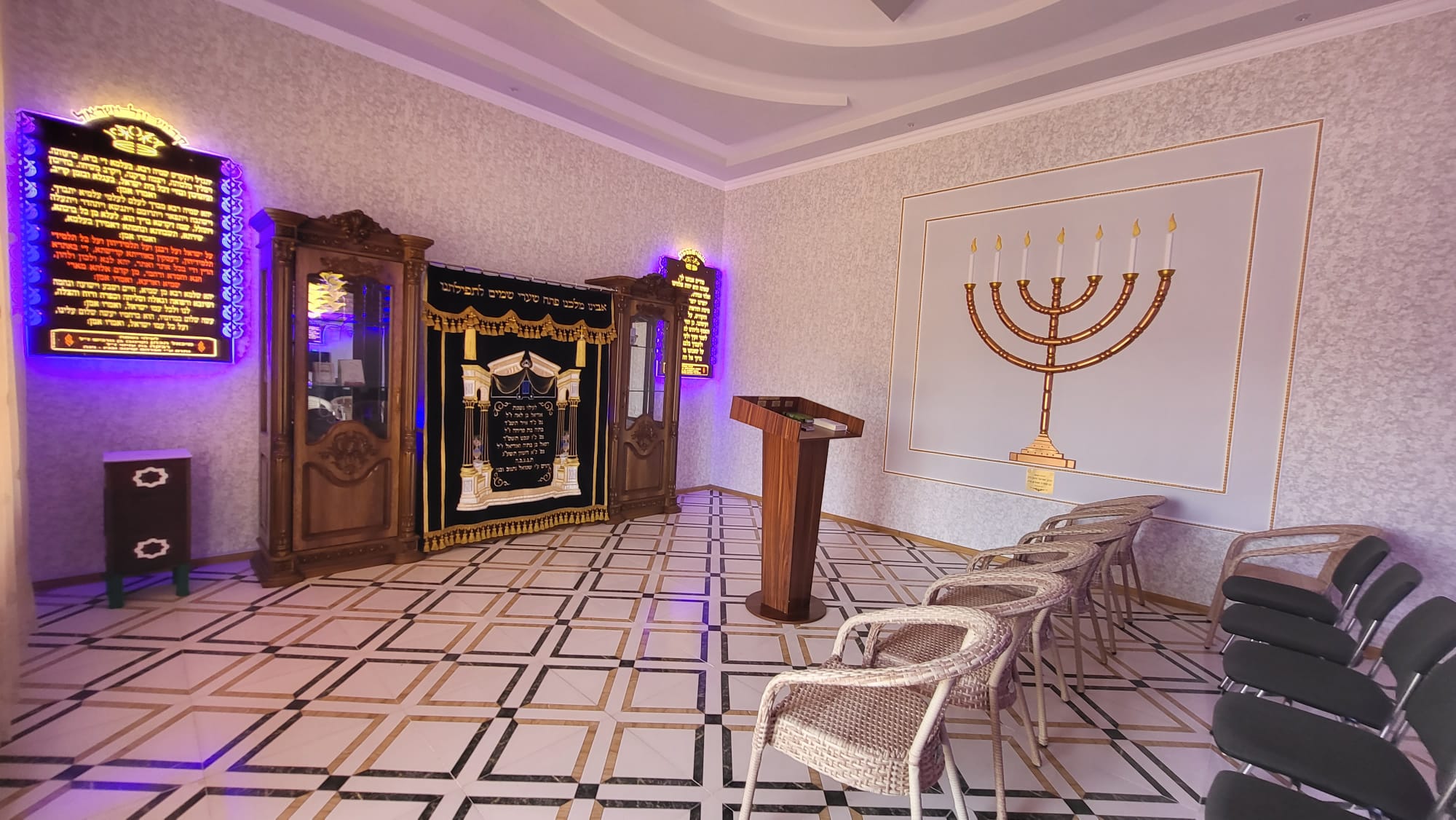
In another part of the building, a hall serves as a venue for mitzvah feasts, a tradition of Bukhara Jews following funerals and memorials. The gatherings feature a menu that includes fried fish infused with garlic, coriander, and saltwater
A crimson marble monument, imported from India, pays tribute to soldiers from Shahrisabz's Jewish community who perished in both World Wars
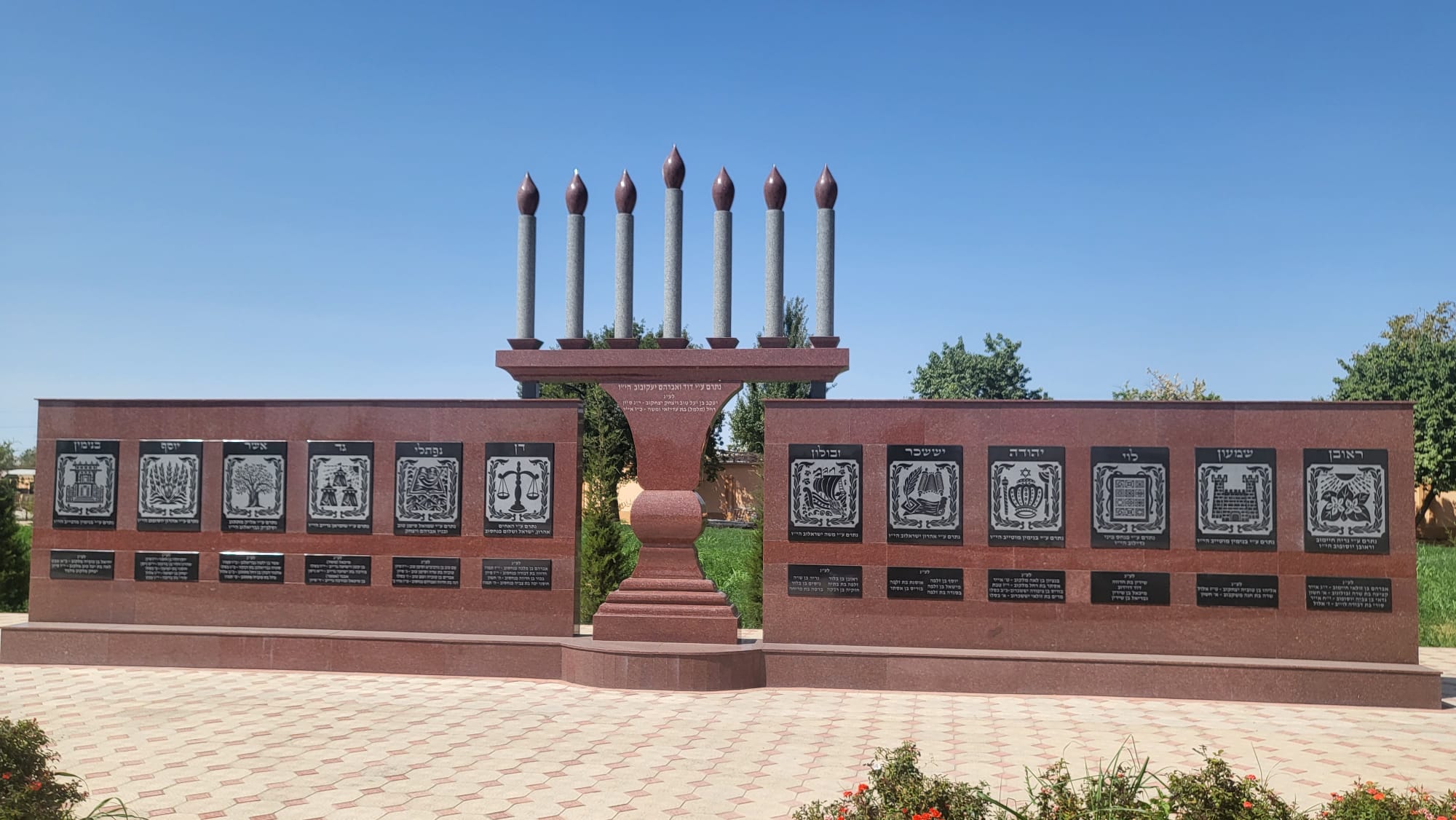
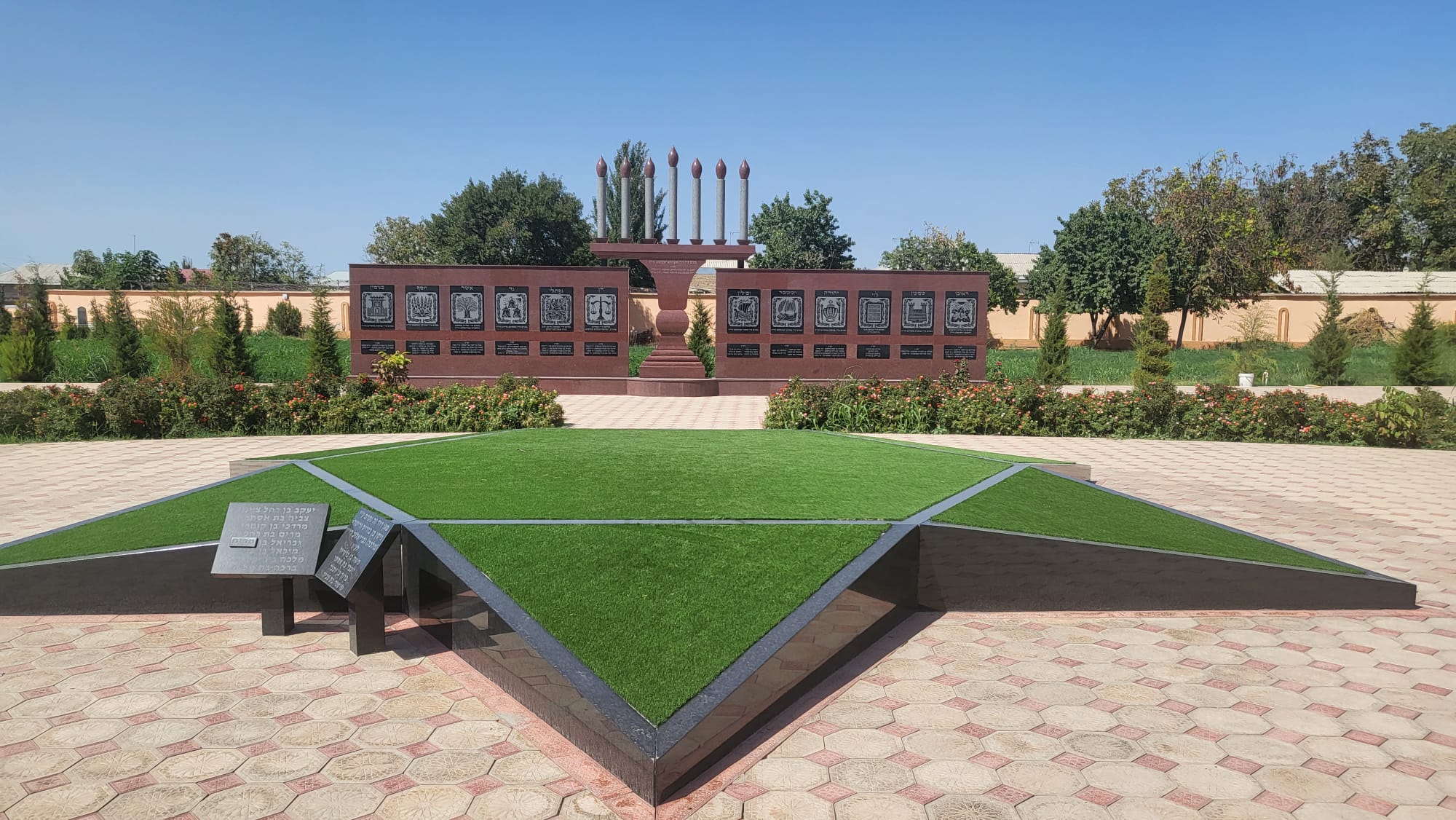
Venturing further along the path, the new section of the cemetery reveals the final resting place of the community's departed throughout the last century to the present. On the very morning of my visit, a funeral was conducted for an Israeli woman who had immigrated from Shahrisabz. In her will, she expressed her wish to be interred beside her parents in the cemetery. This area houses approximately a thousand graves
The left side of the path bears witness to a tombstone and mass grave, where 21 Jews lost their lives in 1919 while attempting to thwart the construction of a road across the cemetery grounds
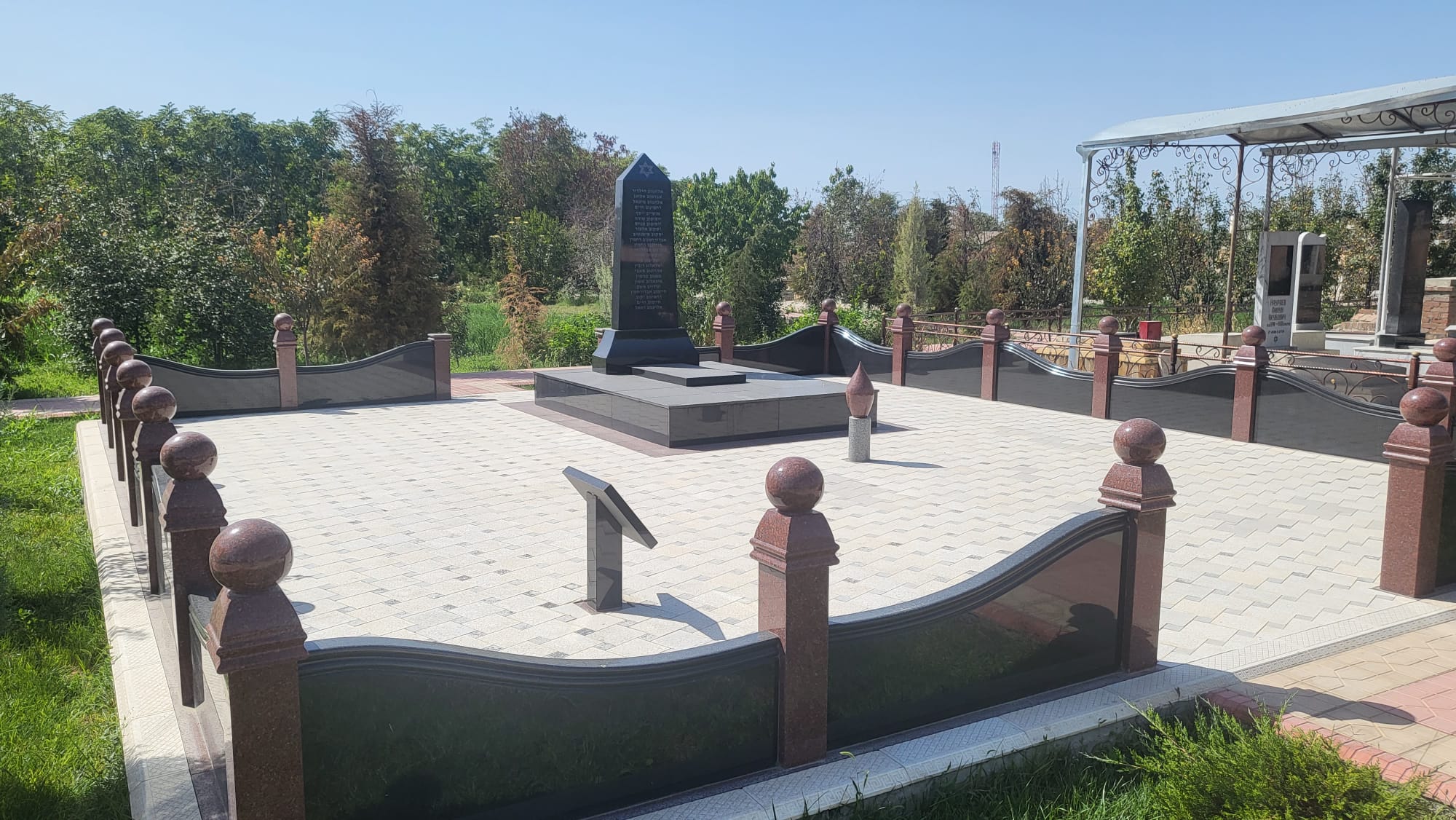
Over some family grave sections, roofs have been erected to shield them from the elements
As we wander among these new tombstones, a profound silence envelops us. We are left to ponder the fate of this once-thriving community, its presence now marked solely by these hallowed grounds and the committed custodian. On my way out, I paused once more at the tombstone honoring the 21 fallen souls and recited the Kaddish in their memory
As evening settles over Jewish Shahrisabz, the city grows quieter beneath the fading glow of turquoise domes and desert dust. The tourists drift back toward Samarkand, the souvenir stalls close, and silence returns to the cemetery paths where generations of Bukharian Jews once buried their loved ones. Jewish Shahrisabz leaves behind an unusual feeling, somewhere between wonder and melancholy. The monuments of Timur speak of conquest, ambition, and imperial glory, while the Jewish cemetery speaks softly of ordinary families, vanished neighborhoods, prayers whispered at sunrise, and communities carried away by history. Perhaps every ancient city contains both stories at once: the rulers who built empires and the quieter people who gave those places a soul. In Jewish Shahrisabz, memory survives not through crowds or grand ceremonies, but through gravestones, fading names, and the stubborn human desire to remember worlds that time tried to erase.
You will probably also be interested in reading articles about other cities in Uzbekistan, such as Samarkand, Bukhara, Tashkent and you may also find useful tips and practical advice in this article, which will help make your trip to Uzbekistan more comfortable and enjoyable.
FAQ
What is Shahrisabz and why is it important in Uzbek history?
Shahrisabz is an ancient city in Uzbekistan best known as the birthplace of Emir Timur, also known as Tamerlane. The city is filled with historic monuments that reflect the glory and power of Central Asia during the Silk Road era.
What was Timur’s White Palace?
The White Palace, or Ak Saray, was Timur’s enormous summer palace in Shahrisabz. Its gigantic gates and dazzling blue and gold mosaics made it one of the most impressive buildings in medieval Central Asia.
Which major landmarks should visitors see in Shahrisabz?
Travelers usually visit the Kok Gumbaz Mosque, the Hazrat i Imam complex, and the ruins of Timur’s White Palace. Together, these sites create a fascinating blend of Islamic architecture and Silk Road history.
Was there once a Jewish community in Shahrisabz?
Yes, Shahrisabz was home to a long standing Bukharian Jewish community for centuries. Although no Jews live there permanently today, the city still preserves important traces of Jewish life and heritage.
What makes the Jewish cemetery in Shahrisabz unique?
The cemetery contains thousands of graves, with some sections dating back nearly a thousand years. It stands as one of the most important reminders of the once thriving Jewish community in the city.
Who takes care of the Jewish cemetery today?
The cemetery is maintained by a devoted local caretaker named Joly, who inherited the responsibility from his grandfather. Although he is not Jewish, he carefully preserves the graves, pathways, and surrounding gardens.
What can visitors see inside the former Beit Tahara building?
The old purification house now functions as a small synagogue for visitors and families who come to pray or recite Kaddish. It contains chairs and an Ark, although there is no Torah scroll inside.
Why is there a memorial for 21 Jews who died in 1919?
The memorial honors Jews who were killed while trying to prevent a road from being built through the cemetery grounds. It reflects the community’s determination to protect the sanctity of their burial place.
How can travelers reach Shahrisabz from Samarkand?
Visitors can travel by train, taxi, or private car from Samarkand. The trip usually takes between one and two hours through mountainous and sometimes rough roads.
What impression does Shahrisabz leave on travelers?
Shahrisabz combines the grandeur of Timur’s empire with the quiet sadness of a vanished Jewish community. Many visitors leave feeling they have stepped into a forgotten world where history, memory, and spirituality still linger.
The author was a guest of the Uzbek Ministry of Tourism and the Qanot Shak airline